I’m pretty despairing about the prospects for the Voice referendum. The current strategy is failing badly. There is an alternative that I believe might work, but I have pitched it in a few places and had no interest. So I’m putting it for the record and on the off-chance that someone might pick it up.
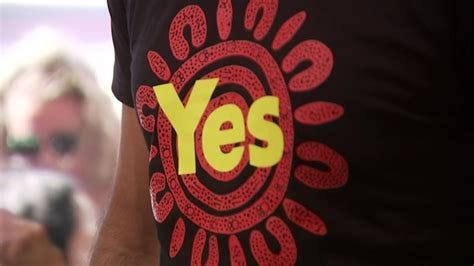
On present indications, the Voice referendum is doomed to defeat. Polls show the Voice failing to win either a majority of votes or a majority of states. Past experience suggests that support for referendum proposals invariably declines over time, and that most fail. In the last fifty years, the only successes have been marginal tweaks to such items as a retirement age for High Court justices and the procedure for replacing senators. But two earlier successes offer some hope. The 1946 referendum on Social Service and the 1928 referendum on the Loans Council succeeded because they provided a firm constitutional basis for vital policies that were already in operation. The other important , though primarily symbolic, success was the 1967 referendum recognising Indigenous Australians
So, the ideal approach to the Voice would have been to legislate it first, and constitutionally entrench it later. But there’s still a chance to do the next best thing. The Parliament, in consultation with First Nations and community in general, could legislate a model that would come into effect if, and only if, the referendum was passed. The government has insisted that the design of the Voice should be left to “the Parliament of the Day’, but as far as initial design is concerned this is a distinction without a difference – next year’s Parliament will be the same as this year’s.
 John Quiggin
I’ll just repeat the comment I wrote on Substack.
On a first read, I like the idea. The Design Principles of the Voice are already in the public domain, on the website of the Uluru Statement from the Heart. The government should state that these will provide the basis for the Voice, and then enact legislation based on them that will come into effect if, and only if, the referendum is carried.
https://ulurustatement.org/education/design-principles/
The proposal above would be the only chance. However, it’s probably too late for that now. A change at this late stage would further baffle and alienate the electorate unless perhaps the referendum itself was deferred to the next term of Parliament.
I get the strong impression that Albanese is not only running dead but that he positively *wants* the referendum to fail – despite all his protestations to the contrary. His behavior, utterances and tactics are inexplicable otherwise. Has his approach been inept or has it been calculated to help the initiative fail while pretending to be in favor of it? I think it is the latter. Operating in this manner he can garner popularity and potential future election votes in certain quarters while not offending his mining corporation donors and masters. *They* certainly do not want traditional land owners to have a voice.
Albanese is a very slippery customer and perfectly capable of this level of dissimulation and treachery. We just have to look at his treachery, as abandonment of anything like traditional Labor values and concerns, over the issues of coal mine licenses, tax cuts, employment and housing policy and deliberate silence and inaction over the endless Covid-19 pandemic. He talks a good game but everything he does is done to protect oligarchic and corporate capital.
Several other questions failed to pass at the 1946 referendum. The amendment proposal concerning Social Services passed. By subsequently holding out and successfully negotiating for an insertion (in brackets, even) of a then seemingly innocent clause lifted and modified from one of the failed amendment proposals the then Opposition leader, Menzies, shrewdly acting for an important part of his party base, doctors and dentists, planted a bomb under social services in the amended Constitution wording.
The 1967 referendum recognising Indigenous Australians was indeed largely symbolic, and that symbolism widely thought to be understood, yet many years later Howard found a useful bomb planted under it.
JQ, there little else clearer concerning the Voice than this: “but as far as initial design is concerned this is a distinction without a difference – next year’s Parliament will be the same as this year’s.” I believe the implications of this strongly support the conclusions Ikonoclast has arrived at above. I also think a double dissolution trigger is being sought for a legislative bomb placement in the unlikely case of the referendum proposal passing.
Hmmmm,
“(xxiiiA) the provision of maternity allowances, widows’ pensions, child endowment, unemployment, pharmaceutical, sickness and hospital benefits, medical and dental services (but not so as to authorize any form of civil conscription), benefits to students and family allowances;”
Not exactly a “bomb”. It’s pretty clear and up front what the exclusion excludes. It would not exclude paying doctors and dentists enough to attract staff to such services.
“As initially written, s 51(xxvi) empowered the Parliament to make laws with respect to: “The people of any race, *other than the aboriginal race in any State*, for whom it is deemed necessary to make special laws”.” The Australian people voting at the 1967 referendum deleted the words in asterisks.
“Section 127 was included in the Constitution of Australia when it was ratified, and stated that:
“In reckoning the numbers of the people of the Commonwealth, or of a State or other part of the Commonwealth, aboriginal natives shall not be counted.”
This section was repealed effective 10 August 1967 following the 1967 referendum.
What “bomb” did Howard discover? I am puzzled. BTW, I am not a fan of Menzies or Howard. Far from it in fact.
There have been some polls and on the basis of these polls everybody has given up, packed their bags and gone home. That’s not staying the course.
The No camp argument is run on distortions, lies, BS or all three – they should not win – they will not win.
OK?
+1 rog… “they should not win – they will not win.”
rog for PM.
Sounds like you’d do better than Albo.
*
JQ said: “The Parliament, in consultation with First Nations and community in general, could legislate a model that would come into effect if, and only if, the referendum was passed.” … and the Parliment will be the same next year.
I am unable to see, imagine, nor infer via “The Parliament, in consultation with First Nations and community in general” how would this be able;
i) to be settled in any reasonable time frame with a reasonable outcome
ii) to garner full representative First Nations in a reasonable time frame
iii) to be scuppered delayed and derided by the FUD merchants including again, some imagined fears of the “future”.
iv) why have a referendum again?
v) when it doesn’t pass then … what?
Start again? Hence +1 rog.
To legislate a model the Parliment must have legislation. The process to get to legislation is imo, as fraught as it is now. So Legislation – a bit of a Voice of some compromise, and come back for a second bite to fix and future proof … when? 2030, 40, 50?
There is NO bit of a Vioce.
The Voice is needed. Simply a body to deliver answers to problems from the actual people with lived experienced.
Anyone here identify as an Aboriginal or Torres Straight Islander? Got lived experience?
We, and all levels of government get “lived experience” from capitalists, spivs, consultants and ex politicians with an axe out or a hand out. Not optimal voices.
The Climate Council? Remeber them? They have a Voice. Know anybody- politician, media etc – other than the Climate Council themselves, standing up saying “we listened to The Voice of the Climate Council”?
The Voice is necessary as ‘we’ don’t have lived experienced and snafu’d our way through 240 years and still can’t even “close the gap”s.
Something needs ro change.
Recognise them.
Give them a Voice.
It wont hurt a bit – afterwards… as we will all sink back into amnesia, and then next culture war will be propagandised by newscorpse.
*
Voting No to the Voice people… if the Voice gets up, will you continue to campaign against it?
No. Didn’t think so. We will all just ignore it and the parliaments will pick and run with what they deem appropriate at the time.
Just like it has been since the Westminster system came in.
Vote Yes.
Only your cognitive dissonance says No.
Ikonoclast, the Menzies time bomb(s) went off with a big bang during negotiations and High Court litigations a little more than a quarter century later doing untold damage to Medibank, went off again ten years later doing untold damage to Medicare, and continue to blow up plans for comprehensive equal and better health care. The bomb works on several levels. It doesn’t just prevent the simple concept of conscription, i.e. drafting for service. (The lifted conscription clause from the failed referendum proposal concerning industry may be a factor in that failure.) On another level because of the time bomb relevant professions are protected from competitive market forces, ie they decide on their numbers, the restrictive practices of a closed shop as it were are enshrined and constitutionally protected. That alone excludes “paying doctors and dentists enough to attract staff to such services.” It has been well argued elsewhere. A quick search hasn’t found where I’ve read and heard at least two, perhaps all three, of the following cover this: Professor Bill Bowtell, the ‘father of Medicare’ late Professor John Deeble and co creator of Medibank with the late Dick Scotton.
The time bomb from 1967 that Howard found, steered through High Court litigation, and used was that the amended power to make laws concerning race did not mean, as most previously understood, that such power precluded making laws to disadvantage a race.
Interestingly in context of the need for the 1946 referendum there was also a Chifley social security time bomb. It was clear by the end of 1942 that the Curtin government had to find an additional £40 million in taxation. On July 23, 1942, the High Court upheld the right of the Commonwealth to take over taxation. Treasurer Ben Chifley started a National Welfare Fund (NWF) in February 1943. A separate tax for that was dismissed as too complicated and the funds simply went to consolidated revenue. Developed over the next several years a tax increase to fund much improved NWF social welfare was settled on as cover that could be sold to the public. Increased income taxation was settled on to remedy post war inflation too. Two birds, one stone. There was bipartisan support for Chifley’s time bomb collection of an additional 7.5% income tax purportedly to be invested in the NWF. The NWF was in the end a trick accounting construct. The funds collected again went to consolidated revenue, but part of the NWF accounting trick was that contributions initially for each year and cumulatively were shown on personal tax returns and were invested in government bonds. Menzies stopped the personal income tax disclosures practice fairly smartly, for fear that people might get the right (wrong) idea about their purported investment and be motivated to make demands as of right. The nominally invested NWF fund grew to a rather substantial amount before Treasurer Lynch formally grabbed the funds around 30 years into its life, an unknowing generation plus later, and closed the fake books. Treasurer Keating repealed the NWF legislation as first order business around 8 years later. However the tax has not been repealed. Today the compounding NWF investment fund would provide non means tested and more generous pensions of the various types to all. Instead the country has a grossly unfair welfare and retirement system, and is being softened up for further degradation of that system and greater inequality.
The science makes it very clear that “race” as a category concept has no genetic basis. There are no races of humans, just variations (diversity), within our single species. Race is a social construct.
https://www.cell.com/ajhg/fulltext/S0002-9297(18)30363-X
Law can be and is made with respect to social constructs. As an example, property is a social construct (as opposed to territory and range which can be given physical and ecological definitions) and we make law about it. I suppose this laws-about-social-constructs rationale is very deeply embedded in law, to the point that one could say that it is what legal Law is: rules about social constructs.
Notwithstanding the above, I wonder if the time has arrived to embed some scientific concepts in the law, including in the Constitution. I mean known facts about first occupation of the Australian continent, along with the ideas of territory and range and even the ecological concepts of the necessity for care and stewardship of the land.
Or maybe this is just another one of my wacky ideas?
As to identification, the title of one article cited in the link says it all or at least implies it all.
“Human ancestry correlates with language and reveals that race is not an objective genomic classifier.”
The fuller statement would be:
“Human ancestry correlates with language and culture and reveals that race is not an objective genomic classifier.”
To sum up, perhaps the more radical approach would be, as I said, to have Law, including the Constitution, guided by the settled science (as settled as humans can achieve it). This would mean:
(1) Explicitly *disavowing* the concept of “race” in the constitution.
(2) Explicitly avowing the concept of ancestry correlating with language and culture.
(3) Explicitly mentioning first occupation of the Australian continent by aboriginal peoples and their long-standing stewardship of the land which that implies.
Point (2) is not radical. This is what we effectively do in law now outside the constitution. But it needs to be stated in the Constitution. In fact, none of these points are radical.
The Voice is relatively little (it’s a lobbying platform) in relation to the above requirements plus full aboriginal land rights. This raises the question. Is the Voice a step towards something better or another delaying tactic of applied neoliberalism? I can see both points of view. In relation to my “lobbying platform” contention, lobby groups that work have their “own” money (stolen by primitive accumulation and exploitation of labor) and connections. With these advantaged they gain access, lobby and donate. The lobby groups that are really effective are those who donate to politicians and political parties for campaigns. If the Voice can’t replicate this, how can it be effective in the current system? I don’t see how. Without a full treaty in the Consitution, as a preamble and full setting for the Constitution, there will be no progress at all, in my view.
LYRICS to “Treaty” (courtesy of the Yothu Yindi website):
Well I heard it on the radio
And I saw it on the television
Back in 1988, all those talking politicians
Words are easy, words are cheap
Much cheaper than our priceless land
But promises can disappear
Just like writing in the sand
Treaty yeah treaty now treaty yeah treaty now
Nhima djatpangarri nhima walangwalang (You dance djatpangarri, that’s better)
Nhe djatpayatpa nhima gaya’ nhe marrtjini yakarray (You’re dancing, you improvise, you keep going, wow)
Nhe djatpa nhe walang gumurrt jararrk gutjuk (You dance djatpangarri, that’s good my dear paternal grandson)
This land was never given up
This land was never bought and sold
The planting of the union jack
Never changed our law at all
Now two river run their course
Separated for so long
I’m dreaming of a brighter day
When the waters will be one
Treaty yeah, treaty now, treaty yeah, treaty now
Nhima gayakaya nhe gaya’ nhe (You improvise, you improvise)
Nhe gaya’ nhe marrtjini walangwalang nhe ya (You improvise, you keep going, you’re better)
Nhima djatpa nhe walang (You dance djatpangarri, that’s good)
Gumurr-djararrk yawirriny’ (My dear young men)
Nhe gaya’ nhe marrtjini gaya’ nhe marrtjini (You improvise, you keep improvising, you keep going)
Gayakaya nhe gaya’ nhe marrtjini walangwalang (Improvise, you improvise, you keep going, that’s better)
Nhima djatpa nhe walang (You dance djatpangarri, that’s good)
Gumurr-djararrk nhe yå, e i, e i, e i i i, i i i, i i i, i i (You dear things)
Treaty ma’ (Treaty now)
Promises disappear – priceless land – destiny
Well I heard it on the radio
And I saw it on the television
But promises can be broken
Just like writing in the sand
Treaty yeah treaty now treaty yeah treaty now
Treaty yeah treaty now treaty yeah treaty now
Treaty yeah treaty ma treaty yeah treaty ma
Treaty yeah treaty ma treaty yeah treaty ma
A Voice.
“The South Australian government will be under no obligation to follow the Voice’s advice – just like the situation for the proposed national Voice.”
“How does the South Australian Voice to Parliament work and what does it tell us about how a national Voice might work?”
https://theconversation.com/how-does-the-south-australian-voice-to-parliament-work-and-what-does-it-tell-us-about-how-a-national-voice-might-work-210465
A possible way to save it, but this duplicitous government is no saviour save for bau.
https://inqld.com.au/politics/2023/08/08/its-time-for-albanese-to-put-himself-and-the-rest-of-us-out-of-this-self-induced-misery/
I’ll just make a comment about race as a concept. The genotype defining a “race” is not to be found, is my basic understanding of what is meant by race having no meaningful sense. The phenotype, on the other hand, is the set of essentially visual and odour based markers, the physical properties of an individual. If we see a bunch of people with the same tone of black skin, and the same general body type (say tall and thin, or short and well built, big noses, fine noses, blue eyes or green eyes or whatever, ear lobes or no ear lobes, etc.), we humans intuitively classify individual people as belonging to a class, category, etc., even though the boundaries of the class, category, etc., are quite clearly vague and ill-defined, if definable. It’s because we are pattern matching machines, as part of the primal brain, built for finding food, mates, shelter, and avoiding becoming prey rather than being predator. We simplify in this way, all the time. Enough about race.
With respect to the Indigenous Peoples of Australia, we know one essential fact: they were here before Cook, etc. In other words, if we map the genealogical lines from then to now, we can say that there were (potentially a lot of) groups of people from pre-colonial times who are, through their descendants, represented in the current Australia. While labelling is always deficient when it comes to the (as pointed out) failure of race to be a meaningful genotypic definition, from the perspective of recognition of the descendants of the pre-colonial possessors of Australia the continent, I guess it serves a basic purpose. The more important thing is the recognition of the impact of colonial settlement and colonial policies with respect to the Indigenous people who were here, long before the ships arrived. Indigenous is a far superior word to words that relate to specific atavistic ideas of “race.”
Upshot, we arrived, we did harm, and harm is still ongoing, despite the exceptional cases we see, the lawyers and actors and professors and so on that have come up from the Indigenous population. I note that we fall into a default pattern of measuring Indigenous people’s achievements based on their success within what—until fairly recently—was a white colonial view of society. The flip-side to that is we—the colonials and their descendants—have fallen into the default of measuring failure of Indigenous people in terms of their “failure”’ to integrate with the colonial society. Very little meeting them half way, just a my way or the highway version that the subjugators always do.
The Voice, to me, is a pretty simple vehicle for ensuring that the descendants of the pre-colonial Indigenous tribes, societies, communities, etc., have an enduring presence within our political system. I don’t understand why this matter of equity, an addressing of a structural inequity towards the Indigenous people, is so difficult to prosecute as an affirmative case. For all I’ve heard from the ALP leadership, it’s like they ticked a box months back, and then sat on the sofa to watch the AFL season. What is going on with them? Get out there and make it plain and simple why this Voice is a worthwhile addition to our Constitution. Man. So annoyed, as per Iknon’s frustration, I concur with Ikon.
The failure of the Yes side to have a simple, persuasive message right from the get-go is infuriating, but a sure sign of the campaign’s (sic) origins from within the post-materialist knowledge class. (“Read the report” is not a message!) It’s crystal clear that it launched from within a group of people who’d all
(1) taken one DEI workshop too many;
(2) looked on the 1619 project with envy; and so
(3) assumed the historical dispossession of indigenous peoples was anything but a 100th-order issue for most non-indigenous people outside their class; for whom
(4) the implied argument “vote yes or you’re racist” was almost literally the most compelling, irrefutable argument they could possibly imagine — beaten only by the utterly ne plus ultra argument “vote yes or you’re a bad ally; and
(5) failed to make the most basic possible prediction about how a federal Coalition dominated by the LNP would respond. What did they think Peter frickin Dutton was going to do — respond to appeals to his better nature? About race???
Inglehart’s post-materialism thesis is way off target. Society became more materialist, in Inglehart’s sense, after the beginnings of the full neoliberalism project, circa 1985. Other values were destroyed or beaten out of shape as money and markets, in the hands of the manipulative elites, took over much of the governance of our society.
However, there is a “post-materialist knowledge class” in another sense. As people became functionally more materialist in the sense of chasing more material wealth, they became immaterialist in a new way, in the philosophical sense: philosophical materialism is the theory or belief that “nothing exists except matter and its movements and modifications”.
Possessing more material wealth permits more resources for the raising of castles in the air. Billionaires and many tenured social science academics excel at this activity. They envisage colonies on Mars or produce 200 page managerialist plans for the next earthly utopia. These never seem to work. On the other hand, plans for dystopias tend to work, viz. the Omega File. Why? It’s easier to destroy than build.
https://www.theguardian.com/politics/1985/jun/11/thinktanks.uk
Previous immaterialism was of the more conventional religious variety. The collapse of religious faith has been mirrored by the rise of faith in markets and faith in the teleology of human progress. Humans seem unable to live without a blind faith in something. Both classes, the neoliberals and the “post-materialist knowledge class”, the latter overlapping but not the same as the post-modernists and which latter the social sciences are riddled with, essentially believe that human theories, especially but not only as ideology, tell objective reality what to do. Either that or they don’t believe that objective reality exists from which premise it follows that what humans believe and want can ipso facto become true.
I’ll try to rescue some mangled sentences in my last paragraph above.
“Earlier immaterialism (and dualism) were of the more conventional religious variety. The collapse of religious faith has been mirrored by the rise of faith in markets and faith in the teleology of human progress. Humans seem unable to live without a blind faith in something. The “post-materialist knowledge class”, which riddles the contemporary social sciences, are not the same as post-modernists but their thinking overlaps in some areas. Both neoliberals and the “post-materialist knowledge class” essentially believe that human ideas can tell objective reality what to do. Either that or they don’t believe that objective reality exists or else exists just as putty for humans to mold. From this premise they tend to deduce that what humans, especially themselves, believe and want can ipso facto become true.”
I will be frank too, again. I think the Voice concept is seriously flawed and will/would likely achieve nothing real for the aboriginal people even if it passed. People would feel good for a while if it passed and aboriginal people would feel hopeful for a time but nothing would ever come of it in the longer run. This is my prediction. It would be another failed initiative. The Voice is pure neoliberalism and mangerialism in form and content: tokenism, delaying tactics and the refusal to commit real resources to real outcomes as opposed to supporting the expansion of further processes of palaver and delay. Despite this I am conflicted and wonder if I should vote “Yes”. The dashing of hopes once again (even if they are spurious hopes) could very well lead to a very bitter outcome and much fallout.
Professor Marcia Langton’s role in the “Adani affair” seems to indicate a compromised position with respect to the mining industry and a lack of full understanding of the absolute urgency of environmental issues including the need stop new coal mines.
https://www.theguardian.com/environment/2017/jun/09/leading-indigenous-lawyer-hits-back-at-marcia-langton-over-adani
Privileged intellectuals and public figures can end up out of touch in all sorts of ways, no matter the bona fides of their upbringing and heritage. Albanese is an example, going on about his working class upbringing and struggling mum and then pushing a 100% neoliberal main course with a little side-dish of correct and proper identity politics.