Another Monday Message Board. Post comments on any topic. Civil discussion and no coarse language please. Side discussions and idees fixes to the sandpits, please.
Having finished off the Easter eggs (or bunnies/bilbies) and Hot Cross Buns (though these are a year-round thing now), I ought to be turning attention back to what’s happening in the world. But that’s too depressing to look at, a view our aspiring leaders have endorsed by resolutely ignoring anything more geopolitical than the price of petrol.
So, I’m going to turn my attention to the various absurdities created by having a four-day holiday that floats all over the calendar, from March 22 to April 25, depending on arcane calculations about the full moon. These in turn can be traced to the calendar used by one subgroup of a religion now practised by only a small minority of the population (according to this survey, only 17 per cent of Australians attended an Easter services in the three years to 2023)
Easter is late this year, meaning that we have only three days between Easter Monday (a holiday of no religious significance whatsoever) and Anzac Day, (a date genuinely held as sacred by many Australians). The gap is long enough that most of us will have to go back to work, but leaves a long interval in February and March with no holidays at all in most states.
The fluctuating date of Easter makes a mess of school calendars, in particular making it difficult for Christmas holidays as well.
As it happens, the UK has a law on its books, passed in 1928 but never brought into effect, setting Easter as the first Sunday after the first Saturday in April. It would be a great idea to adopt this timing. A further improvement would be to shift Australia Day to 3 March, the anniversary of the Australia Act which established our independence from the UK once and for all.
Another Monday Message Board. Post comments on any topic. Civil discussion and no coarse language please. Side discussions and idees fixes to the sandpits, please.
Back in November, when I concluded that Trump’s dictatorship was a fait accompli lots of readers thought I was going over the top. In retrospect, and with one exception, I was hopelessly over-optimistic. I imagined a trajectory similar to Orban’s Hungary, with a gradual squeeze on political opposition and civil society, playing out over years and multiple terms in office,.
The reality has been massively worse, both in terms of speed and scope. Threats of conquest against friendly countries, masked thugs abducting people from the street, shakedowns of property from enemies of the state, concentration camps outside the reach of the legal system, all happening at a pace more comparable to Germany in 1933 than to the examples I had in mind.
The one exception is that I expected Trump to invoke the Insurrection Act on Day 1. Instead, perhaps to preserve a veneer of legality, he has commissioned a report from the Secretary of Defense (Hegseth) and the Secretary of Homeland Security (Noem), due by 20 April. Unless he faces massive political blowback in the next few days, he will doubtless order these flunkies to recommend invoking the Act, effectively the equivalent of Hitler’s Enabling Act.
Meanwhile, two other crucial issues are coming to a head. First, Trump is openly defying the courts over the illegal deportation and imprisonment in a concentration camp of legal migrant Abrego Garcia and others and is now threatening the same even for native-born US citizens. Second, elements of civil society (notably universities and law firms) that have previously engaged in shameful capitulation are now standing up.
If Trump is defeated on all three fronts, there is a good chance that US democracy could survive his onslaughts, though it will take many years to recover. But a Trump victory on even one of them will spell the end. Defeating the courts would render any legal constraints on his power irrelevant. The Insurrection Act would permit him to use troops to suppress protest and to arrest his political opponents. A victory over civil society would turn the US into a totalitarian state, in which all organisations are controled by the Leader and his followers.
I haven’t given up hope, but I don’t expect that Trump will be stopped. The vast majority of Republican voters support everything Trump is doing, even though he has signally failed to deliver on the economic prosperity he promised. And while it would only take a handful of Republicans in Congress to change sides and stop him, there is no sign that this will happen.
Once Trump’s dictatorship is established there is no way back within the current US system. When his regime finally collapses the models for reform will be those of post-war reconstruction of a defeated and discredited state, a process which is sometimes successful, sometimes not, but always painful
Another Monday Message Board. Post comments on any topic. Civil discussion and no coarse language please. Side discussions and idees fixes to the sandpits, please.
Thanks to James Wimberley for prompting me to write this, and alerting me to the data on China’s emissions
Most of the news these days is bad, and that’s true of the climate. Even as climatic disasters worsen, the Trump regime is doing its best to dismantle US and global efforts to decarbonize our energy systems. But there is still some surprisingly good news.
First, China’s emissions from coal-fired electricity appear to have peaked. Thermal power generation fell 5.8 per cent in January and February this year, relative to 2024. The only times this has happened previously were during the Covid lockdowns and in the aftermath of the GFC. On this occasion, total power demand fell by 1.5 per cent due to a warm winter, but the big decline in coal was due to increased solar generation.
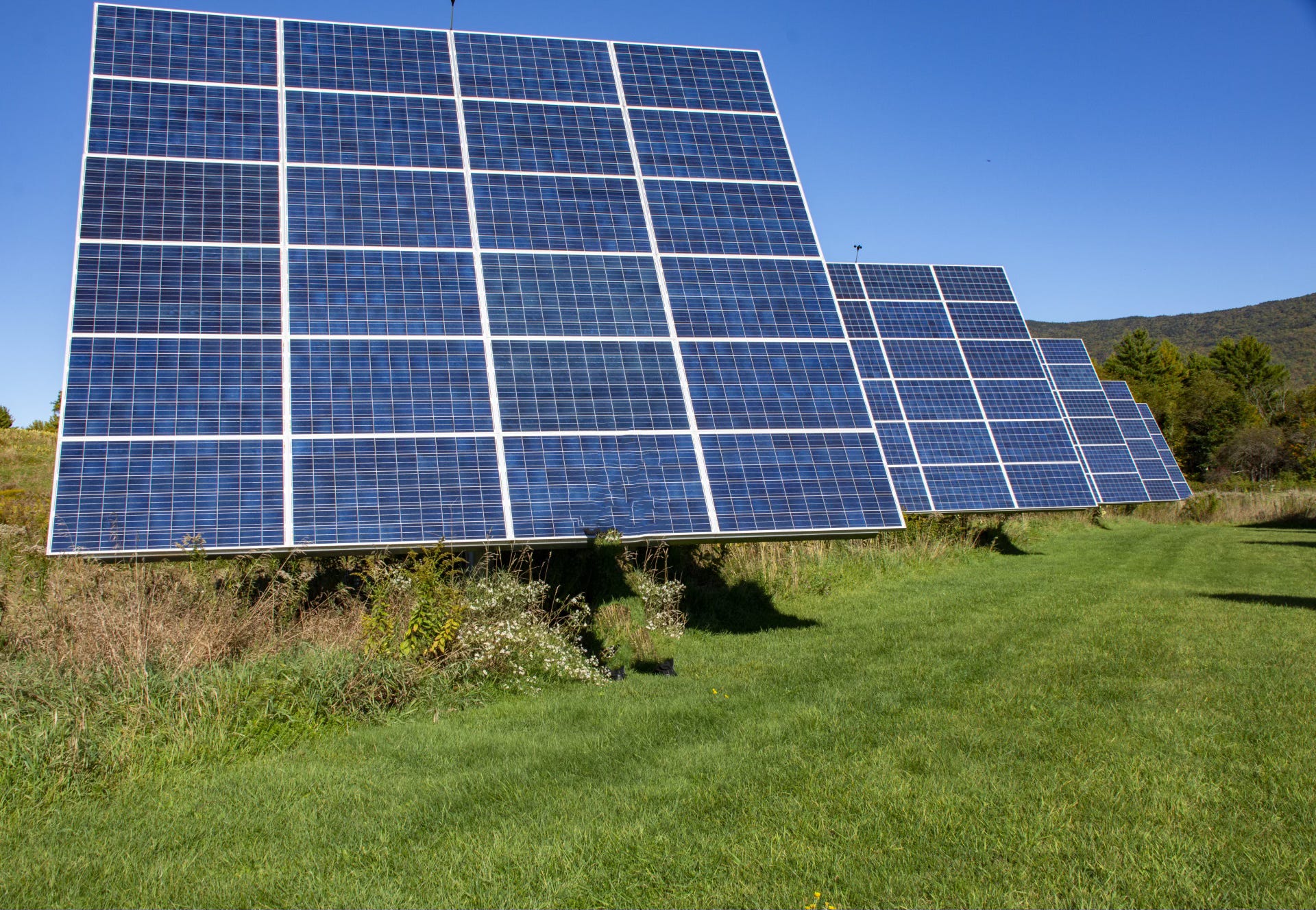
And China’s solar industry keeps on growing on all fronts. China added another 277 GW of PV last year, more than all the capacity installed in the world up to 2015. Recorded exports were 236GW, another record. Since production was estimated at more than 600 GW, it seems likely there are some unrecorded installations.
All this is happening even though new coal-fired power stations are still being built, largely for political rather than economic reasons. It seems likely that these plants will see limited operation as solar power (augmented with storage) meets more and more demand.
Second, the great AI boom in electricity demand has turned out to be a mirage, at least so far. This isn’t always obvious from the breathless tone of coverage. For example, this story leads with the claim that “Electricity consumption by data centers will more than double by 2030”, but leaves the reader to calculate that this implies an increase of just 1.5% in global demand.
Notably, Microsoft which was one of the leading promoters of claims about electricity demand is now scaling back its investments. And large numbers of data centres in China are apparently idle
Even Trump is helping in perverse ways. His policies are already reducing projections of US economic growth, which will accelerate the decline of coal-fired power in particular. His attempts to defy economic reality by keeping coal plants open are unlikely to have much effect in this context.
And coal is on the way out in many other countries. Finland just closed its last coal-fired powerand even laggards like Poland are making progress
The picture is less promising with the transition to electric vehicles, which has slowed in most places. But once we complete the transition to solar, wind and storage, electricity will be massively cheaper. And once again, China is a bright sport, with electrics taking 25 per cent of the market in 2024, and new vehicles becoming cheaper and cheaper. BYD is now offering an electric car in Australia for less than $A30 000 (a bit under $20 000 US).
As I argued a year ago, the irresistible force of ultra-cheap solar PV will overcome the seemingly immovable barriers in its way.
Donald Trump’s announcement of a “Liberation Day”, involving the imposition of tariffs on almost every country in the world, is one of a series of measures which call for an urgent reorientation of Australia’s economic and foreign policy. It is, in effect, a commitment to remove the United States from the global economy, which is seen by Trump as unfair and exploitative of Americans.
The 10% tariff imposed on Australian exports is not of great concern in itself. The US is only our fifth-largest export market and would be ranked even lower by measures that aggregated the EU and Asean trading blocs. Moreover, the inevitable retaliation by other countries against US exports, particularly in agriculture, will remove a major competitor for Australian exports.
There will be much bigger effects from further rounds of escalation. In Trump’s first term, when his presidency was seen as an aberration, EU retaliation was limited to symbolic measures directed at Trump supporters, such as tariffs on Kentucky bourbon. These have been threatened again. But now it is America rather than Trump alone that is seen as an enemy by Europeans, a sentiment increasingly reciprocated by Trump’s Republican supporters.
And with Trump now announcing plans for a third term (and implicitly a presidency for life), the idea of waiting him out has ceased to be meaningful. Instead, the EU is looking at invoking its anti-coercion mechanism, initially developed in response to China’s ill-fated experiment in “wolf warrior” trade policy. That would hit the US where it hurts, in digital and financial services, leading to yet further retaliation.
American withdrawal from the global economy goes far beyond tariff policy. The US has withdrawn from a wide range of international organisations and treaties, abandoned international development aid and cancelled scientific research funding for joint projects in Australia and other countries. The World Bank, the International Monetary Fund and even the United Nations could meet the same fate. In any case, the continued location of these bodies in the US seems increasingly untenable, as the country slides from semi-democracy into autocracy.
Meanwhile, the Trump administration’s domestic policies, including the assault on universities and the rejection of medical science, are setting a course for long-term economic decline. Whereas the US has traditionally attracted the best and brightest researchers from around the world, the direction is now reversing. Although the idea of emigration is an illusion for most Americans, scientists fleeing the regime will find a warm welcome in many places, just as the US welcomed a similar wave of scientific émigrés from Germany in the 1930s.
But there is no sign that any of this is deterring Trump, or his supporters. Although Republicans have suffered some modest electoral reverses recently, Trump’s approval ratings are still higher than those of his departing predecessor, Joe Biden. The idea that America should stand alone, while dictating terms to “lesser breeds without the law”, seems to have strong appeal.
The closest recent parallel to Trump’s liberation day rhetoric is the North Korean Juche ideology. Although hard to translate, it is often rendered in English as “self-reliance”, “autonomy” and “independence”. Economists use the term “autarky”. Unlike in North Korea, a shift to autarky will not reduce the US to miserable poverty. A withdrawal from the global economy will produce a short-run recession and long-run stagnation in the US, but not necessarily an economic collapse.
How should Australia respond to these developments? Unsurprisingly, the initial response has been denial, followed by (notably unsuccessful) bargaining. We are now beginning to see anger and depression, as the reality of the situation sinks in.
Acceptance will come with the recognition that the US is no longer part of our economic and geopolitical future. This creates an opportunity to finally engage fully with our region and become, politically and economically as well as geographically, an Asian nation. The crucial steps here are to seek membership of the Association of Southeast Asian Nations (Asean) and to find a balance between the would-be hegemons of our region, the US and China. This can’t be done until we abandon both the idea that the US is a friend, and the alliances inherited from the era when this was true.
Breaking with the US will be painful in all sorts of ways. But the break is coming whether we like it or not. Rather than pretending that the return of US democracy is just around the corner, we should welcome the opportunities of becoming a full participant in the most dynamic region in the global economy.
Another Monday Message Board. Post comments on any topic. Civil discussion and no coarse language please. Side discussions and idees fixes to the sandpits, please.

 John Quiggin