US–Australia alliance wanes under Washington’s whims

My latest in The East Asia Forum

The May 2025 federal election campaign was characterised by a studious avoidance of the main issues facing Australia, most notably the country’s future relationships with the United States and China. Canberra should confront the quandaries redefining the US relationship, initiated by President Donald Trump’s second term. Washington’s radical reorientation shows no sign of reversing even after 2028, when Trump is due to leave office.

The major parties’ avoidance of this issue is unsurprising given the complex attitudes of the Australian public, particularly towards the United States. On the one hand, Australians’ views of US President Donald Trump are overwhelmingly negative, a fact that contributed to the scale of the conservative Liberal–National Coalition’s defeat. On the other hand, there has been no genuine challenge to the general belief of policymakers, and the majority of the public, that Australia’s alliance with the United States is both necessary and beneficial.

During Trump’s first term in office, these seemingly contradictory perceptions could be reconciled. Trump’s election was seen as an aberration, driven by dislike of the Democratic candidate Hillary Clinton and the vagaries of the Electoral College system. His bellicose rhetoric could be dismissed as theatrical bravado. The phrase ‘take him seriously, but not literally’ was coined by writer Salena Zito to describe the attitudes of Trump supporters in 2016. The adage became conventional wisdom. Trump’s conventional Republican choices for Cabinet appointments meant that his policy choices were supposedly constrained by ‘the adults in the room’.

Joe Biden endorsed the view of Trump as an aberration after his narrow victory in the 2020 election. After Biden proclaimed that ‘America is back’ and the strong backlash against the storming of the Capitol on 6 January 2025, it seemed that Trump and Trumpism would be driven from public life.

The situation in 2025 is radically different. Having been vindicated by a plurality of voters in the 2024 election, Trump has governed as a radical extremist, with appointees to key positions who are, if anything, even more extreme than he is. Both domestically and internationally, he has shown a clear preference for dictatorship over democracy. And there is no reason to suppose that things will return to pre-Trump normality even assuming he leaves office as scheduled
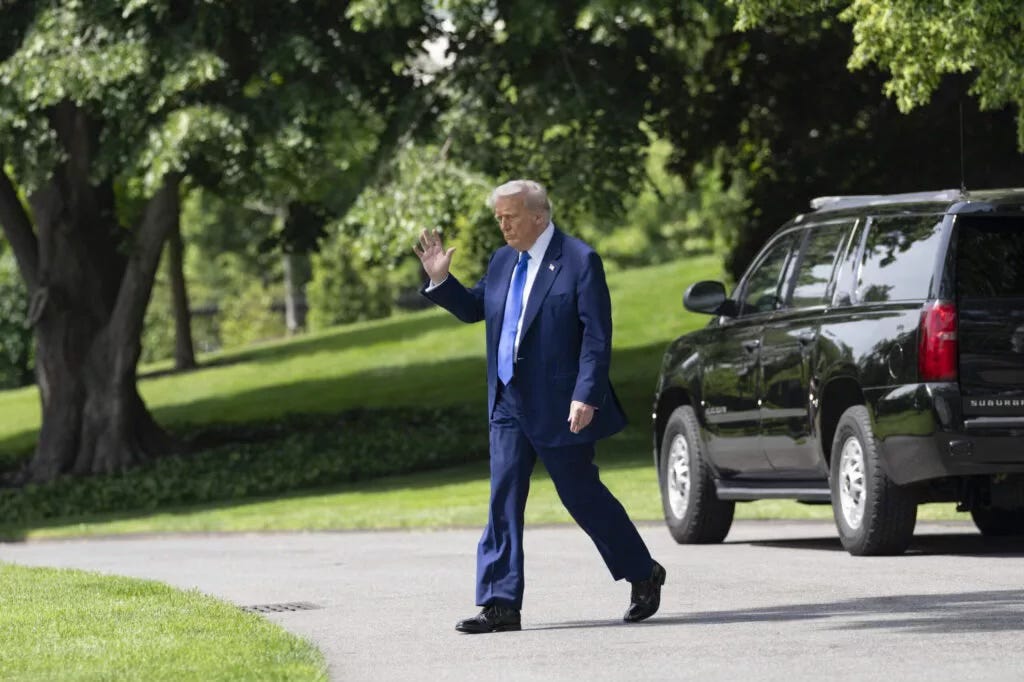
The May 2025 federal election campaign was characterised by a studious avoidance of the main issues facing Australia, most notably the country’s future relationships with the United States and China. Canberra should confront the quandaries redefining the US relationship, initiated by President Donald Trump’s second term. Washington’s radical reorientation shows no sign of reversing even after 2028, when Trump is due to leave office.

The major parties’ avoidance of this issue is unsurprising given the complex attitudes of the Australian public, particularly towards the United States. On the one hand, Australians’ views of US President Donald Trump are overwhelmingly negative, a fact that contributed to the scale of the conservative Liberal–National Coalition’s defeat. On the other hand, there has been no genuine challenge to the general belief of policymakers, and the majority of the public, that Australia’s alliance with the United States is both necessary and beneficial.

During Trump’s first term in office, these seemingly contradictory perceptions could be reconciled. Trump’s election was seen as an aberration, driven by dislike of the Democratic candidate Hillary Clinton and the vagaries of the Electoral College system. His bellicose rhetoric could be dismissed as theatrical bravado. The phrase ‘take him seriously, but not literally’ was coined by writer Salena Zito to describe the attitudes of Trump supporters in 2016. The adage became conventional wisdom. Trump’s conventional Republican choices for Cabinet appointments meant that his policy choices were supposedly constrained by ‘the adults in the room’.

Joe Biden endorsed the view of Trump as an aberration after his narrow victory in the 2020 election. After Biden proclaimed that ‘America is back’ and the strong backlash against the storming of the Capitol on 6 January 2025, it seemed that Trump and Trumpism would be driven from public life.

The situation in 2025 is radically different. Having been vindicated by a plurality of voters in the 2024 election, Trump has governed as a radical extremist, with appointees to key positions who are, if anything, even more extreme than he is. Both domestically and internationally, he has shown a clear preference for dictatorship over democracy. And there is no reason to suppose that things will return to pre-Trump normality even assuming he leaves office as scheduled

As far as Australia is concerned, Trump has made it clear that the United States will not be bound by treaties — even those he negotiated in his first term. Further, he believes that all US allies, including Australia, have cheated the United States in the past and deserve punishment. His 10 per cent tariff on Australian exports, while lower than those announced and then suspended for countries with which the United States runs a trade deficit, represents a clear breach of the US–Australia Free Trade Agreement.

In these circumstances, it would be foolish to expect that the United States would come to Australia’s aid in the — fortunately remote — event of a conflict with a regional neighbour. This realisation has coincided with a historical reassessment that the United States has always viewed its Australian alliance as more transactional than Australians themselves imagined.

Then Australian prime minister John Curtin’s famous turn to Washington in the Second World War was negatively received in the United States, which viewed Australia more as a geographically convenient base for fighting Japan than as a natural ally. The United States declined to militarily assist Australia during the Indonesian Confrontation and the Malayan Emergency — Commonwealth operations against Southeast Asian insurgents in the 20th century. They gave only grudging and limited support for the liberation of East Timor.

But even this relatively limited support is far more than Australia could expect from the Trump administration or its possible ideological successors.

The US alliance is also seen as offering Australia domestic and regional security through the ‘Five Eyes’ intelligence sharing arrangement and access to high-tech defence equipment. But Trump has already compromised the potential of both benefits, reportedly planning massive cuts to the Central Intelligence Agency and threatening to expel Canada from the Five Eyes agreement.

As the politicisation of all aspects of the US government continues, there can be no guarantee that intelligence sharing would not be manipulated to benefit the United States at Australia’s expense. Similar issues arise with military equipment. Trump’s threat to restrict alliance partners to functionally limited versions of the new F-47 fighter aircraft have led many potential buyers to consider alternatives such as the French Dassault Rafale fighter aircraft.

The re-elected Albanese government needs to accept the fact that the United States, as Australians have imagined it since Curtin’s famous speech, is gone for good. In the new world, the United States no longer has allies, only clients who can be discarded whenever it becomes convenient to do so. Meanwhile China, which was attempting to use trade coercion against Australia until recently, continues to assert its own claims.

In protecting itself against the hegemonic pretensions of the great powers of the United States and China, Australia must find a balance between the two that preserves its independence.

The re-elected Albanese should pursue closer relations with Asian neighbours who face the strategic predicament.

As far as Australia is concerned, Trump has made it clear that the United States will not be bound by treaties — even those he negotiated in his first term. Further, he believes that all US allies, including Australia, have cheated the United States in the past and deserve punishment. His 10 per cent tariff on Australian exports, while lower than those announced and then suspended for countries with which the United States runs a trade deficit, represents a clear breach of the US–Australia Free Trade Agreement.

In these circumstances, it would be foolish to expect that the United States would come to Australia’s aid in the — fortunately remote — event of a conflict with a regional neighbour. This realisation has coincided with a historical reassessment that the United States has always viewed its Australian alliance as more transactional than Australians themselves imagined.

Then Australian prime minister John Curtin’s famous turn to Washington in the Second World War was negatively received in the United States, which viewed Australia more as a geographically convenient base for fighting Japan than as a natural ally. The United States declined to militarily assist Australia during the Indonesian Confrontation and the Malayan Emergency — Commonwealth operations against Southeast Asian insurgents in the 20th century. They gave only grudging and limited support for the liberation of East Timor.

But even this relatively limited support is far more than Australia could expect from the Trump administration or its possible ideological successors.

The US alliance is also seen as offering Australia domestic and regional security through the ‘Five Eyes’ intelligence sharing arrangement and access to high-tech defence equipment. But Trump has already compromised the potential of both benefits, reportedly planning massive cuts to the Central Intelligence Agency and threatening to expel Canada from the Five Eyes agreement.

As the politicisation of all aspects of the US government continues, there can be no guarantee that intelligence sharing would not be manipulated to benefit the United States at Australia’s expense. Similar issues arise with military equipment. Trump’s threat to restrict alliance partners to functionally limited versions of the new F-47 fighter aircraft have led many potential buyers to consider alternatives such as the French Dassault Rafale fighter aircraft.

The re-elected Albanese government needs to accept the fact that the United States, as Australians have imagined it since Curtin’s famous speech, is gone for good. In the new world, the United States no longer has allies, only clients who can be discarded whenever it becomes convenient to do so. Meanwhile China, which was attempting to use trade coercion against Australia until recently, continues to assert its own claims.

In protecting itself against the hegemonic pretensions of the great powers of the United States and China, Australia must find a balance between the two that preserves its independence.

The re-elected Albanese should pursue closer relations with Asian neighbours who face the same strategic predicament.
David Littleproud cites nuclear energy disagreement as major factor in Coalition split

Nationals’ leader David Littleproud has singled out nuclear energy as a key reason for his party’s spectacular split from the Liberals, as both parties seek to rebuild following the Coalition’s devastating election loss.

Speaking to the media on Tuesday, Littleproud said:

our party room has got to a position where we will not be re-entering a Coalition agreement with the Liberal Party […] Those positions that we couldn’t get comfort around [include] nuclear being a part of an energy grid into the future.

The junior partner had long held strong sway over the Coalition’s climate and energy stance, including the plan to build nuclear reactors at seven sites across Australia using taxpayer funds. 

After public sentiment appeared to go against nuclear power during the election, the Nationals had reportedly been weighing up changes to the policy. It would have involved walking away from the plan to build reactors and instead lifting a federal ban on nuclear power.

But some quarters of the Nationals remained deeply wedded to the original nuclear plan. Meanwhile, Nationals senator Matt Canavan had called for the net-zero emissions target to be scrapped, and Nationals senator Bridget McKenzie insisted renewable energy was harming regional communities. 

Now, with the Nationals unshackled from the binds of the Coalition agreement, the future of its energy policy will be keenly watched.

Don’t let democracy run off the rails. 

Donate today 

dried up rural scene
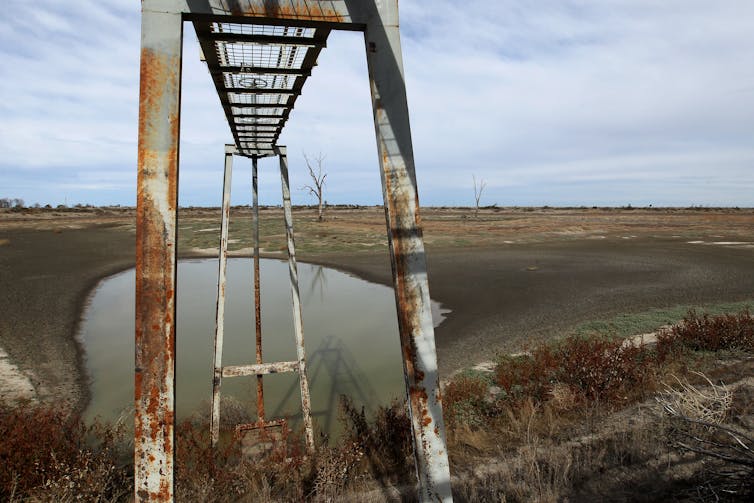
Some Nationals say renewable energy harms rural Australia. Danny Casey/AAP

A graceful way out of nuclear

Littleproud on Tuesday did not confirm where exactly he expected the Nationals to land on energy policy. But he rejected suggestions his party was unwise to stick with the nuclear policy after the Coalition’s poor election result, saying public opinion had been swayed by a “scare campaign”.

Even if the Coalition had won the election, however, the policy was running out of time.

CSIRO analysis showed, contrary to the Coalition’s claims, a nuclear program that began this year was unlikely to deliver power by 2037. But up to 90% of coal-fired power stations in the national electricity market are projected to retire before 2035, and the entire fleet is due to shut down before 2040.

Now, the earliest possible start date for nuclear is after the 2028 election. This means plugging nuclear plants into the grid as coal-fired power stations retire becomes virtually impossible.

This very impossibility provided the National Party with a graceful way out of the policy. It could have regretfully accepted the moment had passed.

With nuclear out of the picture, and coal-fired power almost certain to be phased out, that would have left two choices for the Coalition: a grid dominated by gas, or one dominated by renewables.

However, expanding gas supply frequently requires the controversial process of fracking, which is deservedly unpopular in many regions where it’s undertaken. 

What’s more, gas is an expensive energy source which can only be a marginal add-on in the electricity mix, used alongside batteries to secure the system during peak times.

Logically, that would have left renewable energy as the only feasible energy policy option for the Nationals – but it wasn’t to be.

protest against nuclear in Australia.
Littleproud dismissed claims Australians do not like nuclear power. Steven Markham/AAP

‘Technology agnostic’?

Littleproud claims the party is technology agnostic about energy policy. In practice, that would mean choosing the technology that can reduce emissions most rapidly and cheaply, rather than being bound by ideology or political expediency. 

In principle, this approach is the right one. Many energy sources can reduce carbon emissions, including solar and wind (backed up by energy storage), nuclear, hydro-electricity, and even gas and coal if emissions can be captured and stored. 

But the Nationals’ claim to agnosticism is not reflected in its actual policies which, in recent years, have been characterised by dogmatic faith in nuclear and so-called “clean” coal, and an equally dogmatic rejection of solar, wind and battery storage. 

The Nationals’ hostility to renewables may in part be driven by pressure from anti-renewable activist groups.

The Institute of Public Affairs, for example, has sought to promote rural opposition to renewables and emissions reduction and focused its efforts on Nationals-held seats

And the now-defunct Waubra Foundation, named after the small town in northwest Victoria, opposed wind farms and claimed they caused health problems. The group was created by an oil and gas executive with no apparent links to the town. 

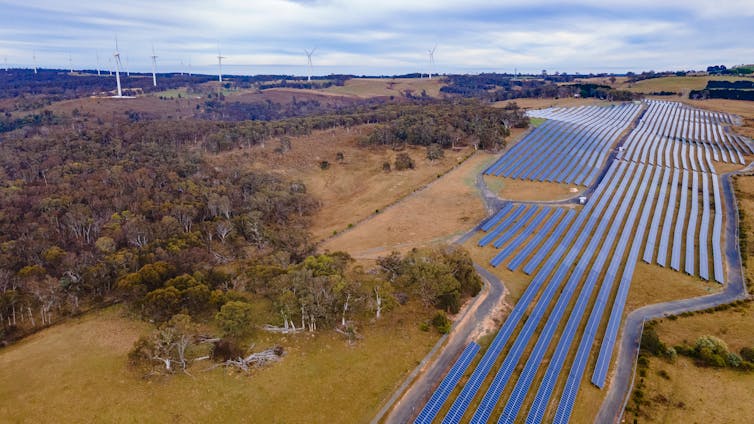
The Gullen solar farm and Gullen Range wind farm at Bannister in NSW. The Nationals are hostile to large-scale renewables technology. Steve Tritten/Shutterstock

What about net-zero?

Elements of the Nationals had been calling for the Coalition to abandon support for Australia’s target of net-zero emissions by 2050.

This would mostly have been a symbolic measure, since the target does not require, or prohibit, any particular policy in the short run. It may, however, have exposed Australia’s agricultural exports to tariffs on carbon-intensive goods.

The move would have been disastrous for the Liberals’ chances of regaining urban seats, and for investment in renewable energy. So it was never likely to be accepted as part of a Coalition agreement.

The Nationals could have chosen to accept the target in return for concessions elsewhere. Or it might have sought an agreement with the Liberals where the parties agreed to differ. 

It’s not clear what role, if any, net-zero played in the dissolution of the Coalition agreement. But in the end, the Nationals decided to walk away from it altogether.

Renewables can be good for the bush

Nationals Senate leader Bridget McKenzie last week said her party was concerned that renewable energy targets are “impacting rural and regional communities”. The party has long voiced concern about the impact of large-scale wind and solar projects in the bush.

However, many farmers and other rural landowners benefit financially from hosting solar and wind farms, which, in many cases, do not prevent the land from also being used for farming

five people in broad-brimmed hats in silhouette
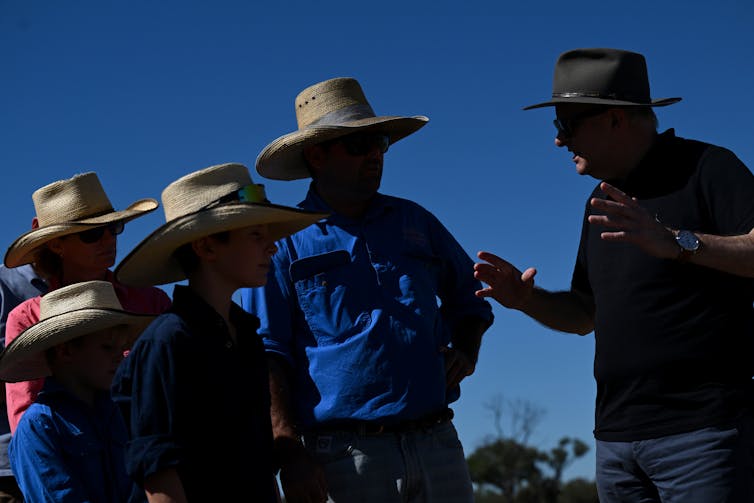
Farmers can benefit from hosting renewables. Pictured: Prime Minister Anthony Albanese talking to farmers during the election campaign. Lukas Coch/AAP

Concerns that wind farms and solar panels might slash the value of neighbouring properties have been shown to be ill-founded.

And importantly, the increasing frequency of extreme climate events is already a challenge to Australia’s agriculture sector and will become more difficult. Tackling the problem is in regional Australia’s interests. 

The Nationals’ hostility to renewable energy comes at a cost to rural and regional Australians. But Littleproud clearly could not balance competing views within the Nationals on energy policy while inking a deal with the Liberals. Instead, the party will now go it alone.

Childcare is just the latest failure of Australia’s privatisation push. It’s time for an ideology overhaul

My latest in The Guardian 

series of ABC 7.30 reports tells a familiar story of failure in human services. Inadequate staffing, dangerous incidents brushed under the carpet, ineffective regulation and, at the back of it all, for-profit businesses, either ASX-listed or financed by private equity.

This time it’s childcare but the same problems have emerged in vocational educationaged careprisons, hospitals and many other services. Every time the answer we get is the same. More and better regulation, we are told, will make the market work better, allowing competition and consumer choice to work their magic.

The reason for this record of failure has been pointed out many times, and ignored just as often by policymakers. Businesses providing publicly funded or subsidised services can increase their profits in one of two ways. The hard way is to make technical or organisational innovations that provide a better service at lower cost. The easy way is to avoid meaningful improvements and approach rules with a “tick a box” attitude.

It would appear the easiest way of all, however, as claimed in the reports on childcare, is to cut corners on service quality, particularly in areas that are hard to check. Another favoured strategy is “cream-skimming” – providing services where the regulatory setup yields high margins while leaving the public or non-profit sector to deal with the intractable problems.

All of these strategies were employed on a huge scale to exploit VET Fee-Help, the vocational education and training scheme that represented the first big push towards for-profit provision of human services, beginning in 2009. Fee-Help was a disaster. Before it was scrapped in 2017 it swallowed billions of dollars of public money. The scheme left students with worthless qualifications and massive debts, which were eventually wiped by the Morrison government in 2019.

The central statement of the ideology driving public policy in this area is the Productivity Commission’s 2016 report on competition in human services. The report presented market competition as the desired model for a wide range of human services, including social housing, services at public hospitals, specialist palliative care, public dental services, services in remote Indigenous communities and grant-based family and community services.

After being presented with ample evidence of the problems of for-profit provision, the PC responded with a single, evidence-free sentence: “The Commission considers that maximising community welfare from the provision of human services does not depend on adopting one type of model or favouring one type of service provider.”

Although the PC had previously hailed competition in VET as a model of well-regulated competition, the undeniable failure of Fee-Help was now blamed on the regulator, the Australian Skills Quality Authority. But the only solution offered was more and better “safeguards”, a term which usually means Band-Aid solutions to fundamental design problems.

Since then we have seen catastrophic failures in aged care, the reversal of the move to private prisons and the exclusion of acute care hospitals from so-called “public-private partnerships”.

Even the PC is backing away from the for-profit model. Its latest report on childcare noted the growing dominance of the for-profit sector and observed that a much larger proportion of for-profit providers failed to meet standards. The chair of the inquiry, Prof Deborah Brennan, provided a supplementary statement urging action to reduce the share of for-profit businesses. Brennan observed that aspects of Australia’s “highly marketized approach” to childcare will “work against equitable, high quality provision unless moderated”.

“Accordingly, I suggest measures to strengthen and expand not for-profit provision, attention to the financial strategies of large investor-backed and private equity companies, and regulatory strategies to discourage providers whose business models and labour practices do not align well with the National Cabinet vision,” she wrote.

This expert judgment was a bridge too far for the PC ideologues, who ducked the issue for the most part. An exception was the idea of a tendering scheme for “persistent ‘thin’ markets”, where the commission proposed to “strongly prefer not-for-profit providers where a service is completely or substantially directly funded by government”It was unclear why this preference did not extend to the much larger part of the sector that relies on indirect government funding through subsidies to parents.

To its credit, the Albanese government has done a good deal to repair the damage done to the public Tafe system, with increased funding and fee-free places. For-profit providers are complaining about the “complete annihilation” of the private sector, even as yet more dodgy practices are revealed.

But we need more than a sector-by-sector response. Rather than repeating the cycle of for-profit booms, failures, exposés and re-regulation, it’s time to admit that that the ideology of market competition has failed. For-profit corporations have no place, or at most a peripheral place, in the provision of basic human services, including health, education and childcare. “People before profit” might seem like a simplistic slogan but it is much close to the truth than “competition and choice”.

Monday Message Board (on Wednesday)

Sorry about the delay on this one, and absence of recent posts. I’ve been in a bit of a rush, getting ready for travel. Will hopefully return to normal service soon.

Another Monday Message Board. Post comments on any topic. Civil discussion and no coarse language please. Side discussions and idees fixes to the sandpits, please.

I’m now using Substack as a blogging platform, and for my monthly email newsletter. For the moment, I’ll post both at this blog and on Substack. You can also follow me on Mastodon here.

Not so deep thoughts about Deep AI

Back in 2022, after my first encounter with ChatGPT, I suggested that it was likely to wipe out large categories of “bullshit jobs”, but unlikely to create mass unemployment. In retrospect, that was probably an overestimate of the likely impact. But three years later, it seems as if an update might be appropriate.

Source: Wikipedia

In the last three years, I have found a few uses for LLM technology. First, I use a product called Rewind, which transcribes the content of Zoom meetings and produces a summary (you may want to check local law on this). Also, I have replaced Google with Kagi, a search engine which will, if presented with a question, produced a detailed answer with links to references, most of which are similar to those I would have found on an extensive Google search, avoiding ads and promotions. Except in the sense that anything on the Internet may be wrong, the results aren’t subject to the hallucinations for which ChatGPT is infamous.

Put high-quality search and accurate summarization together and you have the technology for a literature survey. And that’s what OpenAI now offers as DeepResearch I’ve tried it a few times, and it’s as good as I would expect from a competent research assistant or a standard consultant’s report. If I were asked to do a report on a topic with which I had limited familiarity, I would certainly check out what DeepResearch had to say.

Read More »