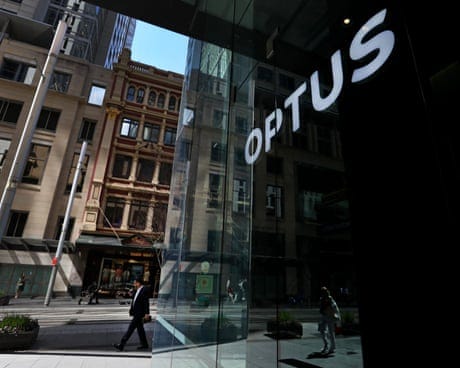
The Optus triple zero disaster was a classic failure of neoliberal reform. In place of the single emergency call system that worked in the period before privatisation and liberalisation, we now have multiple networks, which are supposed to connect their calls to Telstra. Optus lobbying earlier this year successfully delayed a proposal(introduced in response to an earlier outage in 2023) for real-time information sharing on such outages.
Instead, calls reporting the most recent failure were directed to offshore call centres, where the operators failed to “escalate” them properly. The days-long delays in working out the extent of the problem reflect a corporate culture where triple zero calls are seen as an inconvenient cost burden rather than a vital community service. It’s the same culture that has seen Optus fined heavily for misleading consumers.
But until the recent spate of failures, telecommunications was seen as one of the increasingly rare sectors where privatisation and competition had produced improved outcomes for consumers. During the era of neoliberalism, the cost of telecommunications has plummeted, while the range of services has expanded massively. Whereas an international phone call cost more than a dollar a minute when telecoms were deregulated in the 1990s, they now cost only a cent or two per minute even on those plans that don’t include unlimited calls. As a result, telecommunications is regularly cited as an area where neoliberal reform has been successful.
A closer look at the record tells a different story. Technological progress in telecommunications produced a steady reduction in prices throughout the 20th century, taking place around the world and regardless of the organisational structure. The shift from analog to digital telecommunications accelerated the process. Telecom Australia, the statutory authority that became Telstra, recorded total factor productivity growth rates as high as 10% per year, remaining profitable while steadily reducing prices.
But for the advocates of neoliberal microeconomic reform, this wasn’t enough. They hoped, or rather assumed, that competition would produce both better outcomes for consumers and a more efficient rollout of physical infrastructure. Optus was an artificial creation of the reform process. In return for acquiring the publicly owned satellite network Aussat, Optus was given a regulatory head-start of six years, during which it was the only competitor to Telstra.
The failures emerged early. Seeking to cement their positions before the advent of open competition, Telstra and Optus spent billions rolling out fibre-optic cable networks. But rather than seeking to maximise total coverage, the two networks were virtually parallel, a result that is a standard prediction of economic theory. The rollout stopped when the market was fully opened in 1997, leaving parts of urban Australia with two redundant fibre networks and the rest of the country with none.
The next failure came with the rollout of broadband. Under public ownership, this would have been a relatively straightforward matter. But the newly privatised Telstra played hardball, demanding a system that would cement its monopoly position in fixed-line infrastructure. The end result was the need to return to public ownership with the national broadband network, while paying Telstra handsomely for access to ducts and wires that the public had owned until a few years previously.
Meanwhile the hoped-for competition in mobile telephony has failed to emerge. The near-duopoly created in 1991, with Telstra as the dominant player and Optus playing second fiddle, has endured for more than 30 years. The 2020 decision to allow a merger between the remaining serious competitors, TPG and Vodafone, was an effective admission that no more than three firms could survive. Unsurprisingly, prices have increased significantly since then.
And in crucial respects, three will soon become two. Optus and TPG now share their regional networks, a recognition of the fact that telecommunications infrastructure is a natural monopoly, and that the idea of “facilities-based competition” is an absurdity. If we are to have competition, the best model is that of the NBN. That is, a single wholesale “common carrier”, which allows retailers using its network to compete for customers.
But as we’ve learned with privatised electricity distribution businesses, privately owned monopolies are always looking for ways to increase profits at the expense of consumers. Regulation has proved ineffective, a fact that is unsurprising given the massive imbalance of resources between regulators and the companies they oversee.
The likely outcome of the triple zero disaster will be the addition of some new patches in the regulatory quilt and the ritual defenestration of some senior executives. But what we actually need is a reassessment of the whole neoliberal experiment and an acceleration of the return to public ownership of infrastructure that is already under way.
 John Quiggin
Renationalize the lot. By which I mean nationalize everything that was privatized in Australia from the 1980s onwards. I refer to entities like the Commonwealth Bank of Australia, Telstra, Qantas, CSL and operations like power generation and distribution. All should be returned to one hundred percent public ownership. That’s just the beginning of what we should do to completely retrench neoliberalism.
However, much as I would wish it, I do not see any of this happening until the nation is in extremis. That is to say when our economy and society are patently and obviously collapsing then people may demand it and achieve it. By 2035 or perhaps even 2030, it will become obvious to most that our economy and society are collapsing under the dead hand of neoliberalism.
Climate change is accelerating out of control and neoliberalism has wrecked our capacity to build and maintain robust and effective structures and infrastructure. This will all become glaringly obvious very soon in historical terms. What will matter then is how people react and whether we have enough remnant capacities to save ourselves. It will be touch and go at best.
Renationalising sounds awfully like MAGA, we need to reinforce the separation between business and govt, not merge them.
Roger-f,
They are nothing alike. Historically, our natural monopolies were government owned in Australia. They worked well and the outcomes were more equitable for all classes in society. Indeed it helped to reduce class divides. Have you read any economic history?
Amen. We have it bad here too.
A govt owned service is one that is subject to politics and policy – look at the pressures exerted on statutory bodies such as the ABC, CSIRO and BOM.
The govt privatisations of the past funded vote buying, not infrastructure spend. Govt now has to fund infrastructure through a funding pool diminished by tax cuts. In NSW the Minns govt is battling cost blowouts on rail services, and other infrastructure, and I don’t think that the public will be happy to pay extra.
Historically the popularity and effectiveness of a ruler can be undermined by the perception that the people are being excessively or unjustly taxed.
Roger_f,
Your analysis is wrong in a number of important ways. It also appears to be based on one or several misconceptions about governments’ relationship(s) with the populace in general, the electorate, workers, unions, corporations, businesses and also the rich and oligarchs as special over-privileged and over-powerful cases.
Renationalising natural monopolies, in a democracy, and within a Keynesian style mixed economy and welfare economy would be nothing like MAGA. It would be much more like the antithesis of MAGA.
In addition, I don’t think I need to spend my time in blogs writing what a Keynesian / Welfare economy is. A decent AI can handle that. The following is from Google AI.
“A Keynesian-style mixed economy integrates private and public sectors, using government intervention (fiscal and monetary policy) to stabilize the business cycle and maintain economic growth. A welfare economy, or welfare state, is a system where the state takes responsibility for the overall well-being of its citizens, providing essential services like healthcare, education, and unemployment benefits. These two concepts often overlap, with Keynesian economics providing the framework for the state’s active economic role necessary to support robust welfare programs and a prosperous, stable society.
Keynesian Style Mixed Economy:-
Government Intervention: Advocates for government action to correct market failures and smooth out economic fluctuations.
Fiscal Policy: During economic downturns, governments should lower taxes and increase spending (deficit spending) to stimulate demand and create jobs. Conversely, during periods of high growth, they should reduce spending and increase taxes to control inflation.
Monetary Policy: Central banks can use tools like adjusting interest rates to influence the economy.
Goal: To stabilize the economy over the business cycle and prevent deep recessions, relying primarily on market principles but with public sector guidance when needed.
Welfare Economy (Welfare State):-
State Responsibility: The state takes responsibility for ensuring a minimum standard of welfare for its citizens.
Services Provided: This includes a range of services such as universal healthcare, public education, social security, and unemployment compensation.
Economic Foundation: The underlying principle is that keeping citizens economically afloat (by providing a safety net) supports a functional and stable economy by maintaining demand and social cohesion.
Relationship between the two:-
Interdependence: The Keynesian framework provides the economic policy tools to fund and manage the extensive social programs of a welfare state.
Demand-Side Stability: By stabilizing the economy through demand management, Keynesian policies help ensure the ongoing demand for goods and services that a prosperous welfare society requires.
Social Well-being: The welfare economy’s focus on social welfare is often seen as a natural extension of Keynesian principles, recognizing that a market economy can produce inefficient outcomes and hardships that require public solutions.” Google AI.
MAGA is a loosely defined concept utilising nostalgia to further political power. Keynes also attracts nostalgia, for the post War prosperity.
How would you nationalise CBA, TLS and CSL? Expropriate all the shares? – political suicide.
MartinK
Roger_f said:
“A govt owned service is one that is subject to politics and policy – look at the pressures exerted on statutory bodies such as the ABC, CSIRO and BOM.”
You seem to have overlooked the more insidious pressures that would be legitimately(*) exerted on them by their new owners if they were passed into private hands.
(*) Apart from any regulation which, as per John’s article, has in general been pretty ineffective.
Roger_f,
It would be disingenuous to claim or even imply that MAGA is a harmless nostalgia movement, if that is what you are doing. What has coalesced around Trump, MAGA and Project 2025 is a very dangerous, very organised, very determined neo-fascist movement.
https://www.britannica.com/topic/MAGA-movement
How would I recommend we renationalise? Simplistically;
The political will tends to come when too many people start hurting from the current system. While a complacent majority of people think they are safe sitting on their own little pile of money, or portfolio of shares, even as wider society around them starts to disintegrate from inequality, there will not be the necessary political will. When the s**t really hits the fan, as it very soon will, and the financial and social disintegration begins eating into and shrinking the middle class, then the political will will be found. People will be mad as hell and clamouring for change.
As J.Q. says “Optus’s triple zero debacle is further proof of the failure of the neoliberal experiment”. More plainly it is further proof of the failure of the privatisation experiment in the arenas of natural monopoly and public goods and services.
As I say in points 2 and 3, work on a case by case basis and leverage real events as they arise. There were, are and will be plenty of opportunities to do this and do it in ways which don’t expropriate middle-class sized (little but widespread) piles of money and share portfolios.
A “Were” Example:
There was an opportunity with QANTAS during and after the initial COVID-19 crisis. The Federal Government tipped essentially bailout money into QANTAS.
https://www.theguardian.com/business/2021/jul/22/qantas-on-track-to-collect-2bn-of-support-as-morrison-government-criticised-for-not-seeking-stake
The Federal government could have and should have acquired a stake in the airline for that taxpayer money. Following such a strategy, a federal government can acquire / reacquire an enlarging stake in a natural monopoly business. Eventually, it could acquire / reacquire a controlling stake which puts it well on the way to full re-nationalisation.
An “Are” Example:
The current Optus fiasco could be leveraged to take back national control of the 000 service, reduce Optus’s market privileges and reconsolidate, re-nationalise aspects of communication services. Economists like J.Q. are not short of workable ideas to do this. Again it just takes public demands and political will.
“Will be” General Example:
Whenever there is a major crisis unsolvable by semi-disorganised, semi-anarchic free markets, this becomes an opportunity, in some cases, for re-nationalisation or nationalisation of some goods and services. It should always be assessed on a case by case basis. The good or service to be nationalised must meet certain criteria including popular demand for it and often natural monopoly or social welfare / social cohesion characteristics. Professional academic economists and political scientists could provide more information on the necessary characteristics. We should not trust the special pleading of business economists and business-aligned political scientists, lobby groups and think tanks.
There, that was easy wasn’t it? You thought to find me and the relevant published experts (when referenced) bereft of ideas and easily silenced. Not so, my friend.
MartinK
Optus is owned by Singtel, which in turn is owned by Temasek, a Singapore govt owned company.
Singtel has not been without its performance issues.
Ikonoclast
You are verballing me.
Roger_f,
How so? I did add the rider “if that is what you are doing”.
None of the rest of my post is verballing, it is cogent argument.
It appears you have a problem with being opposed by cogent argument after introducing the misdirection of a specious debating point employing that cheap one-liner “nostalgia” criticism.
I can also more fully point out the issue of the disguised false moral equivalence implicit in the original “nostalgia” argument or “put-down” debating point. Whether consciously intended or not the false equivalence needs to be highlighted and refuted.
“The false moral equivalence fallacy occurs when two distinct actions or situations are falsely presented as having the same moral significance, significance, or weight. It’s a type of false equivalence fallacy where superficial similarities between two things are used to mask fundamental differences in their nature, context, or consequences, leading to a distorted and misleading comparison. A common tactic associated with this fallacy is whataboutism, where attention is diverted from criticism by pointing to a fault in the accuser.” – Google AI.