Mitigating the productivity damage from Covid-19: the case for improved ventilation standards

I wrote this for the Cleaner Air Collective, who used it as an input to their submission to the Productivity Roundtable

Cleaner Air Submission here

Given the purpose of the exercise, the discussion is framed in terms of productivity though many of the issues are broader

Covid-19 is a serious economic problem for Australia, not only as a major cause of death, but because of serious impacts in productivity.

Although most Covid-19 deaths occur among people over 80, there were over 200 deaths from Covid among people aged 40-64. This is a mortality rate comparable to that of road trauma (377 deaths in this age group in 2022) As of 2023, excess mortality remained high at 5 per cent

With the effective abandonment of most forms of reporting, it is hard to assess the prevalence and impact of Covid-related morbidity. However, there is substantial global evidence of increased worker absenteeism associated with both acute Covid-cases and post-Covid conditions (long Covid). Evidence also suggests cumulative damage to various organs associated with repeated infection.

Read More »

A billion people would be plenty to sustain civilisation …

… as long as they are healthy, well fed and well educated

Much of the panic about falling birth rates can be dispelled once we realise that (barring catastrophe) there will almost certainly be more people alive in 2100 than there were in 2000. But what about the distant future? Dean Spears, co-author of After the Spike has kindly provided me with projections showing that with likely declines in fertility the world population will decline by half each century after 2100, reaching one billion around 2400. Would that be too few to sustain a modern civilisation ?


We can answer this pretty easily from past experience. In the second half of 20th century, the modern economy consisted of the member countries of the Organization For Economic Co-Operation and Development (OECD). Originally including the countries of Western Europe and North America, and soon extended to include Australia and Japan, the OECD countries were responsible for the great majority of the global industrial economy, including manufacturing, modern services, and technological innovation.

Except for some purchases of raw materials from the “Global South”, produced by a relatively small part of the labour force, the OECD, taken as a whole, was self-sufficient in nearly everything required for a modern economy. So, the population of the OECD in the second half of last century provides an upper bound to the number of humans needed to sustain such an economy. That number did not reach one billion until 1980.

Read More »

No more anti-wokism

I can’t be bothered engaging with people who use “woke” as a pejorative, or similar Trumpist rhetoric. I’ve therefore banned a couple of commentators (Jack Strocchi and Svante) who persisted in using it, despite warnings. There are plenty of other places where they can bloviate if they choose. Anyone offended by my decision on this is welcome to a full refund on the way out.

Whatever happened to Romney Republicans?

Have they changed, or just become their worst selves

While Trump is unpopular with a majority of Americans, his support among Republicans remains solid. That’s despite blatant corruption, fascist policies and a failure to deliver any of the economic benefits he promised. Faced with this depressing fact, the standard New York Times response has been to send an intrepid reporter to “Trump Country” (rural Kentucky or Midwestern diners) to find out what is going on.

But it would be far more instructive to send them to Long Island, where Trump won both counties in 2024. Long Island voters have given solid support to Republicans at all levels. Even as he was crushingly defeated in New York as a whole, Mitt Romney got close to half the vote in Suffolk and Nassau counties. Trump did a few percentage points better in 2024, winning both. But he would have gone nowhere if not for the solid support of Romney voters

This doesn’t fit at all with the usual stories about Trump voters. The residents of Long Island are not the “left-behinds” routinely described in explanations of Trump’s appeal. The average income is over $100 000 and unemployment rates have long been around 3 per cent. Like most New Yorkers, Long Islanders have been beneficiaries of the globalised economy of which Romney was a symbol. And, if you were to believe Jonathan Haidt’s The Righteous Mind they did so because they valued honor, loyalty and purity, qualities Trump routinely trashes.

Democrats from Hillary Clinton on assumed that these contradictions would lead suburban Republicans to abandon Trump in numbers large enough to offset any losses of Democrats attracted by Trump’s racism and misogyny. Evidently this is not the case. Not only have the Republicans who once voted for Romney maintained their support for Trump but they have preferred him to any Republican alternative. And, with few exceptions, they have embraced Trump’s racist and fascist policies, even as he approaches outright Nazism.

What has happened here? Has Trump, as Walter Olson suggests, radicalised his followers leading them to support positions they would once have rejected? Or has he simply allowed them to reveal themselves (or at least their worst selves) as the racists and fascists they always were?

The answers to these questions are academic, in the pejorative sense of the term, as regards the US. Romney-Trump voters have made their choice, and there is no going back to old-style Republicanism. Perhaps, if enough of them realise that their choices have been both evil and disastrous for the US as a whole, the regime might collapse relatively quickly. But there is no sign of that.

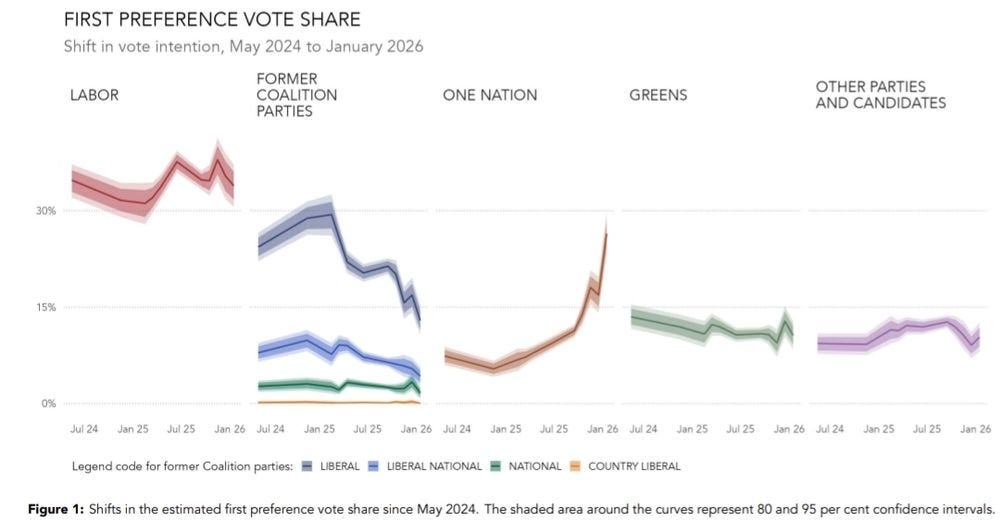
The big question for those of us living outside the US is whether it could happen here. As long as the far-right remains essentially a protest party for low-education voters who are mostly disengaged and disaffected, like Pauline Hanson’s One Nation in Australia, its occasional flare-ups can be expected to fade, as appears to have happened with Geert Wilders in the Netherlands. But if the middle class and business base of the mainstream conservative parties goes the same way, democracy is in trouble.

Read More »

The end of US democracy

I’ve held off posting this in the hope of coming up with some kind of positive response, but I haven’t got one.

When I wrote back in November 2024 that Trump’s dictatorship was a fait accompi there was still plenty of room for people to disagree. But (with the exception of an announced state of emergency) it’s turned out far worse than I thought possible.

Opposition politicians and judges have been arrested for doing their jobs, and many more have been threatened. The limited resistance of the courts has been effectively halted by the Supreme Court’s decision ending nationwide injunctions. University leaders have been forced to comply or quit. The press has been cowed into submission by the threat of litigation or harm to corporate owners. Political assassinations are laughed about and will soon become routine. With the use of troops to suppress peaceful protests, and the open support of Trump and his followers, more deaths are inevitable, quite possibly on a scale not seen since the Civil War.

The idea that this process might be stopped by a free and fair election in 2026 or 2028 is absurdly optimistic. Unless age catches up with him, Trump will appoint himself as President for life, just as Xi and Putin have done.

None of this is, or at least ought to be, news. Yet the political implications are still being discussed in the familiar terms of US party politics: swing voters, the centre ground, mobilisation versus moderation, rehashes of the 2024 election and so on. Having given up hope, I have no interest in these debates. Instead, I want to consider the implications for the idea of democracy.

The starting point is the observation that around half of all US voters at the last three elections have supported a corrupt, incompetent, criminal racist and rapist, while another third or more of US citizens have failed to vote at all. And Trump’s support has not been diminished to any significant extent (if at all) by his actions since returning to power.

Any claims that might be made to exonerate Trump’s voters or mitigate the crime they have committed don’t stand up to scrutiny. The US did not face any kind of crisis that might justify such an extreme outcome (as, for example, Germany did in 1933). Unemployment was at historically low levels. The short-lived inflation resulting from the pandemic was well below the rates of the late 20th century, crime was far below those rates. And so on. The only real driving factor was the resentment and hatred felt by Trump’s voters for large groups of their compatriots.

One part of this is fear of immigrants, particularly but not exclusively, asylum seekers and other undocumented immigrants. But this fear has long been a winning issue for the political right, in many countries including Australia. It has not produced anything like the turn to dictatorship we have now seen in the US.

In this context what matters is not the marginal groups of swinging voters who have absorbed so much attention: the “left behind”, the “manosphere” and so on. It’s the fact that comfortably off, self-described “conservative”, white suburbanites, historically the core of the Republican base, have overwhelmingly voted for, and welcomed, the end of American democracy.

This is something that, as far as I can tell, is unprecedented in the history of modern democracy, and threatens the basic assumptions on which democracy is built. While the last 200 years of modern (partial or complete) democracy have seen plenty of demagoguery, authoritarian populism and so on, these have invariably been temporary eruptions rejected, relatively quickly, by an enduring democratic majority. The idea that a party that has been part of the constitutional fabric of a major democracy for more than 150 years, would abandon democracy and keep the support of its voters was inconceivable. That’s why so many have refused to admit it, even to themselves.

Nothing lasts forever, but there is no obvious way back from dictatorship for the US. Viewed in retrospect, the the Republican party was a deadly threat to US democracy from the moment of Trump’s nomination in 2016 and certainly after the 2021 insurrection.

With the benefit of hindsight, Biden might have declared a state of emergency immediately after the insurrection, arrested Trump, and expelled all the congressional Republicans who had voted to overturn the election. But this would itself have represented an admission that democratic norms had failed. It was far more comfortable to suppose that Trump had been an aberration and that those norms would prevail as they had done at previous moments of crisis. That is no longer possible.

As I siad, I’ve held off posting this in the hope of coming up with some kind of positive response, but I haven’t got one. The best I can put forward is that the US, founded on slavery, has never been able to escape its original sin, and is unique in that respect. Every country has its original sin and a dominant group with its racist core. But only in the US (so far) has that core secured unqualified majority support. The downfall of American democracy should serve as a warning. For conservative parties, flirting with fascism is a deal with the devil that must be avoided. For the left, the nostalgic appeal of the “white (implicitly male) working class” should not tempt us into pandering to racist and misogynist reaction.

I don’t know whether that will be enough to save us. At least in Australia, Trumpism is political poison. But until we understand that Trumpism is not an aberration but the course Americans have chosen, we will not be able to free ourselves from our past allegiance to an idea which is now an illusion.