– but this dream has failed before. My latest in The Conversation over the fold
Last week, opposition leader Peter Dutton called for Australia to join what he dubbed the “international nuclear energy renaissance”.
The same phrase was used 20 years ago to describe plans for a massive expansion of nuclear. New Generation III plants would be safer and more efficient than the Generation II plants built in the 1970s and 1980s. But the supposed renaissance delivered only a trickle of new reactors – barely enough to replace retiring plants.
If there was ever going to be a nuclear renaissance, it was then. Back then, solar and wind were still expensive and batteries able to power cars or store power for the grid were in their infancy.
Even if these new smaller, modular reactors can overcome the massive cost blowouts which inevitably dog large plants, it’s too late for nuclear in Australia. As a new report points out, nuclear would be wildly uncompetitive, costing far more per megawatt hour (MWh) than it does to take energy from sun or wind.
The nuclear renaissance that wasn’t
Early in the 21st century, the outlook for nuclear energy seemed more promising than it had in years. As evidence on the dangers of global heating mounted, it became clear that the expansion of coal-fired power in the 1990s – especially in Asia – had been a mistake.
And despite the prevalence of slogans such as ‘Solar not Nuclear’, the cost of solar and wind energy was then too high to make fully renewable systems a reality.
The rise of Generation III and III+ designs promised to eliminate or at least greatly reduce the risk of accidents like those at Three Mile Island and Chernobyl.
The time seemed right for a nuclear renaissance – especially in the United States. Between 2007 and 2009, 13 companies applied for construction and operating licenses to build 31 new nuclear power reactors. But all but two of these proposals stayed on paper.
Read more: Can nuclear power secure a path to net zero?
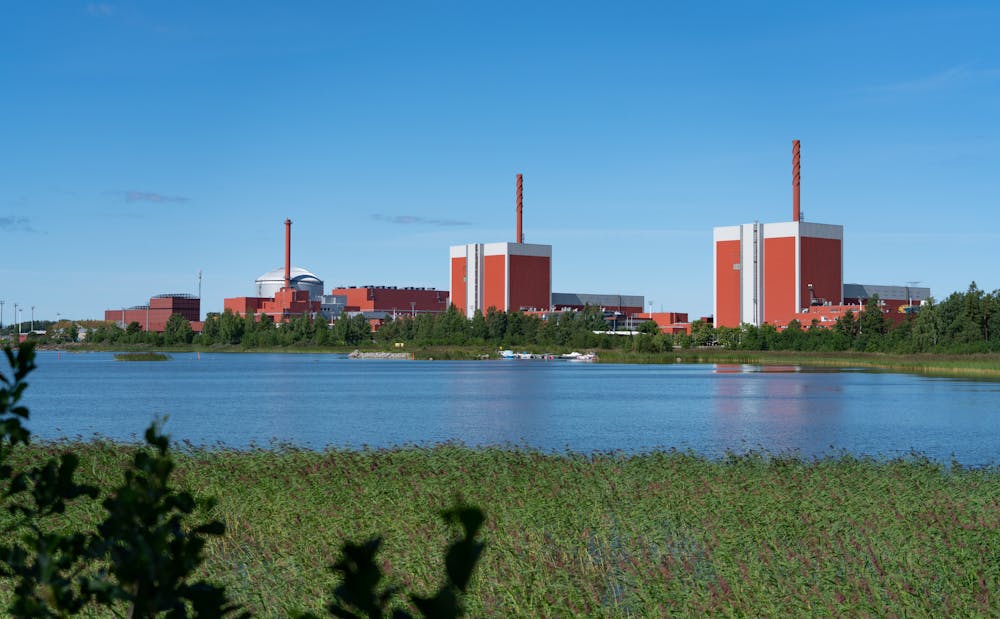
The first, in Georgia, is expected to be completed this year after running way behind schedule and way over budget. The other project in South Carolina was abandoned in 2017 after billions of dollars had already been poured into it. The same disastrous cost and time blowouts have hit new reactors in France (Flamanville, 10 years behind schedule), Finland (Olkiluoto, which opened this year after a 14 year delay) and the UK (Hinkley Point C, still under construction with cost and time blowouts).
China has built a trickle of new nuclear plants, commissioning three or four a year over the last decade. China currently has about 50 gigawatts (GW) of nuclear power capacity. This pales into insignificance compared to the nation’s extraordinary expansion of solar, with 95-120 gigawatts of additional capacity expected this year alone.
Nuclear falls short on cost, not politics
What went wrong for nuclear? Despite the claims of some nuclear advocates, the renaissance in the 2000s did not fall short because of political resistance. Far from it – the renaissance had broad political support in key markets.
And, unlike in the 1970s where intense anti-nuclear sentiment was tied to fears of nuclear war, environmentalists in the 2000s had refocused on the need to stop burning carbon-based fuels. Anti-nuclear campaigns and protest marches were almost non-existent.
What stopped the nuclear noughties was a bigger problem: economics. Governments looking at nuclear saw the cost and time over-runs and decided it wasn’t worth it.
As megaproject expert Bent Flyvbjerg has shown, cost overruns like these are typical. First of a kind nuclear plants offer an extreme example of the problem. To date, no Generation III or III+ design has been produced at scales large enough to iron out the inevitable early problems.
At the same time, other energy sources were growing in importance. The United States found ways of tapping its unconventional shale gas reserves.
All the while, solar and wind were getting cheaper and cheaper, driven by generous subsidies from European governments such as Germany and manufacturing economies of scale in China. Solar and wind production ramped up exponentially, growing around 30% a year every year since the beginning of the century.
In Australia, the writing was on the wall by 2007, when an inquiry found new nuclear power would struggle to compete with either coal or renewables. A string of subsequent inquiries have come to precisely the same conclusion.
Could it be different this time?
To make nuclear viable these days, advocates believe, means making it safe, cheap and easy to build. No more megaprojects. Instead, build small reactors en masse on factory production lines, ship them to where they are needed and install them in numbers matching the needs of the area.
Advocates hope the efficiency of factory production will offset the lower efficiency associated with smaller capacity. Ironically, off-site mass production and modular installation is the basis of the success of solar and wind.
To date, the most promising reactor design is NuScale’s VOYGR. It has yet to be produced and the US company has no firm orders. It does have preliminary agreements to build six reactors in Utah by 2030 and another four in Romania.
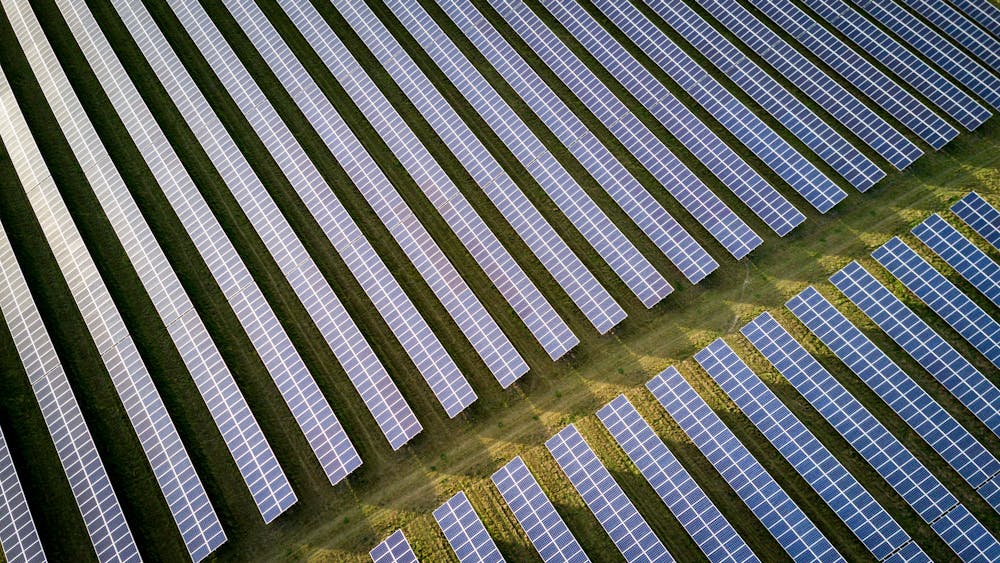
If all are built, that’s still less than the capacity of a single large Gen III plant. More strikingly, it’s about the same as the new solar capacity installed every single day (~710 MW) this year around the world.
Even with US government subsidies, NuScale estimates its power would cost A$132 per MWh. In Australia, average wholesale prices in the first quarter of 2023 ranged from $64 per MWh in Victoria to 114 per MWh in Queensland.
So why, then, is Australia’s opposition still talking about new nuclear? Dutton claims Australia’s future nuclear submarines to be built under the AUKUS deal are “essentially floating SMRs”. This is a red herring – while submarine reactors are small, they are not modular.
The simplest answer is political gain. Announcements like this yield political benefits at low cost.
The US, UK and France have decades of experience in nuclear power, even if failures outnumber successes. So yes, there is a slim chance the latest “nuclear renaissance” will succeed in these countries.
But in Australia, promises to create a nuclear power industry from scratch based on as yet unproven technologies and in competition with cheap renewables is simply delusional.
 John Quiggin
The Ukraine war has reminded us starkly of the non-economic risks from nuclear power. The huge Enerhodar nuclear power plant on the Dnipro river seems to have been built solidly to a sound design, and operated SFIK without serious incident for decades: but it has been caught up in Russia’s war of aggression and weaponised by the invaders to create artificial risks to the general population, on top of depriving the country of a large part of its electrical generating capacity. The specific scenario is unique and would not apply to a hypothetical Australian nuclear programme, but the general issue of energy security can’t be ignored.
Australia cannot be self-sufficient in nuclear technology. For the long life (40 years) of any reactors, it would remain dependent on foreign suppliers, especially the USA and Japan, for critical fuel, spare parts and services. On that long a horizon, the risk of political extortion over these supplies can’t be ruled out – by a second Trump, or a similar populist rightwinger in Japan.
Australia is not self-sufficient in renewables either. But solar panels need no after-sales services, and wind turbines only humdrum maintenance and replacement parts that could easily be replaced domestically or from other foreign sources in an emergency. Inverters for instance need to be replaced at least once in the working life of solar panels, but they are not tied to particular models and could easily be manufactured domestically. Dud panels in an array can be replaced by similar models from different suppliers.
This parrot* is dead.
* Nuclear power.
Do the cost disadvantages of nuclear relative to renewables persist if energy distribution and energy storage costs for renewables are factored in? The required expansion of the distribution network to account for solar and wind does seem a huge and expensive task as do the storage costs to ensure we can switch on the electric lights in the evening.
The CSIRO cost estimates I have seen don’t make this clear.
I am puzzled that the share prices of the uranium miners are so strong if the industry is about to fade away. In response to James’ point – a security argument in favour of nuclear is that Australia has one quarter of the world’s uranium reserves. A guaranteed supply and plenty of storage options for waste.
“I am puzzled that the share prices of the uranium miners are so strong if the industry is about to fade away.” – Harry C.
Lol, like the market has never made an irrational valuation, especially in mining shares and commodity prices.
For comparison, the current price is about US$55 per pound. I assume this is for yellow cake uranium of a given standard.
Uranium prices have risen strongly over the past year. There is no evidence markets are behaving irrationally:
https://ycharts.com/indicators/uranium_spot_price
JQ: – “Even with US government subsidies, NuScale estimates its power would cost A$132 per MWh.”
An IEEFA post by David Schlissel on 11 Jan 2023, headlined Eye-popping new cost estimates released for NuScale small modular reactor, included a graph showing:
UAMPS NuScale SMR Target Price of Power:
2016: _ _ _ _US$55/MWh
2021: _ _ _ _US$58/MWh
Jan 2023: _ US$89/MWh (including US$30/MWh IRA subsidy)
https://ieefa.org/resources/eye-popping-new-cost-estimates-released-nuscale-small-modular-reactor
US$120–130/MWh (without IRA subsidy) = circa AU$176–191/MWh (at AU$1 = US$0.68 exchange rate)
Per E&E News article by Peter Behr published 14 Dec 2022, headlined Rising costs imperil nation’s leading small reactor project, it included:
https://www.eenews.net/articles/rising-costs-imperil-nations-leading-small-reactor-project/
So it seems NuScale’s proposed 6-module UAMPS SMR demonstration project still needs more financial subscribers to proceed further. I’d suggest this is a rather inconvenient detail that seems to be missed/ignored by many SMR boosters.
I’d suggest any pilot SMR plants would take at least until 2035 to properly evaluate. An establishment of large scale manufacturing would probably take at least another ten more years. So being supremely optimistic, Australia likely wouldn’t see an operating SMR until the late 2040s to early 2050s.
Meanwhile, per AEMO’s generating unit expected closure year data (dated 5 May 2023), the NEM’s coal-fired generator currently expected order of closure is:
Eraring, NSW: 4x 720 MW, announced closure 19 Aug 2025;
Callide B, QLD: 2x 350 MW, expected closure in 2028;
Yallourn W, VIC: 2x 360 MW + 2x 380 MW, expected closure in 2028;
Vales Point B, NSW: 2x 660 MW, expected closure in 2029;
Bayswater, NSW: 4x 660 MW, expected closure in 2033;
Gladstone, QLD: 4x 280 MW, expected closure in 2035;
Loy Yang A, VIC: 1x 530 MW + 3x 560 MW, expected closure in 2035;
Tarong, QLD: 2x 350 MW, units 1 & 2 expected closure in 2036;
Tarong, QLD: 2x 350 MW, units 3 & 4 expected closure in 2037;
Mt Piper, NSW: 2x 730 MW, expected closure no later than 2040;
Kogan Creek, QLD: 1x 750 MW, expected closure 2042;
Stanwell, QLD: 4x 635 MW, expected progressive closure from 2043 to 2046;
Loy Yang B, VIC: 2x 535 MW, expected closure in 2047;
Millmerran, QLD: 2x 440 MW, expected closure in 2051.
Callide C, QLD: 2x 460 MW, so far the shutdown date is undisclosed. Unit C4 is still being repaired following a catastrophic explosion on 25 May 2021.
Nuclear technologies cannot be deployed fast enough to compensate for the expected closure of many aging, increasingly unreliable and more costly to operate coal-fired plants currently supplying electricity to Australia’s NEM. Waiting for new nuclear power technologies to become operational increases the risks of Australia’s ‘lights going out’.
Nuclear is a stalking horse for coal & gas.
https://independentaustralia.net/environment/environment-display/nuclear-power-is-a-stalking-horse-for-gas,15174
Why isn’t the media challenging Peter Dutton on this issue? Who’s best interests is Dutton working for?
JQ, your ‘nuclear is a dead parrot’ (as Ikon tagged it,) pieces save me time. The cage changes, new bird – coliur change or size change – it is still ‘nuclear is a dead parrot’
Thanks.
A template may be handy! Just drop in the new thought bubble and hit send.
JQ: – “Dutton claims Australia’s future nuclear submarines to be built under the AUKUS deal are “essentially floating SMRs”. This is a red herring – while submarine reactors are small, they are not modular.”
Some small civilian reactors physically exist, but they don’t conform to the ‘modular’ definition of serial factory production of reactor components.
Russia has a floating nuclear power plant, called the Akademik Lomonosov, with two modified KLT-40 naval propulsion reactors on board, rated at 150 MWₜₕ / 35 MWₑ (gross) capacity each. Construction started on 15 Apr 2007, with operations commencing on 22 May 2020, after lengthy delays (about four times as long as originally planned), as well as huge cost overruns, from an initial estimate of around 6 billion rubles (US$₂₀₀₇232 million), to at least 37 billion rubles as of 2015 (US$₂₀₁₅740 million).
https://pris.iaea.org/PRIS/CountryStatistics/ReactorDetails.aspx?current=895
https://pris.iaea.org/PRIS/CountryStatistics/ReactorDetails.aspx?current=896
https://www.worldnuclearreport.org/-World-Nuclear-Industry-Status-Report-2021-.html
According to the OECD’s Nuclear Energy Agency, electricity produced by the Russian floating plant costs an estimated US$200/MWh (circa AU$294/MWh).
China has the world’s first prototype of a demonstration twin unit (2x 250 MWₜₕ) high-temperature helium gas-cooled reactor (HTGR) connected to a single steam turbine to generate 211 MWₑ (gross), at Shidaowan (Shidao Bay) in Weihai city. Initially approved in November 2005, construction began on 9 Dec 2012, and first grid connection occurred on 14 Dec 2021.
Both the Russian and Chinese physical examples undermine claims by nuclear proponents that SMRs could be built in as little as 2-3 years and provide cheap electricity.
Global warming is only going to make this worse in the years/decades to come:
Harry Clarke: “Do the cost disadvantages of nuclear relative to renewables persist if energy distribution and energy storage costs for renewables are factored in?” Good question. Lazards supply an answer in the latest (the 16th) comparison of energy costs by technology. See here , page 11: https://www.lazard.com/media/2ozoovyg/lazards-lcoeplus-april-2023.pdf
Firming costs for renewables depend on the characteristics of the grid at a system level: demand pattern, generating mix, interconnections, raw mean capacity factors, etc. BTW, nuclear plants have to shut down at intervals for planned refuelling and maintenance, and unplanned incidents like running out of cooling water, which hit the French nuclear fleet last year, so they have firming costs too. You can’t get a simple plant-level number as with the basic LCOE.
Lazards supply estimates for the different American regional grids, and for midpoint subsidised vs. unsubsidised LCOEs. California is large and climatically similar to Australia. They give the midpoint LCOE of unsubsidised utility PV solar in CAISO as $67 per Mwh without storage, and $117 with. As a rule of thumb, storage requirements roughly double the cost of renewables. They guess a range of $141/Mwh to $221/Mwh for new nuclear plants, but this is worthless as none are under construction since Vogtle started operating.
Thank you, James. So the costs of renewables double with storage costs and the cost estimates for nuclear are a guess. It seems to me that further cost-benefit studies are worth doing.
I once read a study – I think in the mid-1970s – that estimated enormous learning-by-doing cost savings in constructing nuclear plants. That is a difficulty. If you were uncertain of costs but favoured renewables that might suggest a concentration on renewable and a small amount of nuclear power. The difficulty is that if there are big learning-by-doing cost benefits you need to go in hard or not at all.
Harry Clarke: – “I once read a study – I think in the mid-1970s – that estimated enormous learning-by-doing cost savings in constructing nuclear plants.”
Wherever you may look, civil nuclear power plants have taken 10+ years (and in many cases much longer) to plan, design, procure, site prepare, construct, grid connect, & commission. Some projects have never become operational. Nuclear learning-by-doing takes decades with each iteration, whereas renewables learning-by-doing iterations are of the order of only a few years. I’d suggest that’s a huge risk for nuclear.
Harry Clarke: – “It seems to me that further cost-benefit studies are worth doing.”
There have been numerous state/federal studies that have already been undertaken. How many more nuclear feasibility studies do you want, Harry?
https://reneweconomy.com.au/no-need-for-nuclear-power-to-reach-australias-climate-goals-finkel/
Nuclear is TOO SLOW to deploy to save us.
“I once read a study – I think in the mid-1970s – that estimated enormous learning-by-doing cost savings in constructing nuclear plants”
Actually, the work of Grubler shows negative learning by doing. Costs have increased steadily, notably in France
Grubler 2010
Energy Policy
Volume 38, Issue 9, September 2010, Pages 5174-5188
“The costs of the French nuclear scale-up: A case of negative learning by doing
Arnulf Grubler
Abstract
…
“… Its most significant finding is that even this most successful nuclear scale-up was characterized by a substantial escalation of real-term construction costs. Conversely, operating costs have remained remarkably flat, despite lowered load factors resulting from the need for load modulation in a system where base-load nuclear power plants supply three quarters of electricity.
“The French nuclear case illustrates the perils of the assumption of robust learning effects resulting in lowered costs over time in the scale-up of large-scale, complex new energy supply technologies. The uncertainties in anticipated learning effects of new technologies might be much larger that often assumed, including also cases of “negative learning” in which specific costsincrease rather than decrease with accumulated experience.”
…
https://www.sciencedirect.com/science/article/abs/pii/S0301421510003526
John, I got the date slightly wrong, it was published in the Bell Journal of Economics, 1982, – the study was by Martin Zimmerman:
https://www.jstor.org/stable/3003455
The Precis: “Recently, attention has been focused on government policy toward commercialization of new energy technologies. Arguments are offered that in the early days of commercialization significant learning externalities that justify subsidy are present. Using nuclear power as a case study, this article estimates the learning effects actually present. The effect of experience on construction cost and on the accuracy of cost estimation is examined. External learning is separated from internalized learning about both construction cost and cost estimation. Finally, an estimate of the value of both kinds of learning externality is provided. The results suggest learning externalities were present, but had little effect on the rate of commercialization”.
The learning that did occur after construction of the first plant was 29% of the value of the plant, of the second 15% band of the third 9%. There were also very significant effects on forecasting errors associated with costs – these errors are seen to arise from misunderstandings of the character of the technology (particularly of the economies of scale), underestimating input cost rises etc.
I haver no idea how learning by doing can be negative. Costs can arise as before through wrongly estimating the effects of scale economies and through not anticipating input cost rises.
I haven’t followed the recent literature so out of touch.
The Gruber study is rejected by:
Historical construction costs of global nuclear power reactors
April 2016, Energy Policy 91:371-382
Jessica Lovering, Arthur Yip, Ted Nordhaus
The existing literature on the construction costs of nuclear power reactors has focused almost exclusively on trends in construction costs in only two countries, the United States and France, and during two decades, the 1970s and 1980s. These analyses, Koomey and Hultman (2007); Grubler (2010), and Escobar-Rangel and Lévêque (2015), study only 26% of reactors built globally between 1960 and 2010, providing an incomplete picture of the economic evolution of nuclear power construction. This study curates historical reactor-specific overnight construction cost (OCC) data that broaden the scope of study substantially, covering the full cost history for 349 reactors in the US, France, Canada, West Germany, Japan, India, and South Korea, encompassing 58% of all reactors built globally. We find that trends in costs have varied significantly in magnitude and in structure by era, country, and experience. In contrast to the rapid cost escalation that characterized nuclear construction in the United States, we find evidence of much milder cost escalation in many countries, including absolute cost declines in some countries and specific eras. Our new findings suggest that there is no inherent cost escalation trend associated with nuclear technology.
The US experience an outlier because of increased regulatory costs.
Nuclear provides 1/3 of the non-carbon based electricity in the world today. Its worthwhile being careful about conclusions.
Harry Clarke – firming costs addendum
A different expert source gives an even lower firming cost for Australia. The Blakers-Stocks team at ANU has been modelling a 100% renewable NEM grid in Australia since 2017. Snippet from a 2019 article (https://ieeexplore.ieee.org/ielx7/5503869/8884772/08836526.pdf )– there may be a more recent one I couldn’t find:
“The cost of hourly balancing of the Australian National Electricity Market for 100% renewables has been estimated at about US$18/per MWh. This comprises additional storage and transmission and includes the cost of occasional spillage of electricity. The cost of hourly balancing is about half the cost of electricity generation from the corresponding wind and PV generators. The amount of storage required was determined to be about 500 GWh [ref], corresponding to 1GW of power per million people with 20 h of storage (20 GWh). This is for a large-area electricity grid (1 million km2) with good wind and solar resources in a high-energy-use country. [….] An alternative rule of thumb is that the approximate amount of storage required for a large-area 100% electricity system based mainly on PV and wind is equal to one day’s electricity consumption; in the case of Australia, it is 650GWh.”
Neither Lazards nor Blakers are immune from criticism. The former use a central cost of capital (10% for debt) that made sense when they started 16 years ago, but is now far higher than what blue-chip wind and solar developers like Buffett, Engie, Ørsted and Masdar have to pay. Blakers is rather sanguine about the ability of Australian civil engineering contractors to dig tunnels for pumped hydro plants without getting stuck.
Neither IIIRC incorporate the very probable future cost reductions. The American utility Xcel for instance has just ordered a 10 MW 100-hour iron-air battery from startup Form. Unlike nuclear (where investors follow Grubler not his critics), there is abundant evidence for steady technical progress in transmission and batteries. Pumped hydro is a mature century-old technology and you can’t expect much there.
Harry C on energy security: ” a security argument in favour of nuclear is that Australia has one quarter of the world’s uranium reserves. A guaranteed supply and plenty of storage options for waste.”
So now the plan is for Australia to develop both ends of the nuclear fuel cycle. How much would this little item cost? Any advance on $10 bn? It is clearly possible for smallish countries to develop their own nuclear technology, including uranium enrichment, as the proliferation of nuclear weapons has shown. But Iran, Israel and North Korea aren’t telling anybody about the huge cost, including the opportunity cost of channeling a high proportion of the national technical capacity into the project. You can’t buy high-speed gas centrifuges running on uranium hexafluoride gas on the Internet, and it’s not likely any currently capable country would rush to help, given that the core rationale of autarky is that you can’t ultimately trust anybody.
A similar difficulty arises over spare parts. Nuclear reactors are very complex devices with thousands of tightly specified components. Many of these are industry-standard. Many like control rods and coolant pumps are not, and have to be designed, manufactured, and certified by expert regulators, for running unattended in a high-radiation environment. Australia would have to choose between dependence on a possibly unreliable supplier country, or a very expensive national effort to go it alone. IIRC JQ made the point about national regulatory capacity in earlier iterations of this unpromising topic.
Harry Clarke – firming costs addendum
A different expert source gives an even lower firming cost for Australia. The Blakers-Stocks team at ANU has been modelling a 100% renewable NEM grid in Australia since 2017. Snippet from a 2019 article (https://ieeexplore.ieee.org/ielx7/5503869/8884772/08836526.pdf )– there may be a more recent one I couldn’t find:
“The cost of hourly balancing of the Australian National Electricity Market for 100% renewables has been estimated at about US$18/per MWh. This comprises additional storage and transmission and includes the cost of occasional spillage of electricity. The cost of hourly balancing is about half the cost of electricity generation from the corresponding wind and PV generators. The amount of storage required was determined to be about 500GWh [ref], corresponding to 1GW of power per million people with 20 h of storage (20GWh). This is for a large-area electricity grid (1 million km2) with good wind and solar resources in a high-energy-use country. [….]
An alternative rule of thumb is that the approximate amount of storage required for a large-area 100% electricity system based mainly on PV and wind is equal to one day’s electricity consumption; in the case of Australia, it is 650GWh.”
Neither Lazards nor Blakers are immune from criticism. The former use a central cost of capital (10% for debt) that made sense when they started 16 years ago, but is now far higher than what blue-chip developers like Buffett, Engie, Ørsted and Masdar have to pay. Blakers is rather sanguine about the ability of Australian civil engineering contractors to dig tunnels for pumped hydro plants without getting stuck. Neither IIIRC incorporate the very probable future cost reductions. The American utility Xcel for instance has just ordered a 10 MW 100-hour iron-air battery from startup Form.
Harry Clarke: – “Nuclear provides 1/3 of the non-carbon based electricity in the world today. Its worthwhile being careful about conclusions.”
Per the Energy Institute’s Statistical Review of World Energy-2023 (72nd edition), Electricity Generation by Fuel (on page 53):
Terawatt-hours (TWh) _ _ 2021 _ _ _ 2022
Oil _ _ _ _ _ _ _ _ _ _ _ _ _ _ 733.5 _ _ _ 728.6
Gas _ _ _ _ _ _ _ _ _ _ _ _ _6565.6 _ _ 6631.4
Coal _ _ _ _ _ _ _ _ _ _ _ _10211.1 _ 10317.2
Nuclear _ _ _ _ _ _ _ _ _ _ 2802.5 _ _ 2679.0
Hydro _ _ _ _ _ _ _ _ _ _ _ 4288.8 _ _ 4334.2
Renewables _ _ _ _ _ _ _ 3664.6 _ _ 4204.3
Other _ _ _ _ _ _ _ _ _ _ _ _ 254.2 _ _ _ 270.5
TOTAL _ _ _ _ _ _ _ _ _ _28520.2 _ 29165.1
“Other” includes electricity generated from: geothermal, biomass and other sources of renewable energy (not already itemized).
The Energy Institute has taken over the role of custodian from BP of producing the latest edition of the SRoWE-2023.
https://www.energyinst.org/statistical-review
Data indicates that nuclear contributions to electricity generation globally have been declining while non-hydro renewables continue to grow strongly.
The growth of renewable energy is now not only outcompeting nuclear power but is also rapidly challenging fossil fuels and has become the source of economic choice for new generation.
See also the World Nuclear Industry Status Report-2022, in the section on NUCLEAR POWER VS. RENEWABLE ENERGY DEPLOYMENT, from page 277. During 2021, the total reported and estimated nuclear investment for the construction of the 2021-projects was around US$24 billion. The total investment in non-hydro renewables globally, despite the economic impact of the COVID-19 pandemic, was US$366 billion.
https://www.worldnuclearreport.org/-World-Nuclear-Industry-Status-Report-2022-.html
Why would you even consider nuclear power for Australia, unless the hidden agenda is for acquiring fissile materials for a nuclear weapons program? Is this the real reason?
I can imagine Dutton sitting at his desk, playing with his Rolodex, flicking through some his old issues to rerun up his flagpole. Attack on marriage by greenleft ✔️ dole bludgers are a major economic cost ✔️Creeping socialism is taking your money ✔️ Climate change is a joke ✔️ African gangs prowling the streets ✔️ Women journos are witches ✔️ Nuclear power 👏
The man is a veritable suppository of brilliant policy initiatives.
“ Why would you even consider nuclear power for Australia, unless the hidden agenda is for acquiring fissile materials for a nuclear weapons program? Is this the real reason?”
The real reason, I believe, is that nuclear power doesn’t present the same challenges to the grid as do renewables. In this regard nuclear and coal are mutually supportive, if one doesn’t happen the other will step up. Renewables are disruptive, they are forcing changes to the grid thereby making old generation, inl nuclear, obsolete.
But don’t just take my word for it
https://research.unimelb.edu.au/strengths/updates/news/transforming-the-grid-for-a-renewables-based-future
rog said “the hidden agenda is for acquiring fissile materials for a nuclear weapons program?”.
I’d say fissile material acquisition is an aspiration.
Capitalism is the driver.
– capital cost for LCOE of nuclear power is 60%, and very sensitive to discount rate of finance.
– all in the cycle are used as capital losses to bail out fools and continue project. Toshiba. Westinghouse. Siemens etc etc
Money makes the world go round. Nuclear power plants just represent to captal owners a ‘big deal’.
We just provide the monopoly and cover the risk! “… For investors, the confidence provided by clear, long-term governmental commitment to a nuclear power programme remains critical.”
https://world-nuclear.org/information-library/economic-aspects/financing-nuclear-energy.aspx
I note also the contract labour used in constuction and operations makes for anvery sobering read:
https://en.wikipedia.org/wiki/Nuclear_Labor_Issues
Harry: Ted Nordhaus is not a neutral or reliable source, and even so, his article scarcely counts as a “rejection” of Grubler. More like a plea in mitigation from a defence lawyer
“Negative learning by doing” – Is that really a thing?
1. Does it mean we know less and less about something by doing it?
2. Or does it mean that we receive a “negative learning” when we try something insuperably difficult and find… it’s insuperably difficult?
I am guessing definition 2 is meant?
“Instead of the positive and repetitive learning-by-doing that is at the heart of smart scale-up, at Monju (Nuclear Power Plant) learning was adverse in the sense that the more experience that was achieved by those involved, the more they realized that the project would be more difficult, take longer, and cost more than anticipated. Sometimes, the more you do something the more difficult it gets. This is called negative learning.” – Bent Flyvbjerg.
View at Medium.com
If the LNP thought the climate problem was serious AND nuclear was the best policy it would BE their policy; they would not require Greens or Labor to agree with them first. They would be relentless in pointing out how seriously bad global warming is and how important it is to ditch the coal and gas and oil to win popular support. Instead they are so deep into denial and delay and fossil fuel money that nuclear is the sacrifice they are willing to make to protect coal and gas and oil from global warming.
Blaming anti-nuclear activism for that choice is, like blaming globalist/socialist/environmentalist/scientist-ist conspiracies for the climate problem being an issue at all, convenient and pushes the Right buttons, but it is bunk. Renewables denial may be displacing global warming denial in the fight to save fossil fuels from accountability but the intent seems the same.
“There is no evidence markets are behaving irrationally” – which is why renewables are forging ahead and nuclear is not. Not good enough to fix the climate problem by itself but it is undercutting the alarmist economic fears of committing to zero emissions.
JQ said “Harry: Ted Nordhaus is not a neutral or reliable source, and even so, his article scarcely counts as a “rejection” of Grubler.”
Harry Clarke, said “The Gruber study is rejected by:” … which is rejected & rebutted by:
“A reply to “Historical construction costs of global nuclear power reactors” Jonathan G Koomey, Nathan E. Hultman, Arnulf Grubler below.
And the World Nuclear Organization say; “… whose costs and delivery challenges tend to be under-estimated.”.
And reading all this I was struck by;
– Nuclear renaissance needs a new current knowlege expert workforce
– capital cost & discount rate is a primary concern
– capital keeps trading losses when contractors fail and qualified constructors (Siemens) sell project bits off when they realise difficulties.
*
“A reply to “Historical construction costs of global nuclear power reactors”
International Institute for Applied Systems Analysis
April 2016
Energy Policy 102
Authors:
– Jonathan G Koomey
Koomey Analytics
– Nathan E. Hultman
– Arnulf Grubler
Citations (32)
References (14)
Abstract
“Lovering et al. (2016) present data on the overnight costs of more than half of nuclear reactors built worldwide since the beginning of the nuclear age.
“The authors claim that this consolidated data set offers more accurate insights than previous country-level assessments.
“Unfortunately, the authors make analytical choices that mask nuclear power’s real construction costs, cherry pick data, and include misleading data on early experimental and demonstration reactors.
“For those reasons, serious students of such issues should look elsewhere for guidance about understanding the true costs of nuclear power. ”
https://www.researchgate.net/publication/301308281_A_reply_to_Historical_construction_costs_of_global_nuclear_power_reactors
*
I cannot understand why ‘we’ have a Nobel Prize winner making – predictions – and denying other studies when Jessica Lovering, Arthur Yip, Ted Nordhaus are confident of their finding at 58% of the subset of the whole nuclear industries.
Imagine a university professor providing a pass mark because the economic bit liiked good, when only 58% of work is available! From Jessica Lovering, Arthur Yip, Ted Nordhaus “Historical construction costs of global nuclear power reactors” …
“… only 26% of reactors built globally between 1960 and 2010, [in the Grubler study] providing an incomplete picture of the economic evolution of nuclear power construction. This study curates historical reactor-specific overnight construction cost (OCC) data that broaden the scope of study substantially, covering the full cost history for 349 reactors in the US, France, Canada, West Germany, Japan, India, and South Korea, encompassing 58% of all reactors built globally”.
And as Grubler points out Jessica Lovering, Arthur Yip, Ted Nordhaus didn’t provide data for replication. Fail.
*
World Nuclear Organization says;
“Economics of Nuclear Power”
(Updated August 2022)
…
– “Providing incentives for long-term, high-capital investment in deregulated markets driven by short-term price signals presents a challenge in securing a diversified and reliable electricity supply system.
…
– “Nuclear power plant construction is typical of large infrastructure projects around the world, whose costs and delivery challenges tend to be under-estimated.”
…
https://world-nuclear.org/information-library/economic-aspects/economics-of-nuclear-power.aspx
*
Capital trumps safety.
A nuclear power plant is 60% capital and LCOE is predicated on interest and discount rate of capital. In “Lessons Learned from Olkiluoto 3 Plant” written in 2010
(Just commissioned 13yrs later!)
…
“Nevertheless, in some situations the QC inspectors by the manufacturer, vendor and licensee have evidently faced too much economic pressure and have not been strong enough to enforce stopping of work and making necessary timely corrections.”
https://web.archive.org/web/20191122215122/https://www.power-eng.com/2010/09/01/lessons-learned-from-olkiluoto-3-plant/
*
As Ikon said, nuclear is a dead parrot. Unfortunately with enough capital a new frankenstien will be remade by the capital nuclear fanbioz.
I am looking forward to Dutton’s electorate bidding on having their very own nuclear waste dump site. Crickets chirping…
A big shiny distracting object and we all chase it.
The issue of the economics of nuclear seems debateable to me. What are the cost curves for SMRs and what are the learning-by-doing gains? Australia currently bans nuclear reactors. Why not allow venture capitalists the opportunity to try such plants? That’s the subject of an AFR article today. Extract:
“In terms of the economics of nuclear power, federal Climate Change and Energy Minister Chris Bowen says they simply don’t stack up for Australia, especially in the midst of an energy cost crisis.
But why not remove the ban and let the market decide?
Astute business leaders now understand that decarbonisation is both a huge commercial risk and an opportunity.
With the right policy settings, and as long as safety is mandated and enforced, we can rely on the market to do its magic. Bold venture investors will pour risk capital into nuclear options.
They will examine the feasibility of placing SMRs in decommissioned coal-fired power plants, using the existing skilled workforce (supplemented by imported scientists and engineers), and using the transmission system to deliver carbon-free energy to metropolitan markets.
They will consider the competitive advantage conferred by Australia having the largest known uranium reserves in the world – about 28 per cent of the global total.
They will study the cost curves for SMRs to see whether they can achieve economies of scale and be to large nuclear plants what PCs were to mainframes – initially more expensive, but capable of rapid cost reductions and efficiency improvements.
We cannot be sure what these explorations will unveil, and whether they find a profitable market opportunity, but we cannot afford to exclude this option in our mix of future solutions.
My one caveat to supporting the removal of the ban on nuclear energy is that it cannot be an excuse to stop or reduce the investment in solar, wind, batteries and the necessary upgrades to our transmission system.
The climate response demands renewables and nuclear, not either/or.
The Greens in Finland have understood this, last year becoming the world’s first green party to reverse its historic position and support nuclear power.
We must examine with open minds the relative safety and economic feasibility of all options to get quickly to net zero emissions. A blanket ban on nuclear precludes this debate.
There are risks in nuclear power, but they seem far outweighed by the risks caused by the galloping global climate crisis, evident in our newspapers and on our screens every day.”
Some people seem to assume that the impact of having nuclear power stations in landscapes hit by any or all of catastrophic fires, floods, droughts, high air and water temperatures and rising sea-levels will somehow be positive. Any positive effect (reduced life-cycle carbon emissions… possibly) is likely to be very future-distant but we need CO2 emissions reductions NOW. Meanwhile, nuclear plants hit by by any or all of the above mentioned climate change issues, which are now becoming current and recurrent, are much more likely to present serious short term to mid term catastrophic risks, like meltdowns.
In addition, studies have shown nuclear energy is NEVER profitable. Never has been and never will be.
https://reneweconomy.com.au/nuclear-energy-is-never-profitable-new-study-slams-nuclear-power-business-case-49596/
Some persist in wanting more evidence when all the evidence necessary is already in. The problem is they want evidence which proves nuclear cost-effective. Since no such evidence exists they keep on calling for more studies and more evidence, tediously and endlessly. Talk about flogging a dead horse!
Harry you ask “What are the cost curves for SMRs [^1] and what are the learning-by-doing gains [^2] ?”
I know you are a learned person Harry, yet your 2 questions are abysmal and imo bordering on nefarious misinformation, in equal measure.
^1.
HC Q1. “What are the cost curves for SMRs”.
Judging by below, 3x $ what you are told or think, and 2-3x build start to power timeframe. And SMR’s -2 – are bespoke!, not modular at this stage. And … “HTR-PM [in China] has been built without the safeguards that nuclear reactors in operation today are usually equipped with.”
Harry, you know FULL WELL only 2 ‘so called SMR’s’ are producing power…
Wikipedia – “Small modular reactor – 47.3 GWh – (floating on a barge)
“… and the first SMR units are in operation in Russia and China.[5] The floating nuclear power plant Akademik Lomonosov (operating in Pevek in Russia’s Far East) is, as of October 2022, the first operating prototype in the world. The first unit of China’s pebble-bed modular high-temperature gas-cooled reactor HTR-PM was connected to the grid in 2021.[5]”
Wikipedia – “Akademik Lomonosov
… “Initially, estimated costs were 6 billion rubles ($232 million),[4] whereas later calculations in 2015 summed up to 37 billion rubles ($700 million), including infrastructure reinforcements in Pevek.[17]” …. “…and is designed to shut down automatically without external power and human intervention in case of emergency.”.
They haven’t heard of Titan – 7 x safety ballast systems – one on a rope with sandbag – and boom! Do I trust this to shut down? Zero trust if a catastrophic failure. Or sinking!
Next is the 2nd only ‘SMR’ of which you are asking Harry:
“What are the cost curves for SMRs?”. If I asked such a question, I’d be ridiculed.
“China’s pebble-bed modular high-temperature gas-cooled reactor HTR-PM was connected to the grid in 2021.”
“Work on the first demonstration power plant, composed of two reactors driving a single steam turbine, began in
● December 2012
in Shidao Bay Nuclear Power Plant in Shandong province. The pressure vessels of the two reactors were installed in 2016. The steam generator shell, hot gas duct shell and reactor pressure vessel shell of the first reactor in the HTR-PM demonstration project were successfully paired on 28 April 2020, paving the way for the installation of the main helium fan.[4][5]”
● On 9 December 2022, the HTR-PM project demonstrated it had reached “initial full power”.[11]
Concerns
“A 2018 paper by Rainer Moormann and others published in the journal Joule recommended additional safety measures for this type of reactor based on experiences with the German AVR reactor.[12]”
https://en.wikipedia.org/wiki/HTR-PM
Ref 12 – “Experts voice safety concerns about new pebble-bed nuclear reactors”
Rainer Moormann says;
“Pebble-bed reactors have been described by their supporters as ‘free from catastrophes’ and ‘walk away safe,'” he says.
“What this means in practice, however, is that the soon-to-be-operational HTR-PM has been built without the safeguards that nuclear reactors in operation today are usually equipped with: it does not have a high-pressure, leak-tight containment structure to serve as a backup in case of an accidental release of radioactive material. It also does not have a redundant active cooling system.
“No reactor is immune to accidents. The absence of core meltdown accidents does not mean that a dangerous event is not possible,” Moormann says. He and his coauthors, Scott Kemp and Ju Li of the Massachusetts Institute of Technology, argue that with new technology, there is always a higher chance of user error. And prototype HTGRs have surprised their operators in the past by forming localized hot spots in the core and unexpectedly high levels of radioactive dust. The pebble-bed design also produces a larger volume of radioactive waste, which is challenging to store or treat.”
– end ref 12 –
“South Africa to Invest in Pebble Power, Round 2
(Financial Mail) South Africa a new initiative to revive the Pebble Bed Modular Reactor project that was abandoned in 2010 after years of development. The reasons for halting the project were given as cost overruns, missed deadlines and lack of an anchor customer.”…
https://energycentral.com/c/ec/triso-fuel-drives-global-development-advanced-reactors
~ end HC Q1 ~
^2.
HC Q2: “what are the learning-by-doing gains.”
I wonder if you read this Harry. JQ for example. Up thread no less.
“John Quiggin says:
July 16, 2023 at 4:29 am
“Harry: Ted Nordhaus is not a neutral or reliable source, and even so, his article scarcely counts as a “rejection” of Grubler. More like a plea in mitigation from a defence lawyer”
And Ikonoclast next after JQ:
” “Instead of the positive and repetitive learning-by-doing that is at the heart of smart scale-up, at Monju (Nuclear Power Plant) learning was adverse in the sense that the more experience that was achieved by those involved, the more they realized that the project would be more difficult, take longer, and cost more than anticipated. Sometimes, the more you do something the more difficult it gets. This is called negative learning.” – Bent Flyvbjerg.
[link]
And then me:
KT2 says:
July 16, 2023 at 11:31 am
JQ said “Harry: Ted Nordhaus is not a neutral or reliable source, and even so, his article scarcely counts as a “rejection” of Grubler.”
Harry Clarke, said “The Gruber study is rejected by:” … which is rejected & rebutted by:
“A reply to “Historical construction costs of global nuclear power reactors” Jonathan G Koomey, Nathan E. Hultman, Arnulf Grubler below.
…
“Nuclear power plant construction is typical of large infrastructure projects around the world, whose costs and delivery challenges tend to be under-estimated.”
…
world nuclear org
information-library/economic-aspects/economics-of-nuclear-power.aspx
https://johnquiggin.com/2023/07/13/dutton-wants-australia-to-join-the-nuclear-renaissance/comment-page-1/#comment-261501
~ end HC Q2 ~
You are asking for the Burden of Proof Harry, both for Nuclear and The Voice.
Harry, this is JQ speaking of Ted Trainer!
“Burden of proof
APRIL 10, 2017
JOHN QUIGGIN
…
“In fact, the whole piece is summarized by its title “Burden of Proof”. To give the shorter version:
“Unless every possible detail of a 100 per cent renewable system can be proved to be workable decades in advance, we must go nuclear.”
…
https://johnquiggin.com/2017/04/10/burden-of-proof/
Harry, this is the end of my replies to your FUD, lack of references and buden of proof for smr’s, of which 2 – TWO ONLY – exist in the known universe. 😊
So to answer your 2 quesrions succinctly :
“What are the cost curves for SMRs [^1] and what are the learning-by-doing gains [^2] ?”
1. Don’t know
2. Nuclear will be forever learning, changing design and producing a zero sum learning specific to design and location gains.
I’ll take you advice from now on Ikonoclast.
KT2, Unusually unhinged even for you. If people are making cases for or against SMRs they must know the cost curves or make intelligent guesses about them – costs matter and there must be assumptions about these built into CB calculations. I am not endorsing anything – my best guess is that renewables might win this one – but want to know the facts in a systematic way. Not the baying of a mob of donkeys concerned with defending their ignorance.
I won’t respond to Iko’s snide and foolish innuendo.
Harry Clarke: – “If people are making cases for or against SMRs they must know the cost curves or make intelligent guesses about them…”
Both the Russian and Chinese physical examples undermine claims by nuclear proponents that SMRs could be built in as little as 2-3 years and provide cheap electricity.
https://johnquiggin.com/2023/07/13/dutton-wants-australia-to-join-the-nuclear-renaissance/comment-page-1/#comment-261459
There have been numerous state/federal studies that have already been undertaken. How many more nuclear feasibility studies do you want, Harry?
There’s a plethora of evidence/data that shows nuclear is TOO SLOW to deploy to save us.
https://johnquiggin.com/2023/07/13/dutton-wants-australia-to-join-the-nuclear-renaissance/comment-page-1/#comment-261471
Harry, why do you continue to ignore the overwhelming evidence/data? Is it inconvenient for your ideological narrative?
Why would you even consider nuclear power for Australia, unless the hidden agenda is for acquiring fissile materials for a nuclear weapons program? Is this the real reason?
https://johnquiggin.com/2023/07/13/dutton-wants-australia-to-join-the-nuclear-renaissance/comment-page-1/#comment-261483
Harry Clarke: – “…but want to know the facts in a systematic way. Not the baying of a mob of donkeys concerned with defending their ignorance.”
Harry, it seems to me you don’t “want to know the facts in a systematic way” because you seem to be continuing to ignore the inconvenient evidence/data I’ve presented in earlier comments. Perhaps you are part of the baying mob of donkeys concerned with defending their willful ignorance?
The case against nuclear energy is clear.
Click to access dwr-19-30-1.pdf
“ABSTRACT
The debate on effective climate protection is heating up in Germany and the rest of the world. Nuclear energy is being touted as “clean” energy. Given the circumstances, the present study analyzed the historical, current, and future costs and risks of nuclear energy. The findings show that nuclear energy can by no means be called “clean” due to radioactive emissions, which will endanger humans and the natural environment for over one million years. And it harbors the high risk of proliferation. An empirical survey of the 674 nuclear power plants that have ever been built showed that private economic
motives never played a role. Instead military interests have always been the driving force behind their construction. Even ignoring the expense of dismantling nuclear power plants and the long-term storage of nuclear waste, private economy-only investment in nuclear power plant would result in high losses— an average of five billion euros per nuclear power plant, as one financial simulation revealed. In countries such as China and
Russia, where nuclear power plants are still being built, private investment does not play a role either. Nuclear power is too expensive and dangerous; therefore it should not be part of the climate-friendly energy mix of the future.”
Only serial deniers of the empirical and economic evidence continue to support nuclear energy generation.
There is no case for building new nuclear reactors for energy generation. However, there may be cases for continuing the running of some of the current fleet of reactors IFF (if and only if) they can be operated safely, economically (taking construction costs as sunk and lost) and while real solutions are sought for decommissioning and nuclear waste storage.
I think the RW fantasy is to see the lions share of government clean energy support go to nuclear instead of renewables and so what if it is very expensive – then even more renewables will have to miss out. And they’ll fade away without the subsidies anyway because renewables don’t really work.
And if nuclear plants take a long time to build and we need a lot of them then, oh too bad, Australia will just have to keep using coal and gas until then. And surely that will be a good thing since we have lots of coal and gas and the whole climate change thing is crap anyway.
I think the Dutton led LNP should have nuclear energy as their policy. And defy the wokey PC censorship with a Global Warming is Crap slogan and be up front and proud of that too. They can not fix the climate problem with nuclear energy.
Ken,
You hit the nail on the head. The expensiveness of nuclear energy is not a bug, it’s a feature… to the RW that is. Expensive means they can charge a hell of a lot for it *and* get massive government subsidies into the bargain. Think of the profits! There’s nothing that the RW billionaires love more than government subsidies, so long as they get all of them and the dirt poor are kept in their place… starving and dying of COVID-19 in the slums and tenements owned by the rentiers.
Ikonoclast – yes, they would have to pay someone on a whatever it costs plus guaranteed profit basis to do a fossil fuel friendly nuclear energy program – it being too socialist to nationalise it. Or to use it to force coal and gas out.
I wondered if anyone would be willing but like finding companies to run “let this be a deterrent to refugees everywhere” grade immigration detention centres, there’ll be some.
It seems that there are questions about cost escalation in renewables. Wind energy costs have surged 40% in the British offshore wind energy projects (AFR today p12). Meanwhile, at home the Snowy 2.0 hydro storage costs have spiralled toward $10b well above the previous forecast of $5.9b (AFR today page 23).
Everything has gone up in cost – thanks in large part to fossil fuel company profiteering. Not even to save economies from ruin – let alone mere inflation – would they reduce their super profits down to mere very good profits.
Nuscale costs – projected costs – have gone up again to around AU$160 per MWh. That wouldn’t be ALL the costs were Australia to buy into them. Biden’s policies would give Nuscale about US$30 per MWh subsidy to run them in the US on top of the ongoing subsidies for SMR development – hardly an anti-nuclear stance.
Once again, I second Ken Fabian. The profiteering and price gouging in our economy is out of control. Corporations and big companies are making super profits while workers’ real incomes stagnate.
https://tradingeconomics.com/australia/corporate-profits
Harry Clarke on Snowy 2.
This seems to be an outlier in big pumped hydro projects. SFIK Bath County, Fengning, Dinorwig, Linth-Limmern, la Muela, Tamega, etc came in more or less on budget, at any rate without scandals. List here for proper research: https://en.wikipedia.org/wiki/List_of_pumped-storage_hydroelectric_power_stations.
Nuclear power plants need backup too. Japan built a lot of PUHS at the same time as its nuclear plants, for that reason.
If Australian contractors and clients can’t manage Snowy 2, using technology fully mature for a century, what makes you think they can do any better facing the far more complex challenges of a large nuclear programme?
Acting Opposition Leader Sussan Ley was interviewed by David Speers on ABC TV’s Insiders programme on 23 Jul 2023. From time interval:
0:06:35 DAVID SPEERS: “You’ve been talking too a lot about energy prices and the Coalition’s answer to this now appears to be going nuclear, and you’ve become a convert on this too. As Environment Minister, you rejected a push from some of your colleagues to lift the ban on nuclear power in Australia. Why have you had a change of heart in opposition?”
0:06:53 SUSSAN LEY: “Next generation nuclear makes sense. If you look at the way the energy market is being smashed, which means households and businesses are being smashed right now with rising electricity prices; what we need to do is de-risk investment in the energy market, we need to boost supply, particularly of gas, and we need to have a serious look at nuclear. People are changing their mind, David. I saw a poll in Warringah, I think last week, where more than 50% of people, particularly young people, are saying they want to see nuclear as part of the energy mix for the future. So it absolutely makes sense for clean, baseload energy.”
0:07:29 DAVID SPEERS: “The only problem is like… The CSIRO for example says it’s far too expensive. So, what’s convinced you to change your mind?”
0:07:36 SUSSAN LEY: “The next generation nuclear; the safety of it; the way that both small modular reactors and micro modular reactors are being considered by 50 countries around the world; the level of the debate. And look, Australians, just like me, David, are up for the conversation.”
0:07:53 DAVID SPEERS: “So, it’s just that general level of debate that’s changed your mind?”
0:07:55 SUSSAN LEY: “It’s the, it’s the reality, the reality of the safety of next generation nuclear…” [interrupted]
0:07:59 DAVID SPEERS: “Even though the authorities here are saying, it doesn’t stack up?”
0:08:02 SUSSAN LEY: “Well, I think a lot of people are moving in a direction that is actually very positive about nuclear, just as I am. And if we want that clean baseload power, and we genuinely want to reduce emissions, I say, renewables need all the help they can get. I want to see renewables taken up in Australia; I want to see that pathway. I don’t agree with the way the government, as I’ve said, smashing households and businesses in a way that actually makes them close down; makes them unaffordable; sends manufacturing overseas. We need to do this, we need to do this sensibly. Nuclear is part of the solution.”
There’s about another 70 seconds of this conversation on nuclear, that I think revealed nothing worthwhile.
I think David Speers failed to find out:
* Where are these next generation reactors that demonstrate “the reality of the safety”? Could some physical sites/locations be named?
* Where are there physical examples of these civilian small modular and micro modular reactors?
How much time does it take to deploy them?
How much do they cost to install (AU$/MW)?
What’s the unsubsidised breakeven cost (AU$/MWh) to supply electricity from these reactors?
What’s the operating life?
How much does it cost to decommission them?
Where does the nuclear waste go?
* How does new nuclear technologies help in any way now with Australia’s current energy prices?
Why is the media so incompetent at asking these pertinent questions?
And yet for all the talk there is no actual commitment by the LNP to address the climate problem with nuclear energy. The insincerity is palpable – about everything except the bits about more gas. And that isn’t a flaw it is a feature – the core feature that will still be there when they move on to some other arguments… for supporting gas. Which nowadays can be support for exploiting coal by other means.
Speers, like almost every prominent journalist, fails to ask the kinds of pertinent questions that tend to be uppermost in MY thinking – which somewhat mirrors Geoff ‘s complaint. If it so great why isn’t it LNP policy already? Or twenty years ago? Why aren’t they emphasising how serious the climate problem really is in order to win the support of voters for it?
It all looks too trumpian to me – lies, misdirection, scapegoating, deception in defense of fossil fuels. Not that Labor looks a lot better, showing little willingness to follow through with their “exceed our promises” promises.
Nuclear is the preferred low emissions option for people who DON’T want to fix the climate problem – a coming together of anti-environmentalist fossil fuel supporters and anti-environmentalist nuclear supporters.
Although why nuclear supporters think teaming up with climate science deniers advances their cause isn’t clear… except the deniers keep saying “but nuclear would be better” and nuclear advocacy can’t afford to alienate anyone who says, not even those that don’t really mean it, that they prefer nuclear. Like Ley. Like Dutton. Like Joyce.
An article was published by IAI News on 21 Jul 2023 headlined The end of Oppenheimer’s energy dream: Modular reactors are supported by ideology alone. It was written by Allison Macfarlane, who is the director of the School of Public Policy and Global Affairs at the University of British Columbia and former chairman of the US Nuclear Regulatory Commission. It leads with:
It concludes with:
https://iai.tv/articles/the-end-of-oppenheimers-energy-dream-auid-2549
I’d suggest the media don’t want to dispel the ‘tech bro’ fantasy and tell their readership that: Nuclear won’t save us!
Meanwhile, the Earth’s Energy Imbalance (EEI) from NASA satellite data reached 1.97 W/m² (12-month mean)!
That’s:
• 15.9 Hiroshima nuclear bomb-magnitude energy equivalent uptake per second;
• 500 million ‘Hiroshimas’ in the last 12 months;
• More than one billion ‘Hiroshimas’ over the last 36 months.
On Thu, 27 Jul 2023, the Arctic just hit a modern-day record high 2-metre temperature of 5.813°C (42.46°F), which is 3.33σ above the 1991-2020 mean.
“Technofideism”. I love it. Great word. I rank it with “immunosupremacist” as one of my favorite new words of the last 12 months: new at least to my vocabulary.
With respect to the Global Net Flux graph (with human forcing and natural feedbacks both having impacts) the Earth’s Energy Imbalance appears to doubling every 12 years. That is a terrifying exponential. If it continues we are “cooked” in no time.
‘Era of global boiling has arrived,’ says UN chief as July set to be hottest month on record”
https://www.theguardian.com/science/2023/jul/27/scientists-july-world-hottest-month-record-climate-temperatures
RenewEconomy posted a piece on Aug 14 by editor Giles Parkinson headlined Stop renewables and wait for nuclear: Nationals stunning rejection of science and industry. It included:
Similar thoughts ran through my mind as I watched David Speers interview Nationals leader David Littleproud on Aug 13.
IMO, this was another lost opportunity for the media to reveal what the Coalition is really about – Stop renewables – see my comments above (at JULY 24, 2023 AT 2:30 PM).
Meanwhile, Berkley Earth published on Aug 14 their July 2023 Temperature Update, by Robert Rohde. It included:
The global mean temperature in July 2023 was 1.54 ± 0.09 °C (2.77 ± 0.16 °F) above the 1850 to 1900 average, which is frequently used as a benchmark for the preindustrial period.
This is the 11th time in the Berkeley Earth analysis that an individual month has exceed 1.5 °C (2.7 °F) over the preindustrial benchmark. All other such occurrences have happened during December to April, i.e. during the traditionally more variable months of Northern Hemisphere winter and spring. This is the first time that a 1.5 °C anomaly has occurred during Northern Hemisphere summer. Such a temperature excess coming during the already hot summer months is more likely to lead to extreme temperatures and all-time records than if it had occurred at other times of the year.
2023 is virtually certain to become the warmest year on record (99% chance).
https://berkeleyearth.org/july-2023-temperature-update/
(Two previous comments of mine were submitted last week that went to automatic moderation:
AUGUST 9, 2023 AT 7:21 PM to Monday Message Board, 7 Aug 2023
AUGUST 12, 2023 AT 11:03 AM to Monday Message Board, 7 Aug 2023
I’ve noticed that the Aug 12 comment was published sometime within the last 24 hours.
I’m wondering what I’ve done to require reverting to automatic moderation?)
On Monday, 18 Sep 2023, on ABC TV’s Q&A program titled Energy, EVs & Extreme Weather, the transcript of this event included:
https://www.abc.net.au/qanda/monday-18-september-2023/102832640
It’s clear Labor won’t remove the nuclear ban. I’d suggest for that to change would require a change of government, to one that would commit to lifting the nuclear ban after the next federal election.
The next Australian federal election will be held some time during or before 2025 to elect members of the 48th Parliament of Australia.
To repeal the current nuclear power ban and introduce new legislation to manage and regulate a new civil nuclear power industry in Australia may take a couple of years (at least) – so the green light for civil nuclear projects may begin by mid-2027 (best case).
Per IAEA’s technical report No. NP-T-2.7, titled Project Management in Nuclear Power Plant Construction: Guidelines and Experience, from FIG. 8: Typical durations for the main contracts:
Pre-project (estimate 5 years before first concrete milestone) includes:
* Feasibility study (12 months)
* Detailed site survey & Environmental Impact Assessment (24 months)
* License: Prepare PSAR (12 months) + PSAR review by regulatory body (18 months)
* Design & Procurement
* Site Preparation (18-24 months)
Project Implementation (estimate 5+ years after first concrete milestone) includes:
* License: Prepare FSAR (12 months) + FSAR review by regulatory body (18 months)
* Design & Procurement (ongoing)
* Construction: Excavation (12 months) + Construction & Startup (52 months)
Click to access Pub1537_web.pdf
As can be seen in the example above, large-scale civil nuclear projects are slow to deploy – 10+ years are required to plan, design, procure, site prepare, construct, grid connect and commission, for existing nuclear-fission technologies by experienced countries, and likely 15–20 years for inexperienced countries, like Australia.
The World Nuclear Industry Status Report–2022 indicates ten countries completed 62 reactors over the decade 2012–2021—of which 37 in China alone—with an average construction time (excluding pre-project planning and preparation) of 9.2 years.
So, it seems the compelling data indicates the global average project lead time for large-scale civil nuclear power generator units is significantly beyond 10 years, and more like around 15 years (for experienced countries).
Based on available data for deployments of existing nuclear power technologies, Australia would not see an operating civilian nuclear power generator until at least the mid- to late-2040s, but probably more likely into the 2050s.
How would nuclear power in Australia contribute energy to compensate in any way with the following coal-fired power generator unit closures:
* Eraring (4x 720 MW) announced closure 2025 Aug 19
* Callide B (2x 350 MW) expected closure in 2028
* Yallourn W (2x 360 MW + 2x 380 MW) expected closure in 2028
* Vales Point B (2x 660 MW) expected closure in 2033
* Bayswater (4x 660 MW) expected closure in 2033
* Gladstone (6x 280 MW) expected closure in 2035
* Loy Yang (3x 560 MW + 1x 530 MW) expected closure in 2035
* Tarong units 1 & 2 (2x 350 MW) expected closure in 2036
* Tarong units 3 & 4 (2x 350 MW) expected closure in 2037
* Mt Piper (2x 730 MW) expected closure no later than 2040
* Kogan Creek (1x 750 MW) expected closure in 2042
* Stanwell (4x 636 MW) expected progressive closures from 2043 to 2046
* Loy Yang B (2x 535 MW) expected closure in 2047
ANSWER: Nuclear has no chance.
Nuclear cannot save us!
It seems to me the interesting question is why the mainstream media allows the Coalition’s nuclear fantasy to remain unchallenged.
The Age (and sister paperSMH) published today (Oct 2) an article by Paul Sakkal headlined ‘No good reason for ongoing nuclear ban’: Holmes à Court. It included:
Well I’m certainly not one that would “now accept that nuclear is a potential climate solution.” Nuclear is far, far TOO LATE now for deployments of new nuclear power generator units in any meaningful way either here in Australia or globally, in the limited timeframe required to rapidly reduce human-induced GHG emissions.
See my comments above at SEPTEMBER 21, 2023 AT 11:14 AM.
So far, it seems no one has yet challenged Simon Holmes à Court’s prediction:
https://longbets.org/834/
Meanwhile:
* Global (60N-60S) Sea Surface Temperature Anomalies are at record highs;
* Global Surface Air Temperature of the past 4 months is at a record high;
* Antarctic sea ice extent is at record seasonal lows;
* And the reason for these simultaneous record events is due to the record high Earth Energy Imbalance (EEI).
The EEI will remain high and perhaps continue to increase while humanity continues to produce tens of gigatonnes per year more of GHG emissions. Nuclear cannot save us now!
Geoff – it is telling that not one LNP nuke spruiker ever points to graphs like the Ceres Earth Energy Imbalance as the reason to support nuclear, just alarmist (as in false) fears about renewable energy in defense of fossil fuels. For which they have not one bad word. Global warming? What global warming? Nuclear is the bar too high, that they want Australia to go UNDER, not over. Even the empty symbolism of repealing emptily symbolic anti-nuclear legislation seems a bar too high for them as an actual policy – it never goes past ‘having a conversation’ and at the least pushback they retreat, with “climate activists are suppressing us” excuses. I could handle the LNP having nuclear as a climate policy if they really meant it, but they don’t.