henever I mention concepts such as gross domestic product (GDP), there’s a high probability that arguments about the merits of “growth” and “degrowth” will erupt. Almost invariably, these arguments are stuck in a conceptual framework that’s 50 years out of date, or even more.
The national accounting system, of which GDP is a central part, was developed in the 1930s. It was designed to measure the working of the industrial economy that had emerged in the 19th century and remained the dominant form of economic activity until the late 20th century.
The industrial economy could be conceptually understood in terms of three sectors. Primary industries, such as agriculture and mining, produced raw materials. Secondary industry (manufacturing, broadly defined) turned raw materials into useful products. Tertiary industry (services such as wholesale and retail trade) took the products from the factory to the consumer. Other services, such as accounting, finance and law, greased the wheels of the entire process. Activities such as education and health, which didn’t really fit the model, were thought of as reproducing and taking care of the labour force needed to keep the economy going. Finally, the waste products of the system were burned or dumped.
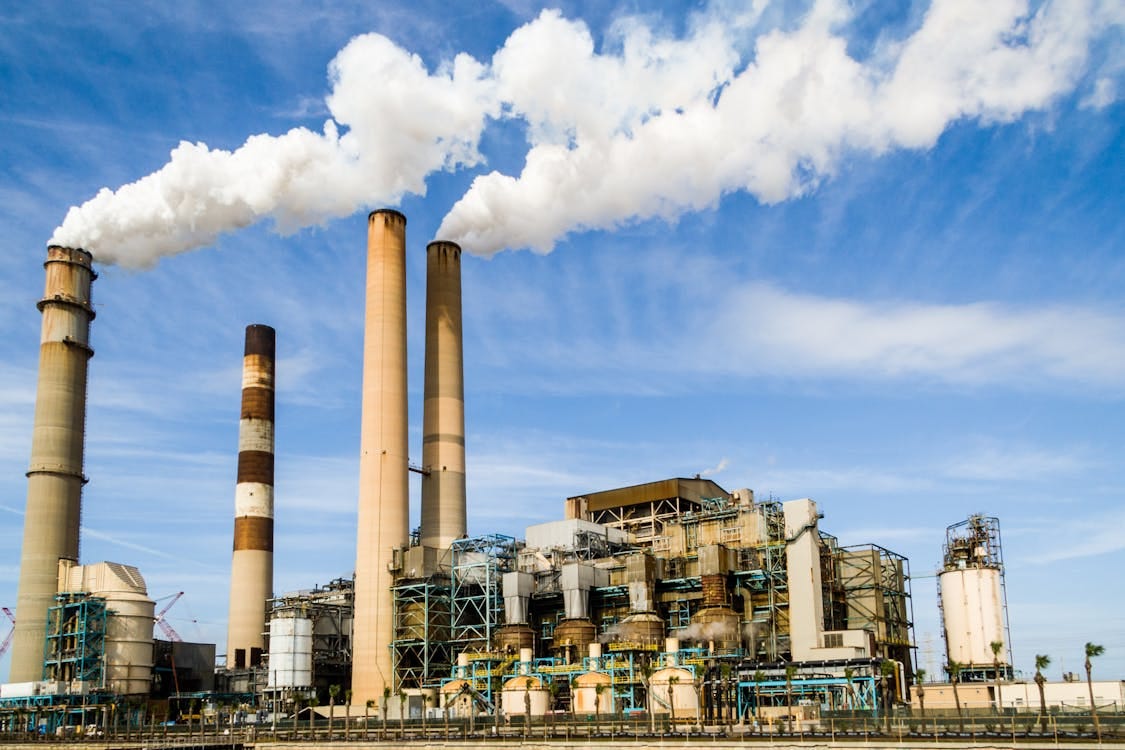
In the industrial economy, growth involved an increasing number of workers, each of whom produced more of everything: more primary products, turned into more manufactured goods, sold in bigger and better shops, generating more and more waste. Growth was achieved primarily by equipping workers with more capital, owned by employers (hence, the term “capitalism” to describe this economy). More sophisticated analyses took account of technological progress and of “human capital”, that is, the skills acquired by workers through education and training.
By the middle of the 20th century it became evident that this process couldn’t continue indefinitely. As was regularly observed, infinite growth in the output of physical goods is impossible on a finite planet.
As it turned out, however, the mid-20th century marked the beginning of the end of the industrial economy. The services or “tertiary” sector accounted for half of US employment by 1950 and that share has increased steadily to about 80% today. Within the service sector, ever fewer workers are engaged in the “tertiary” activities of distributing the output of farms and factories, through retail, wholesale and transport. Many more work either in directly provided human services, such as health care and hospitality. But the truly spectacular growth has been in “office jobs” relating in one way or another to information.
The industrial model, in which all stages of the production process expand in a proportional fashion, is no longer relevant – at least in rich countries. Output of physical goods, and particularly the characteristic products of the 20th-century industrial economy (cars, household appliances and so on), has largely stabilised. For example, the number of motor vehicles sold in the US has fluctuated around the 15m a year mark since 1980, even though the US population has grown.
Meanwhile, the growth in the production and dissemination of information has been so rapid as to defy traditional methods of measurement and any kind of intuition about growth. The volume of information we generate (whether useful or trivial) has grown at about 60% per year since the advent of the electronic computer. To give some intuition that means that every millisecond we collectively generate as much information as we did in an entire year in the 1970s. A concept of “growth” that averages such unimaginable rates of expansion with the nearly stationary output of cars, fridges and so on is meaningless.
And if “growth” is meaningless, so is “degrowth”. There’s no technological or ecological reason why we can’t have more and more services, from health and education to TikTok videos. And, if we can continue to improve the technology, there’s no real limit to our supply of solar and wind energy. What we need to reduce is the “throughput” of the residual industrial economy, beginning with the extraction of resources and ending with the dumping of waste. It’s here that ideas like that of the “circular economy” remain relevant.
In summary, neither “growth” nor “degrowth” makes sense as a long-term objective for economic policy. That doesn’t mean that GDP is useless as a statistical measure. If GDP drops sharply from one year to the next, it’s usually not because a society has become less concerned with material goods and marketed services. Rather, sharp reductions in GDP, such as those during the global financial crisis and the early 1990s “recession we had to have”, usually arise from external shocks or economic mismanagement. GDP statistics provide economic policymakers with valuable information about the short-run state of the economy.
In the long run, however, GDP is not a useful measure. And in an economy subject to the wildly divergent trends we now observe, there is little value in looking for a single number (such as a statistical measure of happiness) that will replace it. We can and should seek better and richer lives, while reducing and repairing the harm that the industrial economy has done to our natural environment and, most notably, to the global climate.
 John Quiggin
The problem is that you economists have given politicians the GDP and talked about it all the time. It’s become central to a lot of economic disussion.
If there is not another measure, they will continue to use it, with all its flaws, and that will tend to stifle investment in transitions to renewables etc
Is there a flavour of the CPI or other indicator connected to carbon footprints, resource use etc that you support?
So I don’t think you can walk away from the GDP without replacing it
Martin Connolly
Growth and degrowth may no longer make sense, as John argues, when defined in terms of GDP, but that’s not the way the vast majority of degrowth proponents define it. From Herman Daly in the 1970s to Jason Hickel in the 2020s, degrowth is defined in physical terms, not economic. Thus, in relation to degrowth, many economists are “stuck in a conceptual framework that’s 50 years out of date, or even more”.
Hickel’s definition is: “Degrowth is planned reduction of energy and resource use designed to bring the economy back into balance with the living world in a way that reduces inequality and improves human wellbeing.”
“And if “growth” is meaningless, so is “degrowth”. There’s no technological or ecological reason why we can’t have more and more services, from health and education to TikTok videos. And, if we can continue to improve the technology, there’s no real limit to our supply of solar and wind energy.” – J.Q.
There is a real limit to “more and more” services. That limit is in the broad arena of energy, entropy, waste heat and the disruptions of earth systems and bioservices. Attempts to supply endlessly spiralling energy and/or to battle against the endlessly spiralling entropy affecting increased complexity and/or to dissipate endlessly spiralling waste heat will become problems. Continuing to overpopulate and over-engineer the earth will further disrupt crucial earth systems (not just climate) and crucial ecologies and bioservices while increasing biohazards especially from ubiquitously discarded wastes like endocrine disrupters and from disrupted microscopic life (the disrupted virus and bacteria biome).
There are also biological (including evo-psych and cultural) limits to providing more and more services to humans. Excessive consumption of all goods and services becomes deleterious to humans, cultures and societies and breaks them down rather than build them up further. This is part of what is happening now. The equating of good health services and good education services (if such still exist) with a disservice or negative service (Tiktok) is also baffling me. Our global (developed) world society is Mr. Creosote. It doesn’t need more non-essential goods. Indeed, more non-essential goods destroy humans, cultures and societies, as well as environments.
We can see that the attempts to provide more information endlessly have foundered horribly and led to the relative provision of more and more misinformation and disinformation. We can see that the attempts to provide more and more entertainment and culture (some of redeeming social value hopefully) have foundered and led to the production of more and more addicting and deleterious material of highly negative social value. To shorthand that, social media and device addiction are now serious social ills. OMG! What am doing here again!
Jokes with truth in them aside, we are on the road to secular perdition and we don’t need “more” overall. We need more of some of the very worthwhile things and a lot, lot less of the great plethora of all the worthless things. The “more of everything without discrimination mantra” is very dangerous IMHO. I see a society addicted to more without discrimination.
Ikonoclast has it 99% correct. I’d add that is in regard to some 20% of the world only: the colonising West. The 80% will have a fair go. So, it is degrowth or destruction, but most likely destruction either way.
Growth and degrowth may no longer make sense, as John argues, when defined in terms of GDP, but that’s not the way the vast majority of degrowth proponents define it. From Herman Daly in the 1970s to Jason Hickel in the 2020s, degrowth has been defined in physical terms, not economic. Thus, in relation to degrowth, many economists are “stuck in a conceptual framework that’s 50 years out of date, or even more.”
Hickel’s definition is: “Degrowth is a planned reduction of energy and resource use designed to bring the economy back into balance with the living world in a way that reduces inequality and improves human well-being.”
Unfortunately, John’s article could be misread as saying that degrowth, as defined by its proponents, does not make sense.
Great thought on this topic, but there are some information that is not well considered.
I support the comment of Ikonoclast, the themodynamic constaints of the world should not be overlooked, also, we should consider that the physicality of the internet, the hard drives and the data centers need materials that are extracted from nature, even with improvements in extraction methods and density of information stored and processed, having an unlimited expansion of digital services will be terrible for the environment as it will still have an enourmous environmantal impact, and that is without considering the gargantual amounts of critical minerals for the renewable energy that we would have to extract from open air mines and from the seabed devastating furthermore the few intact ecosystems we have in earth.
Therefore I’m afraid that we are also bound to find a limit to the service and digitalization expantion.