A couple of weeks ago, just before my 70th birthday, I completed the Mooloolaba standard distance triathlon (1,500m swim, 40km cycle, 10km run). There was nothing exceptional about my performance, placing 1,509 out of 1,730 overall and 14th out of 18 in my 65-69 age category.
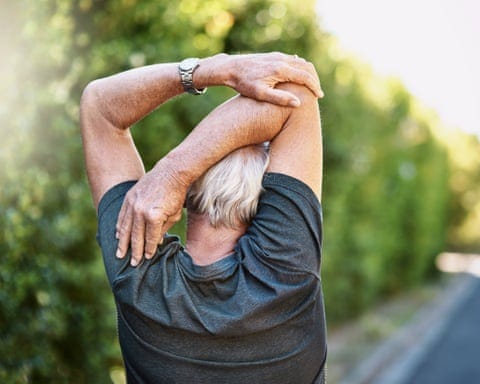
But not that long ago, it would have been exceptional. Until about 1980, competitive sport for those over 70 was restricted largely to golf and lawn bowls. Until the 1990s, there wasn’t even a category for 70-year-olds in most competitive triathlons. The small number of competitors over 65 were lumped into a single category. The first 70-year-olds recorded as completing the demanding Kona Ironman event in Hawaii (3.8km swim, 180km ride, 42.2km run), to which I still aspire, were Hiromu Inada (male) and Ethel Autorino (female) in the year 2000.
What’s true of triathlons is true of endurance sports in general. Older athletes seem to be becoming more numerous, and also quite a bit faster, across a wide range of sports.
One example is the rise of parkrun, the weekly timed 5km run which has grown virally since it began in the UK in 2004. Tens of thousands of Australians over 70 have completed at least one parkrun and cursory review of the published results suggests a thousand or more turn out on an average week.
This reflects a broader change, with studies indicating an increase in physical activity among older Australians. The proportion of adults over 65 in Australia who were insufficiently physically active fell from 72% to 57% between 2017-18 and 2022.
This hasn’t changed the way we talk or think about the over-70 population. People are still classified as “older” or even “elderly” (a term more redolent of walking frames than running shoes) as early as 65, even though they are now expected to keep working until they are 67.
This has an impact on discussions around health and aged care. In 1980, Australians who reached the age of 70 could expect to live another 12 years or so. Today, they (in my case, we) can expect to live another 17 years on average, with more than half surviving to 80.
The assumption that the 80-year-olds of today will have the same health needs as those of the past implies a big increase in health care costs. But increased survival rates mean that old people today are healthier on average than people of the same age in the past.
Most 70-year-olds are much less likely than those in the past to have smoked. When combined with increased physical activity, the result has been a drop in the incidence of coronary heart disease, a major cause of both death and disability.
The Australian Burden of Diseases Study (2024) reported that while life expectancy at age 70 rose by about two years between 2003 and 2024, the expected time spent in ill health rose by as little as six months.
The trends we are seeing are better understood not as an “ageing population” but as a gradual stretching of the lifespan, with most milestones being reached later and later. Young people study longer and form households later, a fact reflected in the current rental crisis. Prime-aged adults, who were retiring earlier and earlier until recently, can now expect to work well into their 60s.
And, while the inevitable end comes for us a bit later than it used to, the process hasn’t changed much. Most people retain moderately good health until their last few years, before declining rapidly. Few spend more than a couple of years in residential aged care, with only a small fraction of that involving high-intensity care.
I’m old enough to be thinking about this future fairly regularly. For the moment though, I’m more focused on my imminent graduation into the 70-74 category, where I will be among the youngest (or least old) competitors, and a serious chance at a podium finish.
 John Quiggin
I think what we have done is hit a plateau in the matter of the health and longevity of old persons in Australia.
https://www.aihw.gov.au/reports/life-expectancy-deaths/deaths-in-australia/contents/life-expectancy
Further, I consider that we will soon witness the beginning of a long term decline in the key measures. Because I am too lazy to research and write much anymore (as just an amateur in such pursuits), I will let the LLM do most of my talking.
“Evidence of a Plateau and Potential Decline
Factors Driving the Potential Decline
I think the key processes now threatening human health in Australia are;
(a) the environment is in severe and rapid decline (climate change, waste and pollution);
(b) the real economy and the logic of policy decisions are in decline due to unchecked austerity and neoliberalism; and
(b) public health and medical care, in theory and in practice, are declining disciplines in Australia. The new neoliberal ideologies of antivax-ism, leaving the vulnerable behind, and letting new highly transmissible and dangerous pandemic disease become endemic (as the preferred “control” method) are all recipes for an ever-spreading disaster.
I say enjoy things while you can, but without making things worse by excess consumption and while helping where you can. I am sure all good-willed and informed people are trying to do this. However, we need to maintain a realistic view of what a parlous state this nation is really in and just how close to rapidly accelerating disasters we are. As I keep saying, without radical political economy change to our system we were really are in danger of becoming a failed society and a failed state. And that’s just Australia. Heaven help the 3/4ths or more of the world that are in a worse position than us.