My latest from Independent Australia
Category: Uncategorized
Can Labor provide cost-of-living relief without feeding inflation and interest rates?
I was part of a panel who responded to this question for The Guardian
The economic situation facing the majority of Australian households is dire. However, the common framing of the problem in terms of the “cost of living” distracts attention from the real problem, which is the decline in the real purchasing power of wages. Having remained stagnant for years, wages have now fallen far behind inflation. Moreover, the average rate of tax paid is rising because of bracket creep and because of the expiry of the Morrison government’s low- and middle-income tax offset, which was not extended in the October budget.
Under our current policy approach, economic welfare is declining
Neither of these outcomes is likely to improve significantly during the current term of government. The budget papers predict a further decline in real wages this year, and only a partial recovery over subsequent years. And while those on high incomes will benefit from the stage-three tax cuts, there is nothing for those on incomes below $45,000. Even the indexation increases in pensions and benefits lag behind inflation by six months.
In response to this crisis, Albanese has said, in effect, that his hands are tied. First, he denounces relief for low-income earners as “a cash-splash, a one-off giveaway to buy a headline. Cheap politics and hugely expensive economics”. But the same is true, in spades, of the massive stage-three tax cuts, which Labor promised to implement for fear of losing a few marginal high-income voters.
If the stage-three tax cuts had been cancelled or deferred in the October budget, Labor would have had room to improve the position of the worst-off voters, while maintaining a broadly stable ratio of debt to GDP. But Labor was too frightened of negative headlines to grasp this nettle.
Albanese’s other argument is that any expansionary fiscal policy would be cancelled out by the RBA, which would raise the interest rate. He observed that “fiscal policy needs to work with monetary policy, not contradict it”.
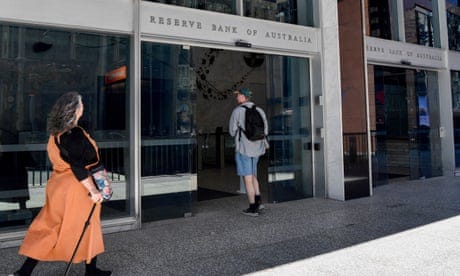
There’s an element of truth here, but also a huge problem. As well as maintaining price stability, the RBA is supposed to act to achieve full employment and “the economic prosperity and welfare of the people of Australia”. But under our current policy approach, economic welfare is declining. Unemployment is expected to rise, and real disposable incomes to fall, even in a situation where GDP is growing steadily.
Under the policy of central bank independence, first introduced under the Howard government, there is nothing that can be done about this. The Reserve Bank pursues its inflation target without regard to the policies of the elected government. But this policy has not served Australia, or other countries that have followed this course, at all well. It was necessarily abandoned during both the GFC and the Covid lockdown. If fiscal policy must work with monetary policy, the reverse should also hold true.
It is clear enough that our current economic policy institutions are not fit for purpose. Sadly, that includes the policies of the Albanese government.
Vote for democracy (please!)
It seems highly likely that the Republican Party will win control of the US House of Representatives, and possibly also the Senate, next week. Unless the margin is so narrow that a handful of believers in democracy can tip the balance, that will mean the end of electoral democracy in the US for the foreseeable future. Most House Republicans voted to overturn the 2020 election. All (except a few who were on the way out) voted against the Electoral Count Act which is supposed to make cheating more difficult, but which will surely be ignored if necessary. That’s without considering the vast numbers of election deniers who will win (or already hold) crucial offices at state and local level, and the likelihood that the Supreme Court will enable them further. And once the Republicans hold all the levers of power, they will never let go of them.
There is still a slim chance that this disaster can be staved off but, even if it isn’t, it will be a shameful memory to have abstained, or voted for a third party with no chance, in this last real election. That’s true whether the decision is out of laziness, hopelessness or a pseudo-left (in reality, aristocratic) view that both sides are equally bad. If you fall into one of these categories, (or if you actually want a Trumpist dictatorship), please don’t comment on this post, or interact with me in any way from now on.
Everyone in the world will be affected by the end of American democracy, but the great majority of us have no vote. All we can do is appeal to those who do to make the right choice, as I am doing here.
Labor’s love lost:the tide is turning on private ownership of electricity grids
I’m not a fan of the convention that newspaper and magazine editors choose the headline for articles, but I liked this one in The Conversation. The heading is neat and the sub-heading gives you the tl;dr version.
The promise by the Andrews government to reintroduce public enterprise to Victoria’s electricity industry, through a revived State Electricity Commission, is something of a shock.
The process of electricity privatisation in Australia began with Labor in Victoria, when the government of Joan Kirner sold 51% of the Loy Yang B power station in 1992. Her Liberal successor, Jeff Kennett, then sold the remainder of Loy Lang B, as well as the rest of the state’s publicly owned generation, transmission and distribution assets.
Labor has been office for all but four years since Kennett’s defeat in 1999. Until now it has made no attempt to reverse his policies. Rather, it has undertaken some rather dubious privatisations of its own, notably the Andrews government’s 2018 sale of the Land Titles and Registry office.
Premier Daniel Andrews’ statement that “it was wrong, it was a mistake, to sell our energy companies” therefore marks a clear shift.
Labor leaders change tack
The change is part of a broader shift in Labor’s position throughout Australia.
Arguably this shift began in Queensland after the trouncing of Anna Bligh’s Labor government in 2012, winning just seven of 89 seats. The Bligh government had sold a range of public assets (though retaining distribution and transmission networks, and coal-fired power generators). The remnants of the Labor party concluded privatisation was electoral and economic poison.
Labor was returned to power in 2015 after the LNP government of Campbell Newman, having sought to push privatisation further, was ousted after one term. Under Annastacia Palaszczuk the Queensland government is now investing in new renewable generation through the publicly owned CleanCo – including 18 wind turbines as part of the MacIntyre Wind Precinct, the largest wind farm project in the southern hemisphere.
NSW Labor went through similar contortions over privatisation, with a series of premiers and treasurers trying and failing to find a way of selling the electricity industry.
caption. Shutterstock
The disastrous defeat of the Keneally Labor government in 2011 was driven by this failure, along with the string of scandals that seem to be the rule rather than the exception in NSW politics.
Now, with the prospect of Labor returning to power next March, Opposition leader Chris Minns has given a guarantee there will be no more privatisations.
At the national level, the biggest single commitment of the Albanese government is the $20 billion Rewiring the Nation initiative, to build the transmission network needed for clean energy. The first two projects to be financed – the Marinus Link between Tasmania and Victoria, and the Kerang link, between Victoria and NSW – are publicly owned.
Taxpayers worse off
What explains this shift?
First, public opinion is now opposed to privatisation.
There was significant public support for privatisation in the 1980s, but this went into decline after major privatisations began in the early 1990s. Contrary to the hopes of supporters, experience with privatisation only made voters more hostile. This has finally permeated through to political commentary. The failings of formerly public enterprises like Qantas are now regularly traced back to the process of privatisation.
More importantly, politicians now understand that the economics of selling income-generating assets don’t stack up.
The premise for privatisation was that it was better for taxpayers to sell state-owned assets and reduce public debt.
But, particularly when interest rates on public debt are below the rate of inflation, government-owned enterprises generate returns well above the cost of the capital invested in them.
Those states that kept ownership of their electricity networks, such as Queensland and Tasmania, have received a steady flow of dividends, and the value of their assets have appreciated. The proceeds of privatisation in other states have long dissipated.
According to the ideology of privatisation, the low cost of borrowing for public enterprises is an illusion, because the public is on the hook for the cost of a bailout in the event of any business failure. But such bailouts have been very rare in Australia, and taking their costs into account does not change the calculation significantly.
The risk premium demanded by investors in private equity has always been large, and is now growing, making the gap between the private and public cost of capital even larger. There has been a corresponding drop in private investment globally, and (outside mining) in Australia. The case for public investment has never been stronger. Labor politicians seem finally to have realised this.
Seminar on mental fitness
I’ll be giving a talk on Tuesday (1pm ADST) to the ANU seminar on health service research and policy. Topic:Mental health and mental fitness in an age of disaster. The Zoom link is https://anu.zoom.us/j/81262299147?pwd=eWRJNDJFSC9JbHh4dDd0a0IvTUFvdz09
A ‘no first use’ U.S. nuclear policy could save the world
My latest piece in Independent Australia
THE RISKS of nuclear war are greater than at any time since the Cuban Missile Crisis. Not only is Vladimir Putin threatening to use nuclear weapons to stave off defeat in Ukraine, but the North Korean Government has continued to develop and test both missiles and nuclear warheads.
U.S. President Joe Biden has responded to Putin’s threats with admirable calm so far, playing down the risk that Putin will use nuclear weapons and avoiding any threat of escalation.
Leaks from the U.S. Administration have indicated that the response to a tactical nuclear weapon would be massive but confined to conventional weapons.
Yet the official doctrine of the U.S. would call for the use of nuclear weapons in exactly the situation faced by Putin today: a conventional war going badly.
Unlike Russia and China, the U.S. military maintains the right to a “flexible response” in which nuclear weapons may be used against an adversary who hasn’t used nuclear weapons and doesn’t pose an existential threat to the U.S. itself [1]
If Putin is threatened with massive retaliation for breaking a supposed taboo on nuclear weapons, the U.S. should commit itself to “no first use” of nuclear weapons. But why hasn’t this happened already?
Throughout the Cold War, U.S. military planning was based on the assumption that the Soviet Union would have a massive advantage in conventional weaponry, most notably because of its tens of thousands of tanks and other armoured vehicles, not to mention millions of artillery shells.
In the scenario favoured by Pentagon planners, these forces would pour the Fulda Gap, on the border between East and West Germany, rapidly overwhelming North Atlantic Treaty Organization (NATO) forces.
Only the use of “tactical” nuclear weapons would even the balance. The term “tactical” might sound moderately comforting, but some of these weapons would have many times the explosive power of the bombs that destroyed Hiroshima and Nagasaki. They would obliterate the advancing forces.
The end of the Cold War shifted the frontier hundreds of kilometres to the east, but the planners found another “gap” to worry about near Suwałki in Poland. And, as Putin rebuilt the crumbling armed forces he had inherited, it seemed that he still had at least 3,000 modern tanks, with another 10,000 in reserve.
But the failed invasion of Ukraine has shown Putin’s army to be a paper tiger. More than half of Russia’s front-line tanks have already been destroyed or captured by Ukraine. Indeed, Russia has been the biggest single supplier of tanks and armoured vehicles to the Ukrainian armed forces.
Meanwhile, the vast reserves turned out to be largely illusory. Thousands of tanks had been left to rust in the open air or pillaged for parts to be sold on the black market. By June, Russia was reduced to deploying ancient T-62 tanks, first produced in the 1960s and then updated in the 1980s. These have already been destroyed in large numbers.
After failing to conquer its near neighbour, there is no prospect that Russia could launch a successful conventional attack on NATO. There is, therefore, no need for tactical nuclear weapons. The same is true of a hypothetical invasion of Taiwan by China.
By adopting a “no first use” policy, the U.S. could greatly reduce the risk of an accidental nuclear war or an unintended process of escalation. Such a policy would certainly face resistance from the U.S. military, which never saw a weapons system it didn’t find essential — as it would from the Republican party.
The U.S. is one of a handful of countries that don’t ban the use of landmines. The Trump Administration revoked restrictions on the use of landmines and sought to develop new ones.
Still, there is hope. Richard Nixon, of all people, committed the U.S. to ban chemical weapons and stocks were finally destroyed under George W Bush.
And the Biden Administration has moved towards a ban on landmines. A “no first use” commitment once made, would be difficult to roll back, even for a future Trump Administration.
fn1. Putin has used annexation as a way of claiming that resisting Russia’s aggression represents an existential threat
Capitalism without capital doesn’t work
The future of the information (non) economy
For quite a while now, I’ve been making the argument that, in an information economy, the relationship between investment, production and profit, central to capitalism, no longer works. Here’s an early statement from my Giblin lecture in 2005.
to the extent that innovation and productive growth arise from
activities that are pursued primarily on the basis non-economic motives, the link
between incentives and outcomes is weakened. This in turn undermines the
reationale for policies aimed at sharpening incentives and ensuring that everyone
engaged in the production of goods and services is exposed to the incentives15
generated by a competitive market. Such policies represent the core program of
‘economic rationalism’, the set of ideas that dominated Australian public policy in
the 1980s and 1990s.
I recently reviewed two books by Jonathan Haskel and Stian Westlake. Their 2017 book, Capitalism without Capital presented a relatively optimistic view of a market economy in which “intangible capital” plays a central role. But their followup Restarting the Future: How to Fix the Intangible Economy, is much bleaker
“When we think about the state of the economy today, it is hard not to think, it wasn’t supposed to be like this,”
My assessment was that
The real intangible here is likely to be monopoly power, generated either by intellectual property laws or control over platforms.
My conclusion
Haskel and Westlake discuss traditional spheres of government activity — the defence-related R&D that gave us the internet, for example — but they don’t consider whether governments should become active investors in intangible capital.
The possibilities are full of promise, but also potential pitfalls. Governments could expand the informational role of public media services like the ABC, reversing the cuts of recent decades. They could systematically strive to make information of all kinds available in an easily searchable form, bypassing advertising-driven search engines like Google. And they could provide platforms for social media on a common-carrier basis, requiring easy interconnection and discouraging the use of “algorithms” (a misnomer) to keep people inside a “walled garden.”
It’s easy to point to the problems that would arise if these possibilities were pursued in a world where trust in governments is low. But these are the kinds of arguments that need to be made when the existing economic model is failing so clearly.
Despite the limited scope of the reforms they consider, Haskel and Westlake’s work tackles fundamental questions considered by few other writers. Restarting the Future is essential reading for anyone interested in the future of capitalism, or in the possibility of a post-capitalist future. •
There’s been a lot of excitement about Artificial Intelligence (AI) lately, much of focused on long-standing “big questions” like “is AI really intelligent” (short answer, no)
I don’t have an answer to that, so I’ll stick to the easier questions like “will a robot take my job”. I’ve argued before that this isn’t a good way to think about the issue. New technology has been changing the way we work for centuries, and will continue to do so. But for particular jobs being transformed by technological change, it is certainly relevant.
One area that’s moved ahead very rapidly is the generation of human-like text. The cutting edge here is a program called GPT-3, launched in 2020, which can produce impressive looking philosophical discussions. The underlying research has already been commercialised with products like Jasper, which has the much more prosaic (literally!) goal of producing advertising copy, blog posts and so on.
Jasper clearly won’t pass a Turing test if you ask for anything complex, but it is very good for its intended purpose: turning out text that looks as if a human wrote it. This has big implications for a large category of jobs, notably including many that the late David Graeber called “bullsh*t jobs”.
As an example, a fair bit of the content of a typical newspaper consists of press releases that have been lightly edited and perhaps spiced up a bit. With Jasper, the time taken for this task goes from an hour or so to a few minutes. For that matter, the press release itself can be generated from a few prompts in a similarly short time.
As with previous tech advances, that’s not likely to create mass unemployment any time soon. But it will mean that this kind of routine copywriting will be done much faster, by writers who have the skills to give programs like Jasper the right prompts, and then to touch up the final output. And this will extend to lots of admin jobs that have previously been immune from technical change.
Lots of middle management jobs, for example, involve writing memos and reports justifying one corporate decision or another. After you read a few, they all seem the same. AI can distil the essence well enough to mimic the style. After that, it’s just a matter of fitting the verbiage around the desired conclusion.
Over the fold, a few examples.
Here’s an output sample I produced in a couple of minutes, using a couple of prompts such as “create change” (UQ’s current marketing slogan) and Shanghai rankings
If you’re looking for a top-quality university that will help you create change in the world, look no further than the University of Queensland. UQ has a proud history of producing leaders and changemakers, and its graduates are highly sought-after by employers all over the world. UQ is consistently ranked as one of the world’s top universities. In the 2019 Shanghai Ranking, UQ was ranked 28th in the world and first in Australia for overall university performance. The Shanghai Ranking is one of the most respected university rankings in the world.
A longer version is here.
Most of the info has been scraped from websites, including UQ’s own. But Jasper provides a plagiarism checker to assure that it isn’t simply a cut-and-past job. The 28th figure looks a bit suspicious to me, but I assume someone at UQ has found a definition of “overall university performance” that fits the bill.
So, if I were told I had a morning to produce a puff piece for every university in Australia, I’d say I could do it with Jasper, and still have time for an early lunch.
And here’s what I got when I asked Jasper to argue that trail running is better than triathlon, using some first-person testimony. I’m almost convinced.
Finally, for those worried about contract cheating, here’s Jasper pitching its essay writing services, then denouncing itself as a threat to education.
Stage 3 tax cuts: The fight is on
That’s the headline for my latest piece in Independent Australia . The next couple of weeks, leading up to Labor’s first budget, will determine the fate of this government, one way or another.
If the tax cuts go through unchanged, the government will be a failure as far as economic and social policy is concerned. Some have suggested that the problems could be fixed in a second term. But having handed out big tax cuts for 2024-25, it’s absurd to suggest that Labor could turn around immediately and campaign on cancelling them. And, there’s no guarantee of a second term. While the LNP is looking pretty hopeless at the moment, an economic downturn would change things. Locking in the cuts would leave Labor with little or no capacity to respond to such a downturn.
Modifying the tax cuts, to keep only the elements that benefit middle income earners would have the political costs associated with a broken promise, but would reduce the costs of the cuts by around $12 billion a year. This would give the government sufficient room to respond to economic crises and address urgent needs.
Among those wishing to keep the cuts for higher incomes, the two main arguments are
(a) a promise is a promise
(b) people earning $150000 or $200000 a year aren’t “rich”
On the first point, while it would have been better not to make the promise to implement the cuts, it’s rarely possible for a government to keep all its promises. Labor’s promise to deliver higher wages has already been downgraded to a hope that real wages *might* increase over the next three years.
As regards “rich”, it’s a meaningless term which roughly means “makes much more money than me”. The fact is that only about 3 per cent of income-earners have a taxable income of $200 000 a year. This well-off group have less need for tax relief than the rest of the population
We need to keep the pressure up, in every way possible, until Budget Day
A day late, and $20 million short
I wrote a piece for the Guardian, urging the Queensland government to hold the line on its plan to close a tax loophole for wealthy investors, in the face of a ferocious Murdoch media campaign, and sabotage from the Perrottet government in NSW. Sadly, just as I submitted it, the government caved in. But the critique of the Courier-Mail might get a run on Media Watch. Anyway, here it is
The Queensland government’s announcement that it is closing a loophole in the land tax system, benefiting interstate investors has produced a furious reaction from the Murdoch-owned Brisbane paper Courier-Mail. More than a dozen editorials and articles have quoted ‘experts’ who warn that the proposal will be unworkable, unconstitutional and will raise rents. These articles have been backed up by editorials and by a parallel campaign in the Courier-Mail’s Sydney counterpart, the Daily Telegraph.
Oddly enough, hardly of these “experts” is a tax economist or, indeed, any kind of economist. The Courier-Mail has managed to locate one economist willing to support its claims: Shane Oliver of AMP. But the vast majority of its sources are representatives of the property lobby.
Economists are famous for disagreeing among themselves, so it might seem surprising that hardly any have come forward to criticise the Queensland government. In reality, however, one of the few propositions on which nearly all economists, of all persuasions, agree, is that governments should raise more revenue from taxing land.
The economic reasoning is simple. Taxes change incentives. In particular, taxes on capital, while desirable as far as equity is concerned, tend to reduce investment in new capital goods. But as a saying variously attributed to Will Rogers and Mark Twain puts the case for buying land “they aren’t making any more of it”. Whether land is taxed heavily, lightly or not at all, the amount of it won’t change. And changes in the value of land aren’t driven by investment, but by the general development of a given area.
The standard analysis of land tax is based on the assumption that all privately owned land is taxed at a common rate. In fact, there are a range of exemptions, reflecting the political difficulty of taxing land. Owner-occupiers are exempt from land tax. Landowners in general are taxed on a sliding scale, with the first $600 000 of land exempt.
This is where the loophole comes in. Each state levies its own land tax independently, with its own threshold and sliding scale. So, large landowners with holdings in more than one state can gain the benefit of the threshold separately in each state. It is rather as if people who derived income in more than one state could split their income and take advantage of the tax-free threshold several times over. The effect of closing this loophole will be to reduce the incentive for interstate investors to buy land, thereby making it a little cheaper for local buyers, both owner-occupiers and investors.
Apart from interstate investors, the big losers from closing this loophole will be real estate agents who rely on their business and benefit from inflated land prices. But neither of these groups is likely to attract much political sympathy. So, to oppose the tax, it’s necessary to claim that it will lead to an increase in rents.
The simplest, not to say most simplistic version of the claim is that land tax is a cost that will be ‘passed on’ to tenants. As any competent economist will tell you, rents, like other prices, are determined by supply and demand. A land tax changes the ownership of land and houses, but has no effect on supply. So, there’s no reason for changes in land tax to affect market rents.
A more elaborate version of the claim is that closing the tax loophole will lead interstate investors to sell, and that the buyers will be owner-occupiers. The Property Investors Professional Association claims that, as a result, Queensland 162, 239 fewer rental properties – or a reduction in supply of nearly 30 per cent. https://www.realestate.com.au/news/interstate-investors-snub-qld-market-set-for-major-sell-off/?rsf=syn:news:nca:cm:spa
There is just one problem with this claim – where did the owner-occupiers come from? If they sold an existing home, there is no change in the net supply. If they were previously renters then the reduction in rental supply is matched by a reduction in demand. And if they moved from interstate or overseas, they made the same addition to demand whether they bought or rented.
The ferocity of the Courier-Mail campaign against the closure of a relatively small loophole also yields some interesting insights into the operations of the media. Most of the time, the Courier-Mail presents itself as a fiercely parochial local paper. But in this case, it is acting to defend the interests of interstate investors, at the expense of Queenslanders (at least those who don’t own land interstate).
The Palaszczuk government has shown unusual courage recently, defying the mining lobby by raising royalty rates, and announcing a radical expansion of renewable energy. Closing the land tax loophole isn’t on this scale, but it’s an important and progressive reform. Let’s hope that it succeeds.
 John Quiggin