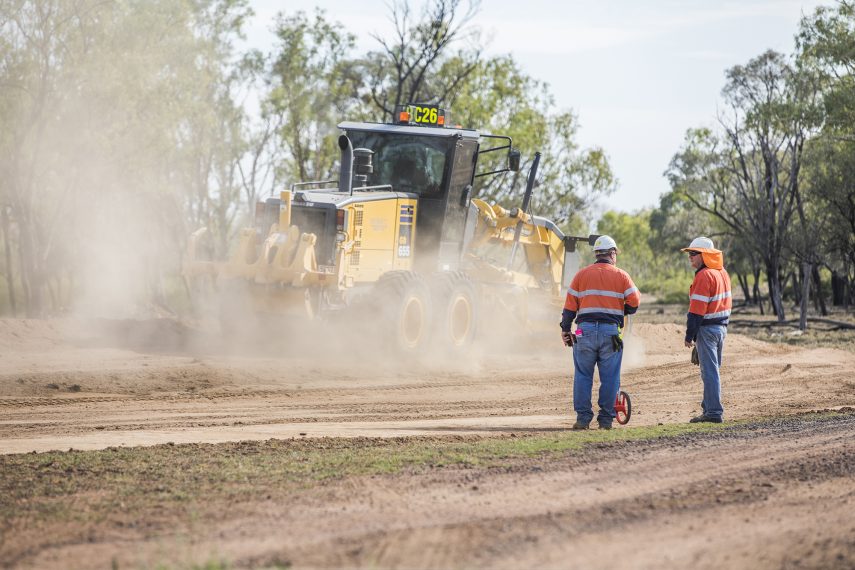
Throughout the long struggle over Adani’s Carmichael mine, I’ve argued that the project, as well as being environmentally disastrous, is not financially viable. Adani’s objective has been to keep the project alive, both to avoid bringing the loss of money already spent on the project and to maximize the chance that an Australian government will either pay them to go away or stop the project in a way that leaves open the possibility of a claim under the insidious system of Investor State Dispute Settlement, which still applies between Australia and India, even though our trade agreement has lapsed.
Read More »Category: Uncategorized
Published (almost!)
Economics in Two Lessons is listed as the #1 New Release in Microeconomics on Amazon. I’m not sure what this means, but it sounds encouraging.
It’s now available for preorder now, with a release date of April 23, the hardcover publication date. Apple books also has it for pre-order.
Thanks again to everyone who read and commented on the excerpts I published along the way. I’ve tried to mention you all in the acknowledgements, but it’s just about inevitable that I will have missed someone.
Energy in 2019: dead horse roundup
If the world is going to avoid dangerous climate change, we need to accelerate the pace of the energy transition towards decarbonization. So, as 2019 begins, it’s worth looking at the state of play. Easing into things, I’ll take a look at the dead horses: nuclear and “clean coal”.
AFAICT, hardly any nuclear plants started construction in 2018, continuing the trend of recent years. At the beginning of the year, lots of reports suggested China would start 6-8 plants, but (again AFAICT) the actual number was zero. Elsewhere, the massively delayed Vogtle project in the US just avoided scrapping. At this point, the best hope is to limit premature closures of existing nuclear plants and keep the focus on ending coal.
“Clean coal” is a deliberately ambiguous term, encompassing carbon capture and storage, which would eliminate CO2 emissions, if only it worked, and ultrasupercritical or “High Efficiency Low Emissions (HELE) technology, a marginal improvement on existing technology.
CCS was an obvious dead horse a year ago, and nothing has changed that. Bob Burton gives a good summary.
But at least CCS would have made a difference if it had worked. The marginal improvement in efficiency going from 1990s “supercritical” technology to more modern “ultrasupercritical” isn’t worth worrying about. In any case, it’s come too late. Although there’s still a big pipeline of coal projects using older technologies (most of which will have to be cancelled if we are to achieve climate goals) there aren’t many new ones. Outside China, the number of HELE plants we are ever likely to see can be counted on fingers and toes: one in the US, a few in Europe, a few more in India, and a handful in developing countries.
The joy of forgetting
I just read (on a plane) The Labyrinth Index the latest novel in Charlie Stross’ Laundry series (a mashup of HP Lovecraft and Len Deighton). The central conceit is a spell which causes Americans to forget the existence of the President whenever they go to sleep. After reading the book and nodding off, I had a dream that someone has a similar office in Australia, with a couple of deputies, one in charge of the bush and another in charge of the money. On waking though, I couldn’t remember any of these.
Update: Apparently, I’m not alone.
Monday Message Board
Another Monday Message Board. Post comments on any topic. Civil discussion and no coarse language please. Side discussions and idees fixes to the sandpits, please. If you would like to receive my (hopefully) regular email news, please sign up using the following link
http://eepurl.com/dAv6sX You can also follow me on Twitter @JohnQuiggin, at my Facebook public page and at my Economics in Two Lessons page
Echo chambers
The idea that, thanks to social media, we are all sorted into “echo chambers” where we only hear views identical to our own, is a commonplace. I think the whole idea of echo chambers is misinformed.
There’s a range of viewpoints close enough to your own that discussion is useful, and a range so far distant that no such discussion is possible. There’s no reason to suppose that this range will encompass the party political spectrum in some particular country. In the case of Australia/US that spectrum includes climate deniers and creationists (with a high degree of overlap).
Taking the creationist case because it’s simplest, what is the point of discussing evolution with them? And from their POV, while they are willing to score debating points where they can, they really can’t have a serious discussion within anyone who isn’t (at the least) a theist.
Admittedly, it’s useful to know what the other side is saying, if only to refute it in discussions with people who hold intermediate views, and whom we may want to convince or learn from.
But here the attack on the modern world social media falls flat. In the kind of one-newspaper town that used to be common, the existence of alternative views could be ignored more or less completely. Now it’s almost impossible to avoid them, if only in the caricatured form presented by the media of your own side.
Brexit: The endgame
On 29 March this year[1,2], if nothing else changes, the UK will leave the European Union under the terms of Article 50. Unsurprisingly, lots of scenarios are being scripted, but the one I see as most likely doesn’t seem to be among them.
I expect that nothing much will happen until about 28 March. May won’t get a deal that can pass through Parliament. If she allows a vote at all, it won’t be until late January and it won’t pass. At that point, or possibly before, Labor will try a motion of no-confidence which will also not pass. There will be a push for a second referendum, but that will be stymied by the fact that the current law requires a minimum of 12 weeks to hold such an exercise, and that will be too late. There may also be an attempt to get an extension of time for the Article 50 notice, but at least one of the EU27 will find a reason to block it.
May will keep stalling for time, as she has done since taking office, until the deadline approaches. At that point, the ports will start to clog up, as shippers try to move goods across the channel before the No Deal exit. There will be attempts to negotiate temporary “No Deal deals” to smooth the flow, but they won’t go anywhere. By March 28, or maybe a bit earlier, panic buying will empty supermarket shelves and stockpiles of medicine.
At that point, the prospect of NO Deal will become too terrifyingly real to contemplate and there will be only one option left. Britain unilaterally revokes its Article 50 declaration, and everyone agrees to forget the whole sorry business.
Feel free to point out plot holes, or suggest your own script.
fn1. Rather less momentously, I will turn 63.
fn2. It’s generally good to be cautious about revealing your birthdate online. But mine is on Wikipedia, so I guess there’s no harm in that.
Sandpit
A new sandpit for long side discussions, conspiracy theories, idees fixes and so on.
Bad news on the global climate
Carbon dioxide emissions rose strongly last year after several years of a near plateau. It appears that the main factor was increased use of oil, mainly as motor fuel. I’ll try to do a more detailed analysis later, but the central element of the required response is obvious. Just like coal-fired power stations, petrol-driven motor cars need to be phased out, as quickly as possible. Australia, as an oil importer with no domestic car production is in a position to pursue this target aggressively. We should, as others have done, commit to a date, say 2030, after which all new cars sold would be zero emission.
Fiddling while Queensland burns
The circus that is the Liberal National Party was pushed down the Queensland TV news today by bushfires, caused in turn by an unprecedented heat wave. There’s little doubt that the severity of the heat wave is the result of global warming, and that it’s part of a broader pattern. The two events are, of course, linked. The chaos in the LNP reflects the determination of the climate deniers in its ranks to reject any action to reduce greenhouse emissions.
None of these people are acting in good faith, or on the basis of a sceptical assessment of evidence. Without exception, their rejection of climate science and the policies it implies is based on a combination of vested interests zndpursuit of a culture war against “greenies”, “virtue signallers” and anyone who wants to do anything to save the planet. There is literally no evidence that can move them from their position, and they would rather see the planet destroyed than admit their errors.
There’s plenty of blame to go around here, but today I’ll call out Ken O’Dowd, the federal member for Flynn, where the worst fires are burning. Flynn is an advocate of withdrawal from the Paris agreement. He’d rather see his electorate burn than admit that climate change is a reality and that we need action now.