This is a follow-up to my previous post on the end of US democracy and its implications. Here I will discuss how what’s left of the democratic world can respond.
Read More »Monday Message Board
Another Monday Message Board. Post comments on any topic. Civil discussion and no coarse language please. Side discussions and idees fixes to the sandpits, please.
I’m now using Substack as a blogging platform, and for my monthly email newsletter. For the moment, I’ll post both at this blog and on Substack. You can also follow me on Mastodon here.
Trump has thrown out the global economic playbook. It’s time for Australia to write its own rules
My latest from The Guardian
=With the resumption of parliament this week, and an election only months away, we have seen even more of the usual point-scoring about the cost of living, tax breaks for long lunches and budget deficits. But since the return of Donald Trump to the White House, the assumptions on which Australian economic policy have always been based are obsolete.
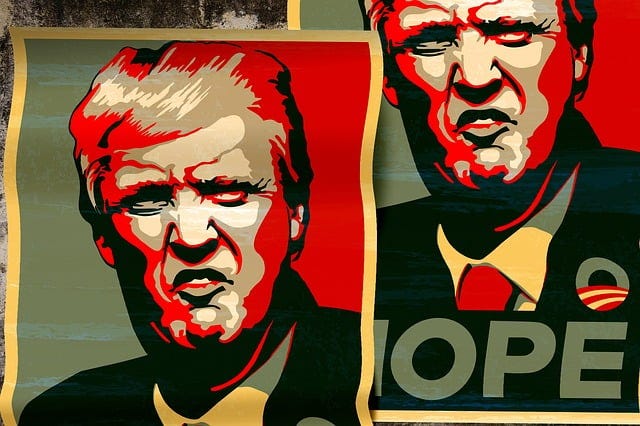
We must ditch the illusion that the US will return to normal and instead become more self-reliant
With the resumption of parliament this week, and an election only months away, we have seen even more of the usual point-scoring about the cost of living, tax breaks for long lunches and budget deficits. But since the return of Donald Trump to the White House, the assumptions on which Australian economic policy have always been based are obsolete.
Read More »Monday Message Board
Another Monday Message Board. Post comments on any topic. Civil discussion and no coarse language please. Side discussions and idees fixes to the sandpits, please.
I’m now using Substack as a blogging platform, and for my monthly email newsletter. For the moment, I’ll post both at this blog and on Substack. You can also follow me on Mastodon here.
The dispensable nation
“The cemeteries are full of indispensable people.” In one form or another, this observation has been made many times over the last century or more.
What is true of people is true of nations. In the past 25 years or so it was often claimed (and , admittedly, often denied) that, in the modern world, the United States was the “indispensable nation”. Whatever the rights and wrong of this claim, it has become obvious that, whether we like it or not, the rest of the world will now have to dispense with the US as a defender of democracy, guarantor of global order, or even (as in Margaret Thatcher’s words about Gorbachev) a state we can do business with.
Anyone whose experience of the US began in the last eleven days would have no trouble recognising an archetypal kleptocracy, like Putin’s Russia or Mobutu’s Zaire (with a touch of Mao madness). The boss rakes off billions in tribute while his cronies scramble to please him, put each other down and collect their share of the loot. Regime supporters commit all sorts of crimes with impunity, while opponents are subject to both legal victimisation and threats of extra-legal terror against which they can expect no protection.
In dealing with such a regime, the only strategy is to buy off the boss, or a powerful underling, and hope that they stay bought long enough to deliver on their side of the bargain This approach is politely described as “transactional”, but without the implication that the transaction will necessarily be honoured. Dealing with kleptocrats can be highly profitable, as long as you get in and out quickly enough, but there’s no possibility of “doing business”, either commercial or political, in the ordinary sense of the word.
The problem is that for nearly everyone who matters, the last eleven days seem like an aberration. For decades, the US has been seen as the central pillar of a “rules-based order”, on which assumptions about the world were largely based. That’as true even for critics who pointed out that the rules were drawn up to favor the US, and that the US often breached them without any real consequences. And it’s true even though you can point to precedents for everything Trump had done.
But all that is over, and can’t be restored.
Read More »Monday Message Board
Another Monday Message Board. Post comments on any topic. Civil discussion and no coarse language please. Side discussions and idees fixes to the sandpits, please.
I’m now using Substack as a blogging platform, and for my monthly email newsletter. For the moment, I’ll post both at this blog and on Substack. You can also follow me on Mastodon here.
Australia (Act) Day (annual repost)
As usual, 26 January has been marked by protests, denunciations of those protests, and further iterations. Even apart from the fact that it marks an invasion, the foundation of a colony that later became one of Australia’s states isn’t much of a basis for a national day.
A logical choice would be the day our Federation came into force. Unfortunately for this idea, our Founders chose 1 Jan 1901. The first day of the 20th century[1] must have seemed like an auspicious choice for a new country, but it ruled out the anniversary as a national day.
The ideal thing would be to fix the problems of our current system with a republican constitution including a treaty with the original owners of our land. That would provide a date really worthy of celebration.
In the meantime, I suggest 3 March, the anniversary of the day in 1986 when the Australia Act came into force, finally establishing beyond any doubt that Australia is an independent country, entirely separate from the UK[2]. We had by 1986 a constitution and public policy that was at least formally non-racist, thanks to the 1967 referendum and the end of the White Australia policy. Many of the symbolic problems with the current date would be avoided, though the real injustices would remain to be addressed.
It’s true that the Australia Act doesn’t have a lot of resonance. But any date with a lot of resonance is bound to resonate badly for a large proportion of the population. At least this would be a choice nearly all of us could celebrate without worrying too much about its precise significance.
fn1. At least if you start the count from 1CE. I think it would be more sensible to cross-label 1BCE as 0 CE, making 1900 the start of C20. I had always assumed that Dionysius Exiguus, who invented the AD calendar was unaware of the concept of zero, but Wikipedia accords him a prominent role in its history.
fn2. Whether, when and to what extent, we had become an independent country before 1986 remains a mystery, but there’s no doubt after that.
Trump open thread
I’ve already said all I plan to (for now) about what’s happening in the US. But if others want to discuss it, here’s an open thread.
Should economists know their own history >
There’s been a recent fuss in various media arising from a tweet from economist Ben Golub regarding astonishment that economists haven’t “worked through” Smith and Marx. English professor Alex Moskowitz chimed in with a claim that economics can’t be a real discipline because economists don’t know the history of their own discipline.
This claim is oversold as regards Smith. Every econ student gets the pin factory example of scale economies and the standard quote about the butcher, the baker and the Invisible Hand. And any moderately sophisticated economist knows that the Theory of Moral Sentiments refutes the vulgar self-interest theory of the kind of people who wear Adam Smith ties. There’s lots more interesting stuff on labour saving innovation, risk attitudes and other topics which still gets quoted.
As for Smith’s writing in support of free trade, it isn’t read much but not because economists now teach fancy mathematical models. Ricardo superseded him, not long afterwards, with comparative advantage, and his example of Portugal, England, cloth and wine is still a standard illustration.
Then there is some stuff that is just plain wrong, like the distinction between productive and unproductive labour. 19th century economists from Smith to Marx wasted a lot of time on this, but there’s no point in rereading it, except for the kind of history of economic thought rather brutally described as “the wrong ideas of dead men(sic)”.
So, it’s true that hardly anyone, except historians of thought, “works through” The Wealth of Nations, let alone Smith’s entire body of work. Like readers in many genres, economists reading Smith skip straight to the good bits.
Unlike with Smith, not many economists read Marx, or at least Capital, any more, because not many economists do Marxist/Marxian economics any more. Marx wrote lots that is still relevant, most obviously the Communist Manifesto, with which any educated person, and certainly any economist, should be familiar. The account of the rise of capitalism, the class struggle and the potential for crisis in capitalism was unequalled when it was written and still commands our attention. But it isn’t something that needs to be “worked through” to do economics.
The economic analysis in Capital is not part of the intellectual history of mainstream (neoclassical/Keynesian) economics. The micro-economic approach that stems from the marginalist revolution of the 1870s owes nothing to Marx, and was developed by economists who had probably never read him (the first published critique from a marginalist viewpoint was by Wicksteed in the 1880s). Keynesian macroeconomics shares with Marx the recognition that capitalism is inherently prone to crisis, but doesn’t draw on his theoretical framework much. Henry George, also little read today, is probably more relevant. His ideas on taxing appreciating land rents have been misappropriated by single-taxers but they remain valid and policy-relevant.
For a long time, Marxist economics was relevant as a rival to the dominant neoclassical/Keynesian program, but that is no longer true. There was still a moderately active literature on the “transformation problem” 50 years ago, but it seems to have died, or (according to Andrew Kliman) been resolved. Most leftwing critiques of the mainstream now draw more on Keynes and Minsky than on Capital.
Given that Marxist thought is still influential in lots of spheres, the decline of Marxist economics might well be a problem. But, if so, the answer is for Marxists to do more and better economics
Coming back to mainstream economics, the lack of historical awareness is a real problem. But the problem isn’t a lack of appreciation of the classics of the long 19th century. It’s that the economics profession pays far too little attention to its relatively recent history, from the 1930s to the present.
Most glaringly, as Paul Krugman points out fairly regularly, there have been only the most cursory attempts to explain the success of Keynesian macroeconomic policies in the decades after 1945. The NAIRU model for short-term macro policy, followed by all central banks, rests almost entirely on the experience of stagflation in the late 1960s and early 1970s. And the theoretical twists and turns that produced the currently dominant Dynamic Stochastic General Equilibrium model (the Lucas critique, new classical macro, various versions of “New Keynesianism”) have largely been forgotten. The result is that a theoretical-policy framework, centred on inflation targeting is presented as an eternal truth, when it is only about 30 years old and has had very limited success either as an explanatory/predictive theory or as a guide to policy.
The situation is not quite as bad outside macro. But, to the extent that macro theories are wrong, the results of most micro analysis can only be regarded as partial and provisional. And an awareness of intellectual history would lead to a much more cautious view of our current theories and tools, notably with respect to game theory.
Australia’s social media ban for under-16s: The evidence (crosspost from my Substack)
This is the second in a series discussing the Australian legislation banning people under 16 from using social media. The previous post is here .
I’m writing from the perspective of a longstanding user of new media and also as someone with personal experience of dealing (not very successfully) with problems of under-16 screen addiction. On the other hand, I’m not a technical expert so I may get some details wrong. I’ll be happy to accept correction on these points
The evidence
The social media ban was rushed through Parliament with no real inquiry into the nature of the problem it was supposed to solve or the likely effects of a ban. Evidence from mental health experts on the question of whether and how social media use is harmful is at best inconclusive, as far as I can determine.
But the advocates of a ban haven’t worried too much about that. They’ve relied on casual correlation and on the testimony of instant experts, with no particular expertise in the mental health of young people.

The most commonly cited piece of evidence is the fact that mental health problems among young people have increased, starting 10-15 years ago around the time that social media became a Big Thing. Correlation is assumed to imply causation.
I have to wonder whether people making this point have been watching or reading the news. It’s been increasingly awful ever since the 9/11 terror attacks more than 20 years ago. Endless wars, global heating, the Global Financial Crisis and the decade of austerity that followed, Trump, Covid and now Trump again. I have a naturally optimistic temperament, but that hasn’t been enough to stop me getting more and more depressed.
And I’m not alone. Depression among old people increased greatly between 2010 and 2019 and further since the onset of the pandemic [1]
Depression among the old has been reflected in their strong support for far-right political parties in many countries, and for the nostalgic politics of Brexit and MAGA. You could make a plausible-sounding case that exposure to talk radio, outrage media and so on is driving this. And if teenagers were making the rules, they might force old people to turn off their preferred media. But the only real solution is to work for a less depressing world.
The other main source of evidence has been from instant experts, most notably Jean Twenge and Jonathan Haidt
Twenge is an exponent of the intellectually discredited, but still popular, idea of generational analysis. I’ve been pointing out the absurdities of this idea for 25 years now. My criticisms and those of others have gradually come home. Most notably the Pew Research Center, a longstanding user of the framework, has announced “should not expect to see a lot of new research coming out of Pew Research Center that uses the generational lens.” I reviewed Twenge’s latest book here concluding “for serious scholarly work, five-year birth cohorts, categorised by race, gender and class background, are much more useful. For entertainment purposes, astrology is just as good and less divisive.”
I didn’t pay much attention to Twenge’s discussion of Generation Z. But her work perfectly illustrates a point I’ve often made that much of the generation game literature consists of restatements of long-standing cliches about “young people these days” and old people “blocking up the halls”. In 2006, Twenge published a book on Millennials, entitled Generation Me: Why today’s young Americans are more confident, assertive, entitled–and more miserable than ever before. Her description of Millennials then was very similar to that of Gen Z now.
I’m underwhelmed by Twenge’s work, but she appears to be an honest scholar. By contrast, I’ve long regarded Jonathan Haidt as a charlatan, whose message shifts over time, but always in a way that appeals to a big audience. I first came across his work in 2012, and responded critically. That was about the time he published The Righteous Mind, where he presented himself as a liberal, concerned that fellow-liberals misunderstood the concerns of conservatives. Whereas liberals saw conservatives as driven by racism and misogyny, Haidt argued that they were actually motivated by concerns about moral purity and legitimate authority. Criticising them just created unnecessary division. I saw this as an example of the well-known Internet tradition of “concern trolling” [2]
When Donald Trump emerged as the conservative standard-bearer, the moral purity stuff looked pretty silly, so Haidt moved on. Along with Bari Weiss, Ben Shapiro and Sam Harris he emerged as part of the self-described “Intellectual Dark Web”, characterised mostly by complaints about being silenced by leftwing critics. These complaints were, of course, widely aired in a variety of prominent platforms. When Republicans demanded forcible silencing of protests over the Gaza genocide, these free-speech warriors were nowhere to be found.
With his usual agility, Haidt has jumped on the bandwagon of concern about social media. And, unsurprisingly, he has been amplified by traditional media, which have been at least as problematic, but get a free pass in this debate.
Given that we have no real understanding of the problem, it’s hard to know how, if at all, the solution of a ban is going to work. But the legislation is unlikely to be repealed, so it’s worth thinking about what might happen when it takes effect. More soon, I hop.e
fn1. As is often the case, evidence is mixed. The advocates of a social media ban cite studies showing no such increase among the old.
fn2. A more comprehensive taxonomy of right wing trolls is here https://johnquiggin.com/2018/11/18/trolls-crosspost-from-crooked-timber/
 John Quiggin