A new sandpit for long side discussions, conspiracy theories, idees fixes and so on.
To be clear, the sandpit is for regular commenters to pursue points that distract from regular discussion, including conspiracy-theoretic takes on the issues at hand. It’s not meant as a forum for visiting conspiracy theorists, or trolls posing as such.
The economic situation facing the majority of Australian households is dire. However, the common framing of the problem in terms of the “cost of living” distracts attention from the real problem, which is the decline in the real purchasing power of wages. Having remained stagnant for years, wages have now fallen far behind inflation. Moreover, the average rate of tax paid is rising because of bracket creep and because of the expiry of the Morrison government’s low- and middle-income tax offset, which was not extended in the October budget.
Under our current policy approach, economic welfare is declining
Neither of these outcomes is likely to improve significantly during the current term of government. The budget papers predict a further decline in real wages this year, and only a partial recovery over subsequent years. And while those on high incomes will benefit from the stage-three tax cuts, there is nothing for those on incomes below $45,000. Even the indexation increases in pensions and benefits lag behind inflation by six months.
In response to this crisis, Albanese has said, in effect, that his hands are tied. First, he denounces relief for low-income earners as “a cash-splash, a one-off giveaway to buy a headline. Cheap politics and hugely expensive economics”. But the same is true, in spades, of the massive stage-three tax cuts, which Labor promised to implement for fear of losing a few marginal high-income voters.
If the stage-three tax cuts had been cancelled or deferred in the October budget, Labor would have had room to improve the position of the worst-off voters, while maintaining a broadly stable ratio of debt to GDP. But Labor was too frightened of negative headlines to grasp this nettle.
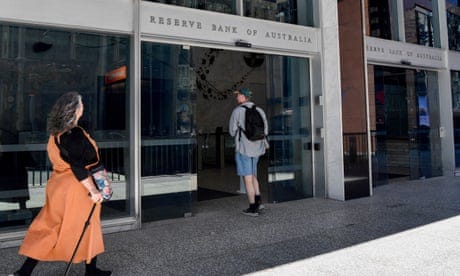
Albanese’s other argument is that any expansionary fiscal policy would be cancelled out by the RBA, which would raise the interest rate. He observed that “fiscal policy needs to work with monetary policy, not contradict it”.
There’s an element of truth here, but also a huge problem. As well as maintaining price stability, the RBA is supposed to act to achieve full employment and “the economic prosperity and welfare of the people of Australia”. But under our current policy approach, economic welfare is declining. Unemployment is expected to rise, and real disposable incomes to fall, even in a situation where GDP is growing steadily.
Under the policy of central bank independence, first introduced under the Howard government, there is nothing that can be done about this. The Reserve Bank pursues its inflation target without regard to the policies of the elected government. But this policy has not served Australia, or other countries that have followed this course, at all well. It was necessarily abandoned during both the GFC and the Covid lockdown. If fiscal policy must work with monetary policy, the reverse should also hold true.
It is clear enough that our current economic policy institutions are not fit for purpose. Sadly, that includes the policies of the Albanese government.
It seems highly likely that the Republican Party will win control of the US House of Representatives, and possibly also the Senate, next week. Unless the margin is so narrow that a handful of believers in democracy can tip the balance, that will mean the end of electoral democracy in the US for the foreseeable future. Most House Republicans voted to overturn the 2020 election. All (except a few who were on the way out) voted against the Electoral Count Act which is supposed to make cheating more difficult, but which will surely be ignored if necessary. That’s without considering the vast numbers of election deniers who will win (or already hold) crucial offices at state and local level, and the likelihood that the Supreme Court will enable them further. And once the Republicans hold all the levers of power, they will never let go of them.
There is still a slim chance that this disaster can be staved off but, even if it isn’t, it will be a shameful memory to have abstained, or voted for a third party with no chance, in this last real election. That’s true whether the decision is out of laziness, hopelessness or a pseudo-left (in reality, aristocratic) view that both sides are equally bad. If you fall into one of these categories, (or if you actually want a Trumpist dictatorship), please don’t comment on this post, or interact with me in any way from now on.
Everyone in the world will be affected by the end of American democracy, but the great majority of us have no vote. All we can do is appeal to those who do to make the right choice, as I am doing here.
I’m not a fan of the convention that newspaper and magazine editors choose the headline for articles, but I liked this one in The Conversation. The heading is neat and the sub-heading gives you the tl;dr version.
The promise by the Andrews government to reintroduce public enterprise to Victoria’s electricity industry, through a revived State Electricity Commission, is something of a shock.
The process of electricity privatisation in Australia began with Labor in Victoria, when the government of Joan Kirner sold 51% of the Loy Yang B power station in 1992. Her Liberal successor, Jeff Kennett, then sold the remainder of Loy Lang B, as well as the rest of the state’s publicly owned generation, transmission and distribution assets.
Labor has been office for all but four years since Kennett’s defeat in 1999. Until now it has made no attempt to reverse his policies. Rather, it has undertaken some rather dubious privatisations of its own, notably the Andrews government’s 2018 sale of the Land Titles and Registry office.
Premier Daniel Andrews’ statement that “it was wrong, it was a mistake, to sell our energy companies” therefore marks a clear shift.
Labor leaders change tack
The change is part of a broader shift in Labor’s position throughout Australia.
Arguably this shift began in Queensland after the trouncing of Anna Bligh’s Labor government in 2012, winning just seven of 89 seats. The Bligh government had sold a range of public assets (though retaining distribution and transmission networks, and coal-fired power generators). The remnants of the Labor party concluded privatisation was electoral and economic poison.
Labor was returned to power in 2015 after the LNP government of Campbell Newman, having sought to push privatisation further, was ousted after one term. Under Annastacia Palaszczuk the Queensland government is now investing in new renewable generation through the publicly owned CleanCo – including 18 wind turbines as part of the MacIntyre Wind Precinct, the largest wind farm project in the southern hemisphere.
NSW Labor went through similar contortions over privatisation, with a series of premiers and treasurers trying and failing to find a way of selling the electricity industry.
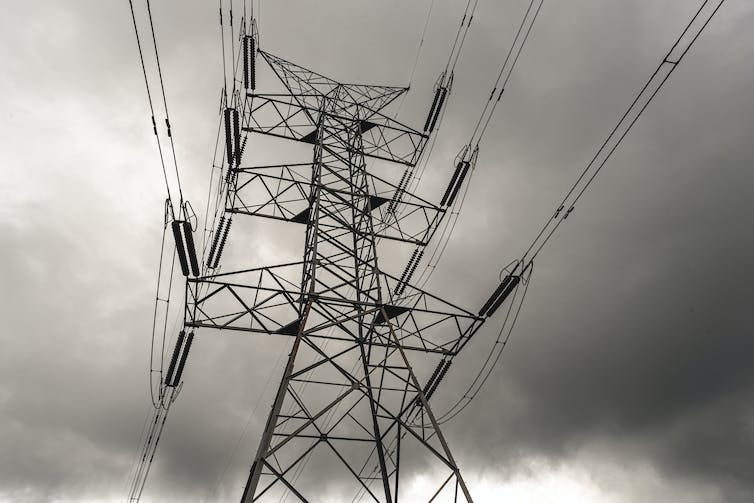
caption. Shutterstock
The disastrous defeat of the Keneally Labor government in 2011 was driven by this failure, along with the string of scandals that seem to be the rule rather than the exception in NSW politics.
Now, with the prospect of Labor returning to power next March, Opposition leader Chris Minns has given a guarantee there will be no more privatisations.
At the national level, the biggest single commitment of the Albanese government is the $20 billion Rewiring the Nation initiative, to build the transmission network needed for clean energy. The first two projects to be financed – the Marinus Link between Tasmania and Victoria, and the Kerang link, between Victoria and NSW – are publicly owned.
There was significant public support for privatisation in the 1980s, but this went into decline after major privatisations began in the early 1990s. Contrary to the hopes of supporters, experience with privatisation only made voters more hostile. This has finally permeated through to political commentary. The failings of formerly public enterprises like Qantas are now regularly traced back to the process of privatisation.
More importantly, politicians now understand that the economics of selling income-generating assets don’t stack up.
The premise for privatisation was that it was better for taxpayers to sell state-owned assets and reduce public debt.
But, particularly when interest rates on public debt are below the rate of inflation, government-owned enterprises generate returns well above the cost of the capital invested in them.
Those states that kept ownership of their electricity networks, such as Queensland and Tasmania, have received a steady flow of dividends, and the value of their assets have appreciated. The proceeds of privatisation in other states have long dissipated.
According to the ideology of privatisation, the low cost of borrowing for public enterprises is an illusion, because the public is on the hook for the cost of a bailout in the event of any business failure. But such bailouts have been very rare in Australia, and taking their costs into account does not change the calculation significantly.
The risk premium demanded by investors in private equity has always been large, and is now growing, making the gap between the private and public cost of capital even larger. There has been a corresponding drop in private investment globally, and (outside mining) in Australia. The case for public investment has never been stronger. Labor politicians seem finally to have realised this.
 John Quiggin