Noah Smith has posted an interesting interview with Sarah Paine who looks at the distinction between maritime powers (in modern history, Britain and the US) and continental powers (everyone else). Paine sees maritime powers as beneficent creators and upholders of a peaceful and rules-based international order
It’s a distinction I’ve discussed in the past, but with very different views. Here’s a full-length response
The maritime/continental distinction is crucial, but not in the way suggested here. The era of maritime dominance is over.
That’s partly because the UK is now negligible as a power, and the US isn’t as dominant as it was.
But it’s mainly because ships are an old technology that hasn’t advanced much over the past century or so, either in commercial or in military terms. Average speed has barely changed since the advent of steam. Meanwhile aerospace (including drones and missiles) and telecoms have advanced massively.
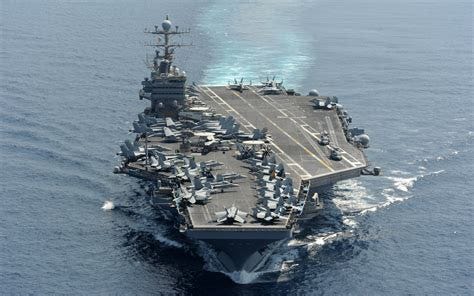
In military terms, navies ceased to be useful long ago (once aircraft and missiles no longer needed carriers to cover vast distances). No one noticed until recently because there hadn’t been any significant naval combat (the Falklands war had lessons, but they were ignored). But the humiliating defeat of Russia’s Black Sea Fleet by a country whose own navy lasted one day in the Ukraine war tells the story. Ships can’t hide in the open sea any more, and they can’t escape from missiles and drones.
In commercial terms, air has replaced sea transport in most high-value goods trade (particularly passenger travel), and telecommunications has made transport of all kinds less relevant.
Ships are still important for bulk transport, but the economic importance of “vital trade routes” was always overstated, and is now negligible. If the current ME conflict continues, we’ll see this. Or rather we won’t see it because the economic impact of longer shipping times will be imperceptible against the general background noise of economic shocks.
Meanwhile, maritime powers (the UK, then US) have made up rules that benefit them (for example, Freedom of Naval Operations) and erected them into sacred principles. Attempts to coerce continental powers like China into respecting those rules will achieve nothing, while risking an accidental outbreak of war.


Minor points which probably would have been mentioned if the post was longer.
Japan was a significant maritime power from about 1911, Port Arthur and the Russo-Japanese War, to about May-June 1942, Battles of the Coral Sea and Midway.
Surface ships can’t hide in the open sea but subs and underwater drones still can… so far as I know.
Unsinkable aircraft carriers, aka islands, have been useful for about 85 years. I guess they are unsinkable missile cruisers too now.
The Belt and Road international initiative, or 1B1R for short, has over 150 countries signed up for mutual trade benefits. China does not need to use the British/USA sea routes. The switch of economic power to Asia is almost complete. Only the animosity between Japan and China is stopping Asia from dominating world trade. The UK is no longer a significant exporting country. It is increasingly becoming merely a service country to Asia. Singapore is becoming more important that London.
Ceteris paribus, the USA is a net debtor country. Despite President Biden’s assurance that,as far as interest payments on foreign debt are concerned,
”We are good for it!”
the USA will one day default on its foreign debt. This has been made more likely by the antics of the Republican Party in the US Congress. The problem with the political double bluff, is that one day it will be called. Once the global financial markets actually sees a US default, then any economic dominance by the USA will be a thing of the past.
Now I did begin this predictive passage with the economic term “Ceteris paribus”. For those not familiar with this precursor qualifier, it means
”All other things being equal”
To predict future events is fraught with dangers.
Will there be a global conflict? Will China self destruct as it did one hundred years ago? Will the USA once more invade Mexico? Will global warming destroy port facilities around the world? Will environmental disasters destroy prosperity?
No definitive answers to these questions means that anything can happen in the future. Which country will rise above the disasters coming from global warming? It will, ceteris paribus, be the next great economic power. Maybe this is why the USA is spending so much money on alternate and renewable energy. They may be trying to win the climate change war.
A lesson from the past may be illustrative of my main point. At one point in time Portugal was the most powerful country known to the western world. It was an economic powerhouse that was also a maritime superpower. Then a climate disaster changed everything. A major Tsunami destroyed much of the capital city of Lisbon. This opened the door for Spain and France to contend for its number one position.
We just don’t know what could upset current economic and military standings. That is why my predictions are not absolute. They can’t be because all the facts are not known now, that will be common knowledge in one hundred years time.
Your guess is as good as mine. But my guess is that Asia will dominate both economically and militarily.
Gregory J. McKenzie’s questions with answers:
Will there be a global conflict? Probably.
Will China self destruct as it did one hundred years ago? Maybe.
Will the USA once more invade Mexico? Unlikely.
Will global warming destroy port facilities around the world? Yes.
Will environmental disasters destroy prosperity? Yes.
Which country/countries will rise above the disasters coming from global warming? None.
Except … US warships are still roaming The Red Sea and are instrumental in attacks on Houthi locations …
The merchant marine is also affected by new developments, ports and shipping lanes can be restricted by land based missile attacks.
re Russia; their naval losses have re opened shipping from Ukraine.
“Except … US warships are still roaming The Red Sea and are instrumental in attacks on Houthi locations ..
With remarkable lack of success. A US-led fleet established a few years ago, specifically aimed at deterring the Houthis, signally failed to do so and, as Biden himself has observed, the current attacks aren’t working.
Ikonnoclast mentions submarines, the problem is that anti-submarine warfare is very effective (which is why we don’t hear much about it).
Joe
How would one deter the Houthis I wonder or not bother deterring the Houthis if that would be the better strategy?
It somewhat amazes me that places where people, and especially children, are starving or near to it are also places which are yet armed to the teeth with small arms, mortars, rockets, missiles and drones. It is an concerning phenomenon (even from a great distance) and not the fault as such of most local women, children, old people and other non-belligerents. But something is feeding all this. A response to external belligerence is one factor obviously. Another factor is weapons aid from those who supply all their proxies. Not pointing fingers of blame yet, or here on the blog, but it is lamentable all round. If I was pointing fingers of blame I would be pointing them everywhere. I would not have enough fingers.
Weapons are triple waste it seems. A waste of resources that then destroys more resources and people’s lives. I can’t see any of it halting though. Under conditions of scarce resources many animals, including humans, fight. Horrific, but unstoppable and unsolvable it seems. We have entered the era of chronically scarce resources; even a liveable climate is going to be geographically scarce. I think this tells us where we are headed. Soon, a “great distance” won’t be distant enough.
A bit exaggerated. Shipping times have not improved much, but door-to-door times have and costs have much reduced over the last 50 years. Basically due to containerisation. Shipping in bulk is orders of magnitude cheaper than air freight, and the only way to ship goods such as grains or ores or anything heavy or bulky – all significant economically (eg the inability to ship grain from Ukraine spiked world prices, to the detriment of poorer states).
Where this is right is that cheap drones and easily-manufactured missiles can pose a threat sufficient to close choke points – and cannot be easily countered. Bombing is unlikely to work. There are usually alternate routes, but, as an instance, the loss of Suez Canal revenue is going to hit Egypt hard.
Note that we are not talking advanced warfare here – nothing like the Black Sea contest. A modern warship is not vulnerable, and escorting merchant shipping in convoy would minimise the risk. But it would demand a disproportionate commitment.
I agree that containerisation was a big deal, though it was mostly done by the 1970s. “The last century or so” referred to naval warfare, where the last big advance was the aircraft carrier (nuclear subs are relevant to global annihilation, but not to maritime power).