Daniel Kahneman, who was, along with Elinor Ostrom, one of the very few non-economists to win the Economics Nobel award, has died aged 90. There are lots of obituaries out there, so I won’t try to summarise his work. Rather, I’ll talk about how it influenced my own academic career.
Read More »Category: Uncategorized
Towards deliberative Parliaments: Greens success at recent elections points the way
Elections over the last week have seen some pretty good outcomes for the Greens and some very bad outcomes for both Labor and the LNP.

Here’s what ChatGPT came up when I asked for a representation of Green Labor
In the Brisbane Council elections, the Greens got 23.1 per cent of the vote, barely behind Labor on 26.9. The combined total of exactly 50 per cent wasn’t reflected in terms of seats, mainly because of preference leakage and exhaustion, but I want to focus on the longer term implications here.
In Tasmania, the incumbent Liberals suffered a 12 per cent swing on primary votes, falling to 37 per cent, after a series of elections in which they received an absolute majority, or very close to it, on first preferences. Most of the aggregate loss went to independents and the Jacquie Lambie network with Labor and the Greens each picking up small gains.
That doesn’t mean that all the people who voted for JLN and independents switched from Liberals. More likely, the Greens (and maybe also) Labor picked up some Liberal voters, but lost ‘protest’ voters to JLN in particular. What’s really striking here is that the combined vote of Labor and the Liberals was below 66 per cent. “Other (including informal/blank)” comfortably outpolled Labor, and came close to beating the Liberals.
Finally, in the by-election for the South Australian seat of Dunstan (vacated by the former Liberal Premier), the Greens polled 22 per cent of the vote. Starting from a primary vote of 32 per cent, which would once have been considered disastrous, Labor won the seat comfortably on preferences, a rare by-election defeat for an opposition party.
Despite this striking evidence of dissatisfaction with the two-party system, journalists reported the Tasmanian outcome as a “hung Parliament”. This is a nonsense way of describing the situation. A hung jury is one that can’t reach a verdict. An election in which no party wins an outright majority of seats is a verdict rejecting the idea that the Parliament, or at least the Lower House, should be a rubber stamp for the winning party (or rather for the leader of that party) in between elections, when the voters have a chance to switch one ruling party for another. For some years, Tim Dunlop and I have been pushing the term “deliberative parliament” to describe this outcome.
The two-party system is one which is familiar and comfortable for the political class, including political journalists. It’s striking to observe that, while there are plenty of journalists who are clearly identified with either Labor or the Liberals, or can be seen as balanced between the two majors, there are none who align with the Greens, or Jacquie Lambie, or the teal independents, even in general terms.
All of these parties, along with the various rightwing parties that have won seats in Parliament are treated by the Press Gallery as alien intruders who will soon be gone. Similarly, a “hung parliament” of which we have seen at least a dozen in Australia, in recent years, is treated as an unfortunate aberration.
For the left, the big problem here is the difficulty of establishing a working relationship between Labor and the Greens. The only place this has worked consistently well is the ACT, where some form of Labor-Green coalition has held office since 2008. There are two big problems here. The first is the general problem of a centre-left coalition (or less formal arrangement) in which the centrist party (in this case Labor) is dominant, and the left party (the Greens) must take responsibility for policies that disappoint their voters. The second, local factor, is the toxic relationship between (large groups of) Green and Labor politicians and activists, of which Anthony Albanese is a notable exemplar.
One way or another, these difficulties will have to be resolved. That will take time, and perhaps some generational replacement, so that those making Labor-Green agreements won’t be distracted by the question of who did what to whom in 2010. But the days of pliant parliamentary majorities are drawing to a end, and democracy will be the better for it.
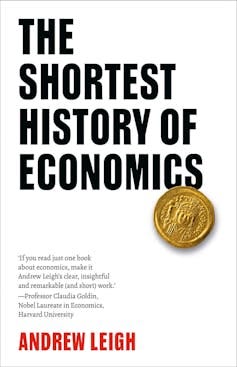
From micro to macro, Andrew Leigh’s accessible history covers the economic essentials: My review from The Conversation
Andrew Leigh’s The Shortest History of Economics is the latest in a series of such histories, mostly focused on particular countries.
It begins with a striking mini-history of household lighting, focusing on the amount of labour required to produce the light now given off by a standard lightbulb: 58 hours for a wood fire, five hours for a candle based on animal fat, a few minutes for an early electric lightbulb, and less than one second for a modern light-emitting diode.
The Shortest History of Economics – Andrew Leigh (Black Inc.)
Importantly, what is true of labour hours is also true of material inputs. Older technologies required felling a tree or killing an animal, but an LED uses the photoelectric properties of common crystals. It only needs tiny quantities. The input of electricity is similarly modest.
Start your day with evidence-based news.
Meanwhile, because workers in all kinds of activities have become more productive, the purchasing power of their wages, expressed in terms of services like lighting, has risen. The result is that services like lighting have become exceptionally cheap.
As this example shows, The Shortest History of Economics is not, as might be supposed, a history of economic thought (a topic primarily suited to retired economists like the author of this review). Rather, it is primarily a history of economic life, from Paleolithic times to the COVID pandemic.
The history is, however, informed by modern economics, included in the narrative in palatable doses.
Standards of living
The first half of the book, covering the period up to the Industrial Revolution, is mostly about technology. Leigh begins with the transition from hunter-gatherer societies – made up of relatively small groups of people, who followed their food sources around – to agriculture, which permitted and required larger settled populations.
The effect on living standards was ambiguous at best. Farmers were less likely than hunter-gatherers to suffer violent deaths or starve in winter, but they were almost permanently undernourished. They overworked to produce a surplus that enabled a small stratum of priests and warriors to live relatively luxurious lives.
The millennia following the agricultural revolution are covered pretty quickly, with a focus on developments in transport (mostly water transport) and trade. Leigh traces the gradual emergence of a global economy, culminating in the rise of European empires, whose reach depended on sail.
There are lots of interesting vignettes, covering topics such as social mobility. There wasn’t much, as can be seen by the persistence over centuries of the same surnames in high-status positions. More depressing is the discussion of the central role of the slave trade, which was a major source of labour in the Americas and income for European nations.
The second half of the book, covering the period after the Industrial Revolution, shifts the focus from technology to economic institutions and policy. The 19th century saw the rise of the corporation and the concentration of economic power.
This produced responses in the form of “anti-trust” legislation in the United States, usually referred to as “competition policy” in Australia. This remains an issue of central concern to Leigh in his day job, as assistant minister for Competition, Charities and Treasury.
The 19th century also saw the rise of the trade union movement and the beginning of an era of continuous struggle over the distribution of income between capital labour. The balance has ebbed and flowed.
As Leigh shows, labour has been losing ground since the 1970s in most countries, while those at the top of the income distribution have gained massively. The offsetting positive development is that the very poorest people in the world have generally improved their lot, thanks to the belated arrival of modern technology.
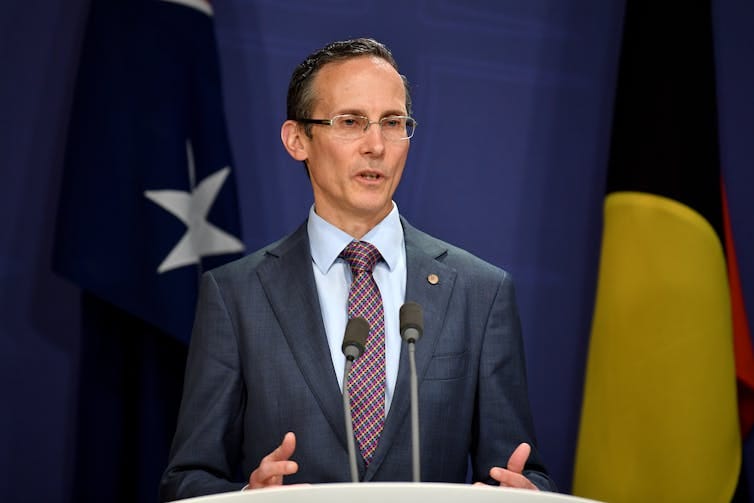
Andrew Leigh at a press conference in Sydney, August 23, 2023. Bianca De Marchi/AAP
Read more: Income redistribution or social insurance? A federal MP considers the future of the welfare state
Macroeconomics
The issues I have discussed so far have mostly concerned markets and prices, the topics studied by economists under the label “microeconomics”. But the 20th century also saw the emergence of “macroeconomics”, the analysis of booms, depressions, inflation and mass unemployment.
The key figure here was English economist John Maynard Keynes, whose General Theory of Employment, Interest and Money (1935) provided the theoretical basis for the use of public expenditure and taxation (fiscal policy) to stabilise the economy.
As Leigh notes in his introduction, The Shortest History of Economics is unusual among recent popular works on economics in covering both microeconomics and macroeconomics.
Despite proceeding briskly through millennia of economic history, Leigh manages to convey the essential points in a way that does not leave the reader feeling rushed through an incomplete argument. While it makes sense to begin by reading the book from beginning to end, it is also enjoyable to dip into it, more or less at random.
Inevitably, I have some points of disagreement. At a couple of points, Leigh gives uncritical credence to beliefs widely held among economists, but not supported by the evidence.
He repeats Adam Smith’s creation story for money as a more efficient alternative to barter. But a hundred years of anthropological evidence, beginning with my namesake Alison Hingston Quiggin and continuing to the work of the late David Graeber, suggests that money first emerged as a way of discharging debts (owed to the king whose face appeared on coins or as recompense for private injuries). It was only later adapted to use in commerce.
In his discussion of Keynesian macroeconomics, Leigh cites a popular rap video presenting a dispute between Keynes and Friedrich von Hayek, two of the great economists of the 20th century.
But in reality, although Hayek had criticised Keynes’ earlier Tract on Monetary Reform (1923), he did not even review his General Theory of Employment, Interest and Money. Arguably the most effective critic was A.C. Pigou, best known nowadays as the inventor of pollution taxes.
And Keynes was quite sympathetic to the arguments against economic planning Hayek presented in The Road to Serfdom (1944).
The idea of Hayek as Keynes’ primary antagonist is largely a piece of retroactive continuity (“retconning” in the jargon of genre fiction). The myth was created in the 1970s, following Hayek’s Nobel Prize in Economics in 1974 and his influence on political leaders, including Margaret Thatcher and Augusto Pinochet.
But these are quibbles, which will be of little concern to the general readership at which the book is aimed. As with all of the dozen or so books Leigh has produced since his election to Parliament (while also raising three children and maintaining a strenuous athletic regime – how does he do it?), The Shortest History of Economics is an engaging read, conveying economic insights to readers who would find a standard economics text both boring and impenetrable.
Old
In a few days time, I’ll be lining up in the 65-69 category for the Mooloolaba Olympic triathlon (1500m swim, 40km cycle, 10km run)[1]. People in this age category are commonly described as “aging”, “older”, “seniors”, “elders” and, worst of all, “elderly” (though this mostly kicks in at 70). The one thing we are never called is “old”. But this is the only term that makes any sense. Everyone is aging, one year at a time, and a toddler is older than a baby. Senior and elder are similarly relative terms. And “elderly” routinely implies “frail” (a lot of old people are frail, but many more are not.
What accounts for the near-universal squeamishness that surrounds the term “old”? Apart from the obvious fact that you are a bit closer to death, it’s not that bad being old. Even if not everyone can complete a triathlon, most people maintain (self-assessed) good health to age 85 and beyond, In most developed countries, old people can live a reasonably comfortable life without having to work. And on average, that’s reflected in measures of happiness.
Yet, at least in the Anglosphere, old people don’t seem to be happy in political terms. It’s voters over 65 who provide the core support for conservative parties and are most likely to welcome the drift to the far right represented by Trump and his imitators.
The pattern is particularly striking in the UK where the YouGov poll shows the right and far-right leading easily among voters over 65 (37% Tory + 28 % Reform), while gaining essentially no votes from those aged 20-24, where the Tories tie for 5th place with the SNP, behind Labor, Green, Reform and LibDems https://yougov.co.uk/politics/articles/48794-voting-intention-con-20-lab-46-28-29-feb-2024 [2].Presumably that reflects Brexit, a particularly irresponsible piece of nostalgia politics inflicted mostly by the old on the young.
But it’s the same in the US, Canada, Australia and (though mainly among women) New Zealand. While there has always been a tendency for old people to support the political right, it’s more marked now than it has ever been. And as is particularly evident with MAGA, there’s nothing conservative about this kind of politics. Its primary mode is authoritarian Christian nationalism.
In part, I think this reflects the increasing dominance of culture war issues, where views that were dominant 50 or 60 years ago are now considered unacceptable. Old people whose views haven’t changed in many years are likely to support the right on these issues.
I’d be interested in any thoughts on this.
fn1. Not expecting to do well, thanks to the hottest and stickiest summer I can remember, but I plan to finish.
fn2. A poll last year had the Tories on 1 per cent among young voters.
Dutton wants a ‘mature debate’ about nuclear power. By the time we’ve had one, new plants will be too late to replace coal
My latest in The Conversation via my Substack
If you believe Newspoll and the Australian Financial Review, Australia wants to go nuclear – as long it’s small.
Newspoll this week suggests a majority of us are in favour of building small modular nuclear reactors. A poll of Australian Financial Review readers last year told a similar story.
These polls (and a more general question about nuclear power in a Resolve poll for Nine newspapers this week) come after a concerted effort by the Coalition to normalise talking about nuclear power – specifically, the small, modular kind that’s meant to be cheaper and safer. Unfortunately, while small reactors have been around for decades, they are generally costlier than larger reactors with a similar design. This reflects the economies of size associated with larger boilers.
The hope (and it’s still only a hope) is “modular” design will permit reactors to be built in factories in large numbers (and therefore at low cost), then shipped to the sites where they are installed.
Coalition enthusiasm for talking about small modular reactors has not been dented by the failure of the only serious proposal to build them: that of NuScale, a company that designs and markets these reactors in the United States. Faced with long delays and increases in the projected costs of the Voygr reactor, the intended buyers, a group of municipal power utilities, pulled the plug. The project had a decade of development behind it but had not even reached prototype stage.
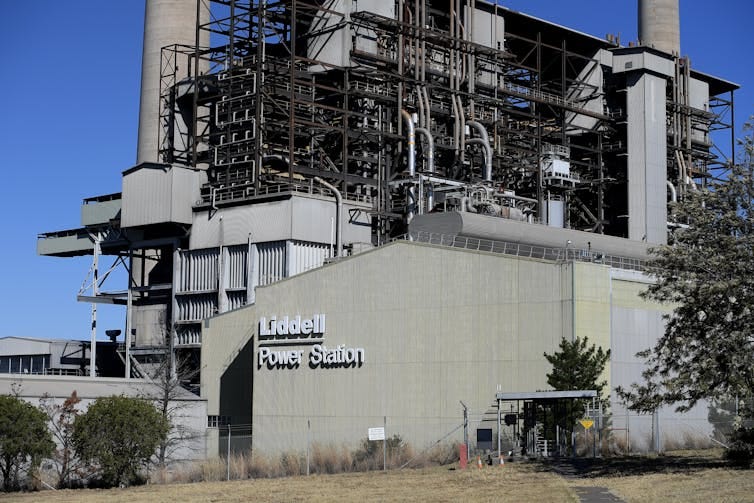
Other proposals to build small modular reactors abound but none are likely to be constructed anywhere before the mid-2030s, if at all. Even if they work as planned (a big if), they will arrive too late to replace coal power in Australia. So Opposition Leader Peter Dutton needs to put up a detailed plan for how he would deliver nuclear power in time. cr
So why would Australians support nuclear?
It is worth looking at the claim that Australians support nuclear power. This was the question the Newspoll asked:
There is a proposal to build several small modular nuclear reactors around Australia to produce zero-emissions energy on the sites of existing coal-fired power stations once they are retired. Do you approve or disapprove of this proposal?
This question assumes two things. First, that small modular reactors exist. Second, that someone is proposing to build and operate them, presumably expecting they can do so at a cost low enough to compete with alternative energy sources.
Unfortunately, neither is true. Nuclear-generated power costs up to ten times as much as solar and wind energy. A more accurate phrasing of the question would be:
There is a proposal to keep coal-fired power stations operating until the development of small modular reactors which might, in the future, supply zero-emissions energy. Do you approve or disapprove of this proposal?
It seems unlikely such a proposal would gain majority support.
Building nuclear takes a long time
When we consider the timeline for existing reactor projects, the difficulties with nuclear power come into sharp focus.
As National Party Senate Leader Bridget McKenzie has pointed out, the most successful recent implementation of nuclear power has been in the United Arab Emirates. In 2008, the UAE president (and emir of Abi Dhabi), Mohamed bin Zayed Al Nahyan, announced a plan to build four nuclear reactors. Construction started in 2012. The last reactor is about to be connected to the grid, 16 years after the project was announced.
The UAE’s performance is better than that achieved recently in Western countries including the US, UK, France and Finland.
In 16 years’ time, by 2040, most of Australia’s remaining coal-fired power stations will have shut down. Suppose the Coalition gained office in 2025 on a program of advocating nuclear power and managed to pass the necessary legislation in 2026. If we could match the pace of the UAE, nuclear power stations would start coming online just in time to replace them.
If we spent three to five years discussing the issue, then matched the UAE schedule, the plants would arrive too late.

Read more: Dutton wants Australia to join the “nuclear renaissance” – but this dream has failed before
It would take longer in Australia
Would it be possible to match the UAE schedule? The UAE had no need to pass legislation: it doesn’t have a parliament like ours, let alone a Senate that can obstruct government legislation. The necessary institutions, including a regulatory commission and a publicly owned nuclear power firm, were established by decree.
There were no problems with site selection, not to mention environmental impact statements and court actions. The site at Barakah was conveniently located on an almost uninhabited stretch of desert coastline, but still close enough to the main population centres to permit a connection to transmission lines, access for workers, and so on. There’s nowhere in Australia’s eastern states (where the power is needed) that matches that description.
Finally, there are no problems with strikes or union demands: both are illegal in the UAE. Foreign workers with even less rights than Emirati citizens did almost all the construction work.
Despite all these advantages, the UAE has not gone any further with nuclear power. Instead of building more reactors after the first four, it’s investing massively in solar power and battery storage.
Time to start work is running out
The Coalition began calling for a “mature debate” on nuclear immediately after losing office.
But it’s now too late for discussion. If Australia is to replace any of our retiring coal-fired power stations with nuclear reactors, Dutton must commit to this goal before the 2025 election.
Talk about hypothetical future technologies is, at this point, nothing more than a distraction. If Dutton is serious about nuclear power in Australia, he needs to put forward a plan now. It must spell out a realistic timeline that includes the establishment of necessary regulation, the required funding model and the sites to be considered.
In summary, it’s time to put up or shut up.
Back to the office: a solution in search of a problem
Managers need to recognise that the best way to dissipate authority is to fail in its exercise
Authority is powerful yet intangible. The capacity to give an order and expect it to be obeyed may rest ultimately on a threat to sanction those who disobey but it can rarely survive large-scale disobedience.
The modern era has seen many kinds of traditional authority come under challenge, but until now the “right of managers to manage” has remained largely immune. If anything, the managers’ power has increased as the countervailing power of unions has declined. But the rise of working from home and, more recently, Labor’s right to disconnect legislation pose unprecedented threats to the power of managers over information workers — those employees formerly known as “office workers.”
To see how this might play out, it’s worth considering the decline of another once-powerful authority, the Catholic Church.
Read More »Light-touch competition policy hasn’t helped Australian mortgage holders. It’s time to get tough
Just two weeks after Prof Allan Fels reported on the extent of monopoly power and resultant price gouging, Australia’s supreme body on competition law has delivered its answer.

The Australian competition tribunal has determined that the banking industry has all the competition we need and that no harm will be done by allowing ANZ to swallow one of the few competitors to the Big Four by acquiring the banking operations of Suncorp. This was the latest in a string of defeats for the Australian competition and consumer commission (ACCC), the regulator formerly headed by Prof Fels.
In effect, the tribunal reversed the burden of proof. Whereas the ACCC said it was not satisfied that the merger would not reduce competition significantly, the tribunal said this was not enough. It was up to the ACCC to prove the seemingly obvious point that a large firm taking over a smaller rival would reduce competition.
Perhaps this is a case of ‘Buggins’ turn’, with the ANZ having missed out on the acquisition party so far
In making its decision, the tribunal referred to the competition provided by Macquarie Bank, the sole survivor from the rush of entrants to the banking industry in the wake of deregulation in the 1980s, and to the role played by mortgage brokers like Aussie Home Loans (established in 1992).
This account ignores the disappearance of Advance Bank, St George Bank and the Bank of Melbourne, all swallowed by Westpac, Bankwest (now part of the Commonwealth Bank) and digital bank “86 400”, taken over by NAB, among others. But perhaps this is a case of “Buggins’ turn”, with the ANZ having missed out on the acquisition party so far.
Most of the institutions that have disappeared were originally either building societies or publicly owned lending institutions. That’s true of Suncorp bank, formed from a merger of Metway (the former Metropolitan Permanent Building Society) and the Queensland Industry Development Corporation (formerly the Queensland Agricultural Bank).
In the pre-deregulation era, these institutions provided important competition for the private banks, which were subject to relatively stringent regulatory constraints in return for privileged access to support from the Reserve Bank. Deregulation removed those constraints, while maintaining the benefits of bank status. Non-bank financial institutions found it nearly impossible to compete, and most turned themselves into small banks, ripe for takeover.
Competition did produce some reductions in bank margins over the course of the 1980s, though much of the reduction was offset by increased fees and charges. But in the 15 or so years since the global financial crisis, margins have barely moved. Meanwhile, the average new mortgage (adjusted for inflation) has risen by about 60%. So the banks are making a lot more money for the same basic service.
As in other industries, such as electricity and telecommunications, the privatisation of government enterprises in the banking sector was undertaken in the belief that competition would protect consumers from exploitation. This was the central theme of the report of the National Competition Policy Review Committee, usually called the Hilmer review after its chair, Fred Hilmer, who subsequently became (among other things) a director of Macquarie Bank. The central theme of the review was the need to protect private enterprise from the unfair competition of the public sector. The ACCC was supposed to keep private monopolists in line.
Thirty years after the Hilmer review, it’s evident that nothing of the kind has happened. Markets are as concentrated as ever and the ethic of public service which continued to influence firms such as Qantas, Telstra and the Commonwealth Bank for some time after privatisation has long since disappeared.
If competition policy is to have any real effect, it must be strengthened. First, responding to the latest tribunal decision, competition policy should reverse the burden of proof. Any acquisition by a dominant firm should be presumed to be anti-competitive, and it should be up to the acquirer to prove otherwise. As recommended in the Fels report, there should be a divestiture power, enabling previous mergers to be unwound.
But this is unlikely to be enough. As in the cases of electricity and telecommunications, it is necessary for the public sector to re-enter the market. In the case of banking, the urgency is increased by the rapid disappearance of cash, which is increasing our dependence on banks whether we like it or not.
We need a public guarantee of access to cash, perhaps provided through Australia Post. In the longer term, as physical cash inevitably fades, we may need to consider the provision of digital cash issued by the Reserve Bank. This could provide the basis for publicly guaranteed savings accounts, independent of the private banking system.
Decades of “light-handed” regulation under neoliberalism have done little to benefit Australian households. In competition policy and elsewhere, it’s time to for government to get a bit more heavy-handed.
Some good news from Oz (crosspost from Crooked Timber)
Over the last few years, the Australian and UK Labor/Labour[1] parties, have followed strikingly parallel paths.
- A better-than expected result with a relatively progressive platform (Oz 2016, UK 2017)
- A demoralizing defeat in 2019, followed by the election of a new more conservative leader (Albanese, Starmer)
- Wholesale abandonment of the program
- Failure of the rightwing government to handle Covid and other problmes
Because we have elections every three years, Australia is now ahead of the UK and we now have a Labor government led by Anthony Albanese. In its election campaign and its first eighteen months in office, Labor ran on a platform of implementing rightwing policies with better processes and minor tweaks to the most repressive aspects. This is, AFAICT, what can be expected from Starmer in the UK.
But over the last month or so, we’ve had a series of significant policy wins, which may set the stage for more.
Read More »For corporations, greed is good – so how can Australia really tackle price gouging?
My latest piece in The Guardian.
The long-running debate over “price gouging” should have been settled yesterday by the release of a report by Allan Fels, the former chair of the Australian Competition and Consumer Commission (ACCC). The report, commissioned by the ACTU, found that a wide range of Australian industries are characterised by limited competition, giving powerful firms ample scope to extract large profit margins.

Consistent with international evidence, most of the inflation observed in the wake of the pandemic was captured in the form of increased profit margins. Contrary to the dominant economic model – in which inflation begins in the labor market, with higher wages being passed on to prices – the recent inflation has seen wages lag far behind prices. In some countries, notably the US, real wages have recovered, but in Australia they are still well below the pre-Covid level for most workers.
The facts are clear enough. But they raise the question: why now? In addition to market power, much of the discussion of price gouging has focused on denunciations of corporate greed and on the various tricks (such as “shrinkflation”) that can be used to raise prices surreptitiously.

But personal greed isn’t new (it’s one of the seven deadly sins, after all). There’s no obvious reason to think that corporate managers have become personally greedier in the years since the pandemic.
More importantly: greed in the form of profit maximisation is the driving engine of capitalism. That’s why Gordon Gecko in Wall Street, echoing his real-life models Ivan Boesky and Michael Milken, said: “Greed, for lack of a better word, is good.”
In corporate-speak, this is usually shrouded in euphemisms like “shareholder value”, or softened by pledges of “corporate social responsibility”, but profit is still the main goal.
Devices like shrinkflation have also been around for a long time. In his classic 1933 work The Theory of Monopolistic Competition, which (along with the contemporaneous work of Joan Robinson) introduced the idea of imperfect competition, Edwin Chamberlin described this and other deceptive practices.
As for uncompetitive markets, this is certainly nothing new in Australia. It has mostly got worse over time, particularly as public infrastructure services have been sold off to private monopolies; but this trend hasn’t been uniform. Notably, the arrival of Aldi has provided some competition for the dominant supermarket chains, Woolworths and Coles. And there has been no particular change that would explain the upsurge in profit margins over the last few years.
Rather, recent inflation has resulted from the interaction between corporate market power and pent-up demand from forced saving during the lockdowns. Economic analysis, including my own work with Flavio Menezes (quoted in the Fels report), shows that increased demand allows firms with market power to increase their margins, exacerbating any initial inflationary shock.
Unfortunately, the process does not work smoothly in reverse. Because wages are slow to adjust, a policy-induced slowdown – such as that now being engineered by the Reserve Bank – will prevent wages from catching up to past inflation, effectively freezing higher profit margins into place.
What then, should be done?
First, instead of focusing solely on the consumer price index as the measure of the “cost of living”, we should be looking at profit margins – largely determined by the gap between prices and wages. Restoring wages is more important than a rapid return to an arbitrary target rate of CPI inflation.
In the longer term, we need to tackle the problems of an economy in which most markets are dominated by a handful of firms. In part, this can be achieved by strengthening the powers of the ACCC. Most importantly, as suggested in the Fels report, there is the possibility of breaking up firms that are already dominant in their markets – Qantas is an obvious target here.
But in an economy as small as Australia’s, dominance by a handful of firms is inevitable in many cases. One possible solution, suggested in the Fels report, is more extensive price regulation.
In the case of infrastructure utilities, the remedy in most cases is to abandon the failed experiments of privatisation and corporatisation and return to public ownership. Ideally, this would involve a statutory authority model in which the objective is to maximise social benefits rather than profits, while setting prices sufficient to cover operating and capital costs.
It’s another idea that’s been around for a long time. But it’s one that might be worth trying.
Labor’s fuel-efficiency standards may settle the ute dispute – but there are still hazards on the road
My latest piece in The Conversation, looking at Australia’s belated move to adopt fuel efficiency standards for light vehicles
Australia looks set to adopt fuel-efficiency standards after the Albanese government on Sunday revealed options for the long-awaited policy. The government says the reform would lead to more cars that are cheaper to run, eventually saving Australians about A$1,000 per vehicle each year.
The announcement comes a decade after the Climate Change Authority first proposed such a standard for Australia. The United States has had such a policy since the 1970s and the European Union implemented mandatory standards in 2009.
The Coalition has already sought to stoke fears among tradies and regional voters by claiming Labor’s policy threatens to take utes off the road. Labor’s policy is designed to address this concern – but the opposition looks likely to continue this scare campaign.
More generally, history tells us the road to fuel-efficiency reform in Australia is a bumpy one. The Albanese government has hazards to negotiate before its proposal becomes law.
Make better decisions – find out what the experts think.

A carbon price, by another name
Labor has outlined three options for a fuel-efficiency target, ranging from weak to aggressive. It describes its preferred middle-ground option as the sensible compromise.
The policy design for each of the options would set a national limit, averaged across all new cars sold, stipulating grams of CO₂ that can be emitted for each kilometre driven. This measure depends on fuel efficiency: that is, the amount of fuel burnt per kilometre. The designs differ in the stringency of the targets, the speed of the changes and the treatment of different vehicle classes.
The limit would not apply to individual cars. Instead, each supplier of new light vehicles to Australia would have to make sure the mix of vehicles does not exceed the limit. Low-efficiency vehicles could still be sold, but car dealers would have to balance this out by selling enough high-efficiency vehicles, such as electric vehicles.
Car suppliers that outperform the targets would earn credits that could be sold to those falling short. This system is similar to Australia’s renewable energy target for electricity and the safeguard mechanism for industry pollution.
All three are effectively a carbon price (though the political toxicity of that term means the government would never characterise them as such). Nonetheless, should the fuel-efficiency standards be implemented, Australia would end up with three carbon prices, one for each major energy use.
The government says the preferred option would lead to a saving of 369 million tonnes of CO₂ by 2050.

What about utes?
One tricky path the policy must navigate is allowing for the supply of both small and large vehicles without further exacerbating the trend towards oversized vehicles on our roads.
The government’s preferred option achieves this by allowing higher – but still limited – emissions for heavier vehicles such as utes, vans and SUVs, to account for their natural tendency to use more fuel.
Heavier vehicles are a sticking point in forming vehicle emissions policy in Australia. Who could forget then-prime minister Scott Morrison’s 2019 claim Labor’s electric vehicle policy would “end the weekend” by banning larger cars used to tow boats and the like.
Following Labor’s policy announcement on Sunday, Nationals leader David Littleproud picked up where Morrison left off, saying:
If you take away particularly utes, they’re tools of trade, particularly for people, not just tradies in the cities, but also people in the bush. And if you put a tonne on the back of an electric ute at the moment, you don’t get far.
Anticipating the Coalition scare campaign, the Labor government’s preferred option has been designed with the aim of ensuring a wide range of conventional utes remain on the market.
In the medium term, we can also expect the trend towards larger vehicles to be weakened by measures in Labor’s last federal budget to roll back vehicle tax breaks for small and medium businesses. But that change doesn’t come into effect until mid-year, which means there may be a rush on larger vehicle purchases until then.

Read more: Electric utes can now power the weekend – and the work week
Ghosts from the past
Labor’s preferred policy option is broadly similar to that put forward by the Climate Change Authority in 2014. Then, the Coalition government appeared to consider the proposal for a time. But it eventually dropped the idea – in part, presumably, due to lobbying by interest groups including the car industry.
There are signs those same groups are gearing up again. The Federated Chamber of Automotive Industries, for example, said on Sunday the government’s targets will “be a challenge” to meet and may lead to more expensive vehicles, or gaps in the supply of utes and SUVs.
But the proposed policy has been welcomed by climate change advocates, the electric vehicle industry and motoring groups. The NRMA described them as “responsible and achievable”, saying “a business-as-usual approach meant that Australian families and businesses were not benefiting from the best technology designed to reduce fuel consumption”.
Progress, at last
The government intends to consult on its preferred model before introducing the legislation, with a view to enacting the policy in January 2025.
Assuming the policy is adopted, Australia would finally shed its unenviable status as the only developed country without such such standards. But we will still be at the back of pack, far behind the EU and only catching up to the US in 2028.
Despite the difficulties, it seems likely Australia will have fuel-efficiency standards in the near future. As with most measures to reduce emissions, the best time to introduce the policy was ten or more years ago. But the second-best time is now.

