Have they changed, or just become their worst selves
While Trump is unpopular with a majority of Americans, his support among Republicans remains solid. That’s despite blatant corruption, fascist policies and a failure to deliver any of the economic benefits he promised. Faced with this depressing fact, the standard New York Times response has been to send an intrepid reporter to “Trump Country” (rural Kentucky or Midwestern diners) to find out what is going on.
But it would be far more instructive to send them to Long Island, where Trump won both counties in 2024. Long Island voters have given solid support to Republicans at all levels. Even as he was crushingly defeated in New York as a whole, Mitt Romney got close to half the vote in Suffolk and Nassau counties. Trump did a few percentage points better in 2024, winning both. But he would have gone nowhere if not for the solid support of Romney voters
This doesn’t fit at all with the usual stories about Trump voters. The residents of Long Island are not the “left-behinds” routinely described in explanations of Trump’s appeal. The average income is over $100 000 and unemployment rates have long been around 3 per cent. Like most New Yorkers, Long Islanders have been beneficiaries of the globalised economy of which Romney was a symbol. And, if you were to believe Jonathan Haidt’s The Righteous Mind they did so because they valued honor, loyalty and purity, qualities Trump routinely trashes.
Democrats from Hillary Clinton on assumed that these contradictions would lead suburban Republicans to abandon Trump in numbers large enough to offset any losses of Democrats attracted by Trump’s racism and misogyny. Evidently this is not the case. Not only have the Republicans who once voted for Romney maintained their support for Trump but they have preferred him to any Republican alternative. And, with few exceptions, they have embraced Trump’s racist and fascist policies, even as he approaches outright Nazism.
What has happened here? Has Trump, as Walter Olson suggests, radicalised his followers leading them to support positions they would once have rejected? Or has he simply allowed them to reveal themselves (or at least their worst selves) as the racists and fascists they always were?
The answers to these questions are academic, in the pejorative sense of the term, as regards the US. Romney-Trump voters have made their choice, and there is no going back to old-style Republicanism. Perhaps, if enough of them realise that their choices have been both evil and disastrous for the US as a whole, the regime might collapse relatively quickly. But there is no sign of that.
The big question for those of us living outside the US is whether it could happen here. As long as the far-right remains essentially a protest party for low-education voters who are mostly disengaged and disaffected, like Pauline Hanson’s One Nation in Australia, its occasional flare-ups can be expected to fade, as appears to have happened with Geert Wilders in the Netherlands. But if the middle class and business base of the mainstream conservative parties goes the same way, democracy is in trouble.
Another Monday Message Board. Post comments on any topic. Civil discussion and no coarse language please. Side discussions and idees fixes to the sandpits, please.
I’ve held off posting this in the hope of coming up with some kind of positive response, but I haven’t got one.
When I wrote back in November 2024 that Trump’s dictatorship was a fait accompi there was still plenty of room for people to disagree. But (with the exception of an announced state of emergency) it’s turned out far worse than I thought possible.
Opposition politicians and judges have been arrested for doing their jobs, and many more have been threatened. The limited resistance of the courts has been effectively halted by the Supreme Court’s decision ending nationwide injunctions. University leaders have been forced to comply or quit. The press has been cowed into submission by the threat of litigation or harm to corporate owners. Political assassinations are laughed about and will soon become routine. With the use of troops to suppress peaceful protests, and the open support of Trump and his followers, more deaths are inevitable, quite possibly on a scale not seen since the Civil War.
The idea that this process might be stopped by a free and fair election in 2026 or 2028 is absurdly optimistic. Unless age catches up with him, Trump will appoint himself as President for life, just as Xi and Putin have done.
None of this is, or at least ought to be, news. Yet the political implications are still being discussed in the familiar terms of US party politics: swing voters, the centre ground, mobilisation versus moderation, rehashes of the 2024 election and so on. Having given up hope, I have no interest in these debates. Instead, I want to consider the implications for the idea of democracy.
The starting point is the observation that around half of all US voters at the last three elections have supported a corrupt, incompetent, criminal racist and rapist, while another third or more of US citizens have failed to vote at all. And Trump’s support has not been diminished to any significant extent (if at all) by his actions since returning to power.
Any claims that might be made to exonerate Trump’s voters or mitigate the crime they have committed don’t stand up to scrutiny. The US did not face any kind of crisis that might justify such an extreme outcome (as, for example, Germany did in 1933). Unemployment was at historically low levels. The short-lived inflation resulting from the pandemic was well below the rates of the late 20th century, crime was far below those rates. And so on. The only real driving factor was the resentment and hatred felt by Trump’s voters for large groups of their compatriots.
One part of this is fear of immigrants, particularly but not exclusively, asylum seekers and other undocumented immigrants. But this fear has long been a winning issue for the political right, in many countries including Australia. It has not produced anything like the turn to dictatorship we have now seen in the US.
In this context what matters is not the marginal groups of swinging voters who have absorbed so much attention: the “left behind”, the “manosphere” and so on. It’s the fact that comfortably off, self-described “conservative”, white suburbanites, historically the core of the Republican base, have overwhelmingly voted for, and welcomed, the end of American democracy.
This is something that, as far as I can tell, is unprecedented in the history of modern democracy, and threatens the basic assumptions on which democracy is built. While the last 200 years of modern (partial or complete) democracy have seen plenty of demagoguery, authoritarian populism and so on, these have invariably been temporary eruptions rejected, relatively quickly, by an enduring democratic majority. The idea that a party that has been part of the constitutional fabric of a major democracy for more than 150 years, would abandon democracy and keep the support of its voters was inconceivable. That’s why so many have refused to admit it, even to themselves.
Nothing lasts forever, but there is no obvious way back from dictatorship for the US. Viewed in retrospect, the the Republican party was a deadly threat to US democracy from the moment of Trump’s nomination in 2016 and certainly after the 2021 insurrection.
With the benefit of hindsight, Biden might have declared a state of emergency immediately after the insurrection, arrested Trump, and expelled all the congressional Republicans who had voted to overturn the election. But this would itself have represented an admission that democratic norms had failed. It was far more comfortable to suppose that Trump had been an aberration and that those norms would prevail as they had done at previous moments of crisis. That is no longer possible.
As I siad, I’ve held off posting this in the hope of coming up with some kind of positive response, but I haven’t got one. The best I can put forward is that the US, founded on slavery, has never been able to escape its original sin, and is unique in that respect. Every country has its original sin and a dominant group with its racist core. But only in the US (so far) has that core secured unqualified majority support. The downfall of American democracy should serve as a warning. For conservative parties, flirting with fascism is a deal with the devil that must be avoided. For the left, the nostalgic appeal of the “white (implicitly male) working class” should not tempt us into pandering to racist and misogynist reaction.
I don’t know whether that will be enough to save us. At least in Australia, Trumpism is political poison. But until we understand that Trumpism is not an aberration but the course Americans have chosen, we will not be able to free ourselves from our past allegiance to an idea which is now an illusion.
Another Monday Message Board. Post comments on any topic. Civil discussion and no coarse language please. Side discussions and idees fixes to the sandpits, please.
Pro-natalism (the idea that people, or rather, women, should have more babies than they choose to do at present) has become an established orthodoxy,[1]. The central claim is that, unless something changes soon, human populations both global and national, are going to decline rapidly, with a lot of negative consequences. This is simply not true, on any plausible assumptions about fertility[2]
There’s no need for me to do any calculations here. For many decades he Population Division of the UN Department of Economic and Social Affairs has been producing population projections for the world, and individual countries, under a variety of scenarios. One finding is unambiguous. Short of a drastic decline in fertility, far beyond what we are now seeing there will be more people on Earth at the end of this century than there were at the beginning
The range of projections considered plausible is the shaded area. All the projections in that range show population increasing for several decades to come, and remaining higher than at present at the end of the century. The reason is simple. Global fertility is close to the replacement level (one surviving daughter per woman) at present, but past growth means that a large proportion of the population is in, or approaching, child-bearing years. It’s only when this group ages out that the effects of declining fertility, assumed in the lower projections will start to dominate
What about the blue dotted lines? These assume drastic reductions in fertility. On the low side, that involves the entire world becoming like South Korea, where the combination of high employment rates for women and pre-modern male attitudes on gender role has produced reproduction rates below 0.5.
But even in this extreme case, world population in 2100 only falls to 6 billion, the same as in 2000. I was around at the time, and did not feel as if there were too few people about.
One reason these predictions have only a limited range of variation is that most of the growth in population is already baked in. There are 2 billion or so children under 14 at present in the world, and most of them will be around in 2100 as will their soon-to-be-born siblings.
What about the need for workers? One unsatisfactory feature of long-running projections like this is the use of outdated statistical concepts such as the “dependency ratio”, that is, the ratio of people aged 15-64 to everyone else. That made sense 50 years ago, when this range represented the period between leaving school and retiring in most industrial societies. But these days (and it will be even more so in 2100) education continues well past 20 and retirement is often deferred to 70 or more. A look at the age group 25-69 shows that it is going to remain more or less stable in absolute numbers declinging only marginally relative to the growing population
Population projections for individual countries depend largely on what happens to migration. In the absence of stringent restrictions, the flow of migrants from poorer to richer countries will largely offset differences in fertility, meaning that the trajectory for individual countries will look similar to that for the world.
Of course, if you combine low fertility and an already-old population with hostility to immigrants, and you can’t stop your own young people from seeking a better life abroad, you end up with a sharply declining population, as in South Korea and Hungary. But it’s much easier to let more migrants in (there are plenty of young adults, many of them well-educated, knocking at the door) than to persuade people to have more babies.
There is no difficulty in gaining access to these projections, and anyone with a spreadsheet and a bit of time can reproduce them. Yet I’ve read dozens of pro-natalist articles in both traditional and new media and the evidence is never mentioned. Maybe I’m living on the wrong planet.
fn1. Some this is driven by racists worrying specifically about the lack of white babies. But the belief that declining fertility is a crisis is also dominant among centrists, like those pushing the “abundance agenda”, who also support high levels of immigration. Archetypal example is Matt Yglesias who advocates One billion Americans
fn2 There are plenty of ways in which we are risking massively increased mortality (nuclear war, climate catastrophe, pandemics, AI apocalypse etc), but having babies won’t help in those cases.
Another Monday Message Board. Post comments on any topic. Civil discussion and no coarse language please. Side discussions and idees fixes to the sandpits, please.
Another Monday Message Board. Post comments on any topic. Civil discussion and no coarse language please. Side discussions and idees fixes to the sandpits, please.
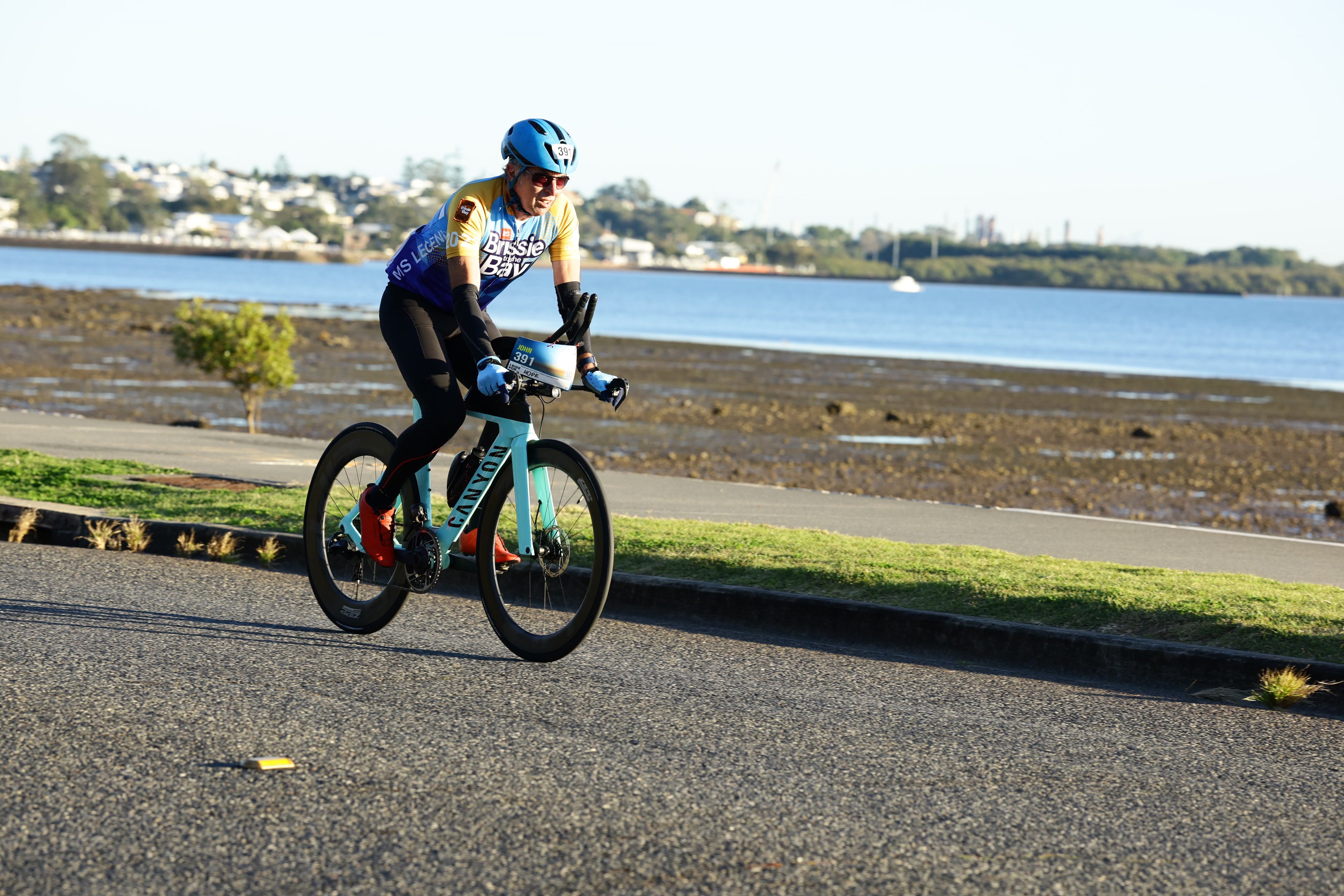
My Brissie to the Bay cycle for MS Queensland, a huge success. Donations totalled $2595, which gave me the title of “Neuro Legend”. Thanks again to all the readers and friends who keep me going on events like this. I’ll never be competitive as a triathlete, but I’m still on top of my game as a fundraiser.
The weather leading up to the event was bitterly cold by Brisbane standards, falling as low as 3° C, but on the day it was very pleasant, starting at 9° C and warming up after sunrise. I had a great time for the first 80km, but suffered a bit on the final 50, which accounted for most of the 1100 metres of total climbing, moderated by some nice downhill runs.
I had only returned on Friday from a three-week trip overseas, during which I couldn’t do any real cycling, so I’m going to attribute my lack of stamina to being out of practice, rather than to my advancing years. I’ll be testing this theory in the Sunshine Coast 70.3 Ironman in September, which includes a 90km ride, between the 1.9km swim and half-marathon run.
As usual, my beautiful Canyon bike attracted lots of nice comments, and my jersey showing status as an MS Legend from previous years got me some encouragement as fellow-riders passed me towards the end.
My reward was another MS cycle jersey. Unfortunately, by the time I finished they’d run out of all sizes except XXL. If anyone who donated would like a huge cycle jersey, just email me at john.quiggin@icloud.com
As always when raising money to fight disease and illness, I’m reminded how lucky I am to have made it to the Biblical three score years and ten (next birthday) without any significant impairment to my health, as well as being in good shape financially. I know that many of my readers aren’t so lucky, and need to focus on looking after their own difficulties. But if you can help, please do.
I’m riding 130km on Sunday to raise money for the Brissie to the Bay cycle for MS Queensland, my longest running fundraising event. I reached my target of $2000, with a couple of days to spare. So of course, I’ve set my sights higher. The top level in the fundraising hierarchy is “Neuro Legend”, and it will only take another $500 to get there. The reward is a lovely MS cycle jersey. I already have a couple, so I’ll use this as an incentive/gimmick. I’ll give the jersey to the first person to donate $100 and include contact details. If you’ve already donated $100 and would like the jersey, get in touch, first come best dressed.
Thanks again to all the readers and friends who keep me going on events like this. I’ll never be competitive as a triathlete, but I’m still on top of my game as a fundraiser.
As always when raising money to fight disease and illness, I’m reminded how lucky I am to have made it to the Biblical three score years and ten (next birthday) without any significant impairment to my health, as well as being in good shape financially. I know that many of my readers aren’t so lucky, and need to focus on looking after their own difficulties. But if you can help, please do.
The May 2025 federal election campaign was characterised by a studious avoidance of the main issues facing Australia, most notably the country’s future relationships with the United States and China. Canberra should confront the quandaries redefining the US relationship, initiated by President Donald Trump’s second term. Washington’s radical reorientation shows no sign of reversing even after 2028, when Trump is due to leave office.
The major parties’ avoidance of this issue is unsurprising given the complex attitudes of the Australian public, particularly towards the United States. On the one hand, Australians’ views of US President Donald Trump are overwhelmingly negative, a fact that contributed to the scale of the conservative Liberal–National Coalition’s defeat. On the other hand, there has been no genuine challenge to the general belief of policymakers, and the majority of the public, that Australia’s alliance with the United States is both necessary and beneficial.
During Trump’s first term in office, these seemingly contradictory perceptions could be reconciled. Trump’s election was seen as an aberration, driven by dislike of the Democratic candidate Hillary Clinton and the vagaries of the Electoral College system. His bellicose rhetoric could be dismissed as theatrical bravado. The phrase ‘take him seriously, but not literally’ was coined by writer Salena Zito to describe the attitudes of Trump supporters in 2016. The adage became conventional wisdom. Trump’s conventional Republican choices for Cabinet appointments meant that his policy choices were supposedly constrained by ‘the adults in the room’.
Joe Biden endorsed the view of Trump as an aberration after his narrow victory in the 2020 election. After Biden proclaimed that ‘America is back’ and the strong backlash against the storming of the Capitol on 6 January 2025, it seemed that Trump and Trumpism would be driven from public life.
The situation in 2025 is radically different. Having been vindicated by a plurality of voters in the 2024 election, Trump has governed as a radical extremist, with appointees to key positions who are, if anything, even more extreme than he is. Both domestically and internationally, he has shown a clear preference for dictatorship over democracy. And there is no reason to suppose that things will return to pre-Trump normality even assuming he leaves office as scheduled
The May 2025 federal election campaign was characterised by a studious avoidance of the main issues facing Australia, most notably the country’s future relationships with the United States and China. Canberra should confront the quandaries redefining the US relationship, initiated by President Donald Trump’s second term. Washington’s radical reorientation shows no sign of reversing even after 2028, when Trump is due to leave office.
The major parties’ avoidance of this issue is unsurprising given the complex attitudes of the Australian public, particularly towards the United States. On the one hand, Australians’ views of US President Donald Trump are overwhelmingly negative, a fact that contributed to the scale of the conservative Liberal–National Coalition’s defeat. On the other hand, there has been no genuine challenge to the general belief of policymakers, and the majority of the public, that Australia’s alliance with the United States is both necessary and beneficial.
During Trump’s first term in office, these seemingly contradictory perceptions could be reconciled. Trump’s election was seen as an aberration, driven by dislike of the Democratic candidate Hillary Clinton and the vagaries of the Electoral College system. His bellicose rhetoric could be dismissed as theatrical bravado. The phrase ‘take him seriously, but not literally’ was coined by writer Salena Zito to describe the attitudes of Trump supporters in 2016. The adage became conventional wisdom. Trump’s conventional Republican choices for Cabinet appointments meant that his policy choices were supposedly constrained by ‘the adults in the room’.
Joe Biden endorsed the view of Trump as an aberration after his narrow victory in the 2020 election. After Biden proclaimed that ‘America is back’ and the strong backlash against the storming of the Capitol on 6 January 2025, it seemed that Trump and Trumpism would be driven from public life.
The situation in 2025 is radically different. Having been vindicated by a plurality of voters in the 2024 election, Trump has governed as a radical extremist, with appointees to key positions who are, if anything, even more extreme than he is. Both domestically and internationally, he has shown a clear preference for dictatorship over democracy. And there is no reason to suppose that things will return to pre-Trump normality even assuming he leaves office as scheduled
As far as Australia is concerned, Trump has made it clear that the United States will not be bound by treaties — even those he negotiated in his first term. Further, he believes that all US allies, including Australia, have cheated the United States in the past and deserve punishment. His 10 per cent tariff on Australian exports, while lower than those announced and then suspended for countries with which the United States runs a trade deficit, represents a clear breach of the US–Australia Free Trade Agreement.
In these circumstances, it would be foolish to expect that the United States would come to Australia’s aid in the — fortunately remote — event of a conflict with a regional neighbour. This realisation has coincided with a historical reassessment that the United States has always viewed its Australian alliance as more transactional than Australians themselves imagined.
Then Australian prime minister John Curtin’s famous turn to Washington in the Second World War was negatively received in the United States, which viewed Australia more as a geographically convenient base for fighting Japan than as a natural ally. The United States declined to militarily assist Australia during the Indonesian Confrontation and the Malayan Emergency — Commonwealth operations against Southeast Asian insurgents in the 20th century. They gave only grudging and limited support for the liberation of East Timor.
But even this relatively limited support is far more than Australia could expect from the Trump administration or its possible ideological successors.
The US alliance is also seen as offering Australia domestic and regional security through the ‘Five Eyes’ intelligence sharing arrangement and access to high-tech defence equipment. But Trump has already compromised the potential of both benefits, reportedly planning massive cuts to the Central Intelligence Agency and threatening to expel Canada from the Five Eyes agreement.
As the politicisation of all aspects of the US government continues, there can be no guarantee that intelligence sharing would not be manipulated to benefit the United States at Australia’s expense. Similar issues arise with military equipment. Trump’s threat to restrict alliance partners to functionally limited versions of the new F-47 fighter aircraft have led many potential buyers to consider alternatives such as the French Dassault Rafale fighter aircraft.
The re-elected Albanese government needs to accept the fact that the United States, as Australians have imagined it since Curtin’s famous speech, is gone for good. In the new world, the United States no longer has allies, only clients who can be discarded whenever it becomes convenient to do so. Meanwhile China, which was attempting to use trade coercion against Australia until recently, continues to assert its own claims.
In protecting itself against the hegemonic pretensions of the great powers of the United States and China, Australia must find a balance between the two that preserves its independence.
The re-elected Albanese should pursue closer relations with Asian neighbours who face the strategic predicament.
As far as Australia is concerned, Trump has made it clear that the United States will not be bound by treaties — even those he negotiated in his first term. Further, he believes that all US allies, including Australia, have cheated the United States in the past and deserve punishment. His 10 per cent tariff on Australian exports, while lower than those announced and then suspended for countries with which the United States runs a trade deficit, represents a clear breach of the US–Australia Free Trade Agreement.
In these circumstances, it would be foolish to expect that the United States would come to Australia’s aid in the — fortunately remote — event of a conflict with a regional neighbour. This realisation has coincided with a historical reassessment that the United States has always viewed its Australian alliance as more transactional than Australians themselves imagined.
Then Australian prime minister John Curtin’s famous turn to Washington in the Second World War was negatively received in the United States, which viewed Australia more as a geographically convenient base for fighting Japan than as a natural ally. The United States declined to militarily assist Australia during the Indonesian Confrontation and the Malayan Emergency — Commonwealth operations against Southeast Asian insurgents in the 20th century. They gave only grudging and limited support for the liberation of East Timor.
But even this relatively limited support is far more than Australia could expect from the Trump administration or its possible ideological successors.
The US alliance is also seen as offering Australia domestic and regional security through the ‘Five Eyes’ intelligence sharing arrangement and access to high-tech defence equipment. But Trump has already compromised the potential of both benefits, reportedly planning massive cuts to the Central Intelligence Agency and threatening to expel Canada from the Five Eyes agreement.
As the politicisation of all aspects of the US government continues, there can be no guarantee that intelligence sharing would not be manipulated to benefit the United States at Australia’s expense. Similar issues arise with military equipment. Trump’s threat to restrict alliance partners to functionally limited versions of the new F-47 fighter aircraft have led many potential buyers to consider alternatives such as the French Dassault Rafale fighter aircraft.
The re-elected Albanese government needs to accept the fact that the United States, as Australians have imagined it since Curtin’s famous speech, is gone for good. In the new world, the United States no longer has allies, only clients who can be discarded whenever it becomes convenient to do so. Meanwhile China, which was attempting to use trade coercion against Australia until recently, continues to assert its own claims.
In protecting itself against the hegemonic pretensions of the great powers of the United States and China, Australia must find a balance between the two that preserves its independence.
The re-elected Albanese should pursue closer relations with Asian neighbours who face the same strategic predicament.