The CIS and social democracy

Readers may be familiar with the concepts of “subtweeting” and “vaguebooking”, referring to social media posts which are clearly aimed at someone in particular who is, however, unnamed. (There’s nothing specifically “new media” in this – the Oz does it pretty regularly, for example.)

I’ve just had the reverse experience. An article in the Guardian by Eugenie Joseph of the Centre for Independent Studies starts out by linking to my piece on a (partially) socialist utopia, also in the Guardian. I assumed, reasonably enough I thought, that Joseph would offer some kind of critique of my piece.

Reading on, however, it became clear that far from offering a critique, she hadn’t even read it. That at least saves me from the trouble of writing a detailed response. I’ll just note a few of the weakest points, and leave it at that.

Most obviously, Joseph and the CIS want to have it both ways: when playing defence, she ascribes to capitalism all the good things that have occurred in the last 200 years, , even though social democratic governments and public institutions played a central role in many of them. But the rest of the time, the CIS interprets the term “capitalism” in terms of free markets and a minimal state. This kind of bait and switch has been christened, the Two-Step of Terrific Triviality by my Crooked Timber co-blogger John Holbo.

As an example, Joseph claims, that capitalism has given us “our mobile phones, the internet, vaccines, and antibiotics”. This is a quarter-truth. Capitalism can reasonably claim credit for mobile phones. But vaccines were around before capitalism, which has done a lousy job in supplying them because they are such low-profit items – who wants to sell a product that costs almost nothing and is only used once in a lifetime? The Internet was developed by the universities and the non-profit sector with seed funding from the US military. Its current messy state reflects the takeover by corporations like Google and Facebook, which have recreated the “walled gardens” of the Internet’s early competitors. Antibiotics were the other way around. Penicillin was first developed by publicly funded and non-profit researchers, then produced on an industrial scale by the War Production Board in the US.

After the obligatory swipe at Venezuela, Joseph cites only one example of successful capitalism – the Nordic countries, whose welfare states she mentions with approval. (When not addressing a mass audience, the CIS message is rather different “Mimicking European policies is the surest way to economic disaster.”)

Still, I’ll take agreement where I can find it. As Paul Krugman remarked in relation to my piece,

Quiggin’s scenario — it really is more of a super-Denmark than a true Utopia. But that’s kind of the point

So,   if Joseph and the CIS are happy to support an expanded welfare state, Scandinavian tax rates and a sharp cutback in the power and influence of the financial sector, I’m happy for them to keep on calling it “capitalism”.
The deplorable word (updated)

Back in 2004, I wrote that

There is only one real instance of political correctness in Australia today and that is that you are never, ever allowed to call anyone a racist. It’s OK to say that Adolf Hitler was a racist, and that apartheid was racist, but the idea that any actual Australian could be a racist is utterly taboo.

  • (Update): 1. That hasn’t changed. As the comments to this post illustrate, even describing the taboo is sufficient to violate it, as with a superinjunction.
  • 2. As is always the case with pejoratives, those who don’t like them being used object on the grounds that the terms aren’t clearly defined. So, I’ll define racism as “seeking the preserve the dominant position of your own racial/ethnic group, typically by means including stoking fear, hatred and derision of others.
  • 3 That definition clearly applies to everyone mentioned by name in this post, as well as to apartheid and Southern US segregationism. To forestall objections, remember that neither apartheid (separate development) nor Jim Crow (based on the Plessy v Ferguson “separate but equal” decision) claimed superiority for whites, so this claim is not essential to racism (End update).

Fifteen years later, the taboo is still in place, but has become increasingly untenable with the rise of overt racism, in Australia, the US and elsewhere. It’s worth thinking a bit more about why it’s so hard to name racism when we we see it.

The central point I think is that nearly everyone gives at least verbal consent to the view that racism, and racists (as defined above), have no place in public life. To call someone a racist, then, is to say that they are unfit to hold public or elective office or to be given a media platform of any kind. A string of US politicians found to have worn blackface or shared racist jokes have been forced out of public life.

That’s bad, but not nearly as bad as the serious advocacy of racism that has re-emerged with the rise of Trumpism and related movements. What we see is continuous pushing of the boundaries of acceptable debate. To avoid the obvious inference that the person involved is unfit for any public role, the media reports these events with euphemisms like “racially charged”. Every now and then, however, one of these racists crosses the (invisible and shifting) line.

This has played out in the cases of Fraser Anning in Australia and Steve King (Iowa Republican) in the US. These two have reached the point where they can be described as “racist”, in news reports and by other politicians, without any pushback from their former allies. The result is that their position in public life has become untenable. Anning was expelled from the Katter Australian Party, and his vote in the Senate is clearly tainted, though that won’t stop the government accepting his support. Similarly, King was stripped of all his committee positions and will face multiple primary challenges in 2020.

The problems is that there is hardly any distance between the racism of Anning and that of Pauline Hanson (who put him into the Senate), or between King and Donald Trump. But the LNP in Australia can’t break with Hanson and her supporters any more than the Republican party can dump Trump. So, the application of the word “racist” to Hanson or Trump implies that the entire political right in Australia and the US is complicit in a position that is supposed to be beyond the pale.

That’s not true universally. In Germany, Merkel has refused to deal with the racists of AfD and Pegida, and in Sweden the parties of the right have gone into opposition rather than form a government with the Sweden Democrats. And, after some hesitation, the LNP broke with Hanson on her first go-round in the 1990s. It’s a pity they didn’t do so this again.


Adani: always read the fine print

Keeping up its flow of announcements, Adani just claimed that it had received 15 000 expressions of interest in jobs at its Carmichael mine, 1500 of them from Townsville alone, “since Adani called for expressions of interest in December.” (Townsville Bulletin, paywalled)

That seemed impressive, and I wondered if all those applications had actually been received since December, as claimed in the Bulletin report. After all, Adani’s “jobs portal” was set up in 2017, and has been accepting registrations ever since.

Given that Adani has announced the imminent start of work on the project several times, it seems likely at least some of those who expressed interest in the past have found better opportunities and moved on. So, are the 15000 expressions of interest all current?

I looked through quite a few links, f which seemed to endorse Adani’s claim of a jobs rush, but finally found one with precise numbers, at the website of Bundaberg radio station 4BU, which led me to check the Adani website, where I found the press release on which the stories were based. At the bottom of its press release, Adani says (emphasis added)

In December Adani advertised for expressions of interest for people wanting to work at the project. When the December numbers were added to previous registrations, the total was 14,498.

Here’s a report from February 2018, where Adani stated that it had already received 11500 applications of which 18 per cent (about 2000) came from Townsville. The Townsville number is higher than the one they are currently claiming, suggesting that some applications must have lapsed or been withdrawn.

Given these figures, it’s impossible to tell how many applications Adani has received in the two months since it reannounced that it would be taking expressions of interest. Almost certainly, it’s a lot less than the headline figures announced in their release.

That’s not to say that there aren’t still plenty of people attracted by Adani’s promise of thousands of jobs. But it does confirm that, when reporting on Adani, it always pays to check the fine print.


Kids in uniform

I’ve never been a fan of uniforms in general and school uniforms in particular. Recently, I was unimpressed by the insistence of numerous state schools in Queensland that girls should be forced to wear dresses even if they would rather wear shorts or pants. The Minister eventually overrode them, but the episode was a pretty clear indication that uniform rules are about the arbitrary exercise of authority, not making kids more comfortable at school.

I was reminded of this by a report in the New Daily quoting “experts” who support school uniforms, though the text of the report suggests that there’s not much research to back this view, and what evidence there is goes both ways.

I was more surprised to read that “the jury is still out on what is more affordable, free dress or school-designed uniforms.” The report links to a school supplier who charges between $240 and $340 for a single (state school) uniform outfit. That’s far more than similar generic items would cost at Target or other stores.

Of course, lots of parents will find ways to save a bit, buying generics for the less obviously school-specific items, or finding hand-me-downs. But that undermines the supposedly equalizing effects of uniforms. At least when I was at school, it was always obvious who’d paid full price and who had patched their uniform together.

More importantly the kids aren’t going to wear their uniforms at weekends or during the holidays. So, having paid for a uniform (or more, assuming you need to wash) , parents still need to buy ordinary clothes anyway. That can’t possibly be more affordable.

Adani starting work?

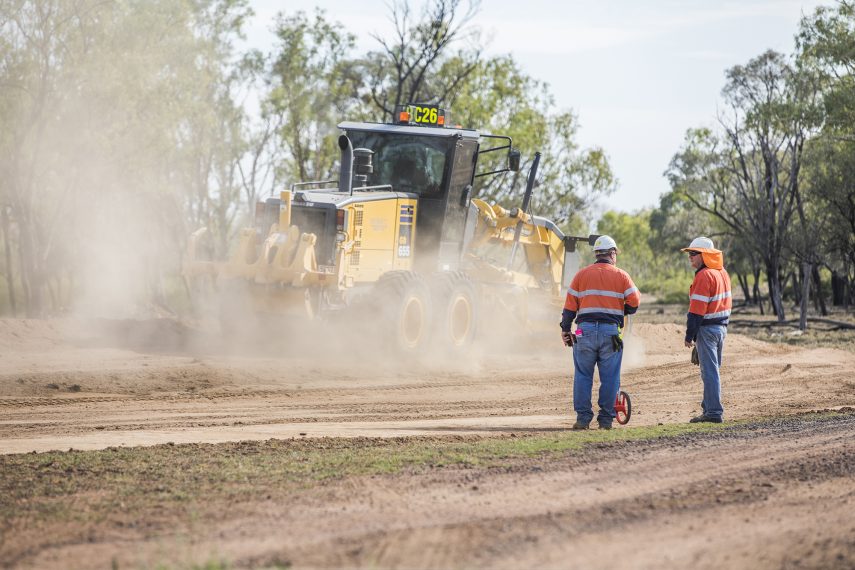
A few weeks ago, I commented sceptically on Adani’s announcement that it had moved heavy earthmoving equipment to its Carmichael site. At the same time, Adani flew a banner over its Brisbane office, claiming it was ready to start the mining project the moment it got the green light. As I observed at the time, the “heavy earthmoving equipment” appeared to consist of one large grader and a few smaller vehicles.

The latest news is that Adani is “moving ahead with access work” namely, building by-passes around cattle grids, which “which will allow larger machinery and equipment to be transported to site. ” It sounds as if the start of real work is a long way off.

And here’s our big yellow grader at work.


Read More »

Monday Message Board (on Tuesday)

Another Monday Message Board, running a bit late. Post comments on any topic. Civil discussion and no coarse language please. Side discussions and idees fixes to the sandpits, please. If you would like to receive my (hopefully) regular email news, please sign up using the following link


http://eepurl.com/dAv6sX You can also follow me on Twitter @JohnQuiggin, at my Facebook public page   and at my Economics in Two Lessons page